Cloud Computing Fundamentals Explained
Introduction to Cloud Computing
What Is the Cloud?
You’ve probably heard the term “the cloud” used to describe where your photos, emails, and documents are stored. But what is it, really? The cloud isn’t a physical object or a single place. It’s a global network of powerful servers that you can access over the internet.
Think of it like the electric grid. When you plug in a lamp, you don’t need your own power generator in the basement. You just connect to a massive, shared grid and pay for the electricity you use. Cloud computing works the same way for computing resources.
Cloud computing is the delivery of computing services—including servers, storage, databases, networking, software, analytics, and intelligence—over the Internet to offer faster innovation, flexible resources, and economies of scale.
Instead of owning and maintaining your own computing infrastructure—physical servers, hard drives, and networking equipment—you can access these services from a cloud provider like Amazon Web Services (AWS), Google Cloud, or Microsoft Azure. This simple idea has completely changed how businesses and individuals use technology.
From Mainframes to the Cloud
Computing didn't always work this way. The journey to the cloud was a gradual evolution. It started with massive, room-sized computers called mainframes. A whole organization would share a single mainframe, with users accessing it through terminals.
Then came the personal computer (PC) revolution. Suddenly, everyone had a dedicated computer on their desk. This was great for individual productivity, but sharing information was clumsy. To solve this, businesses set up local networks with central servers to store shared files and run applications. This was known as the client-server model.
The final leap came with the widespread availability of the internet. Why limit the network to a single building? Companies realized they could host their servers in specialized facilities—data centers—and deliver services to anyone, anywhere, over the web. This centralized, globally accessible model is the foundation of modern cloud computing.
The Building Blocks
So, what is the cloud actually made of? At its core, cloud infrastructure relies on three main physical components, housed in massive buildings called data centers.
- Compute: These are the servers, which are essentially powerful computers without screens or keyboards. They provide the processing power to run applications and perform calculations.
- Storage: This is where data lives. It includes everything from super-fast solid-state drives (SSDs) for active data to slower, cheaper hard drives for archives.
- Networking: This consists of all the cables, switches, and routers that connect the servers and storage together and link the data center to the internet.
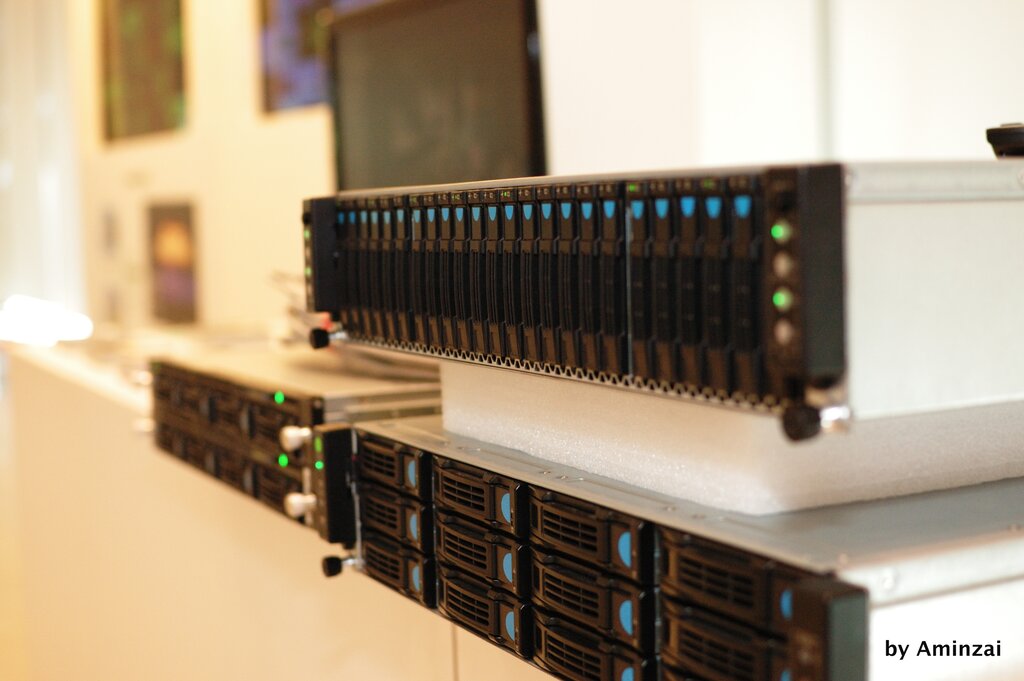
The magic that makes the cloud so flexible and efficient is virtualization. This technology allows a single physical server to be split into multiple "virtual machines" (VMs). Each VM acts like its own independent computer, with its own operating system and applications. Virtualization lets cloud providers maximize the use of their hardware, which lowers costs and allows them to offer resources to many customers at once.
Characteristics of the Cloud
Not just any online service is "cloud computing." A service must have a few key characteristics to qualify. These traits are what make the cloud so powerful.
| Characteristic | What it means |
|---|---|
| On-Demand Self-Service | You can get computing resources like server time or storage automatically, without needing to talk to a human. |
| Broad Network Access | Services are available over the internet and can be accessed from any device, like a laptop, tablet, or phone. |
| Resource Pooling | The provider's resources are pooled to serve many customers at once. You don't know or care exactly which physical server is running your task. |
| Rapid Elasticity | You can quickly scale your resources up or down as needed. If your website suddenly gets a surge of traffic, you can instantly add more server capacity. |
| Measured Service | You only pay for what you use. Cloud systems automatically control and optimize resource use, and you're billed accordingly, like a utility. |
Together, these features give users incredible flexibility. They can provision the exact resources they need, when they need them, and stop paying for them the moment they're done. This eliminates the need for large upfront investments in hardware and the guesswork of capacity planning.
Which of the following is the best analogy for how cloud computing works?
What is the correct historical order of computing models that led to the modern cloud?
This foundation—what the cloud is, how it evolved, and its core characteristics—is the first step to understanding its transformative power.