Cloud Computing Fundamentals
Introduction to Cloud Computing
What Is the Cloud?
You’ve probably heard the term “cloud computing” used to describe everything from backing up your phone to running massive online games. But what does it actually mean?
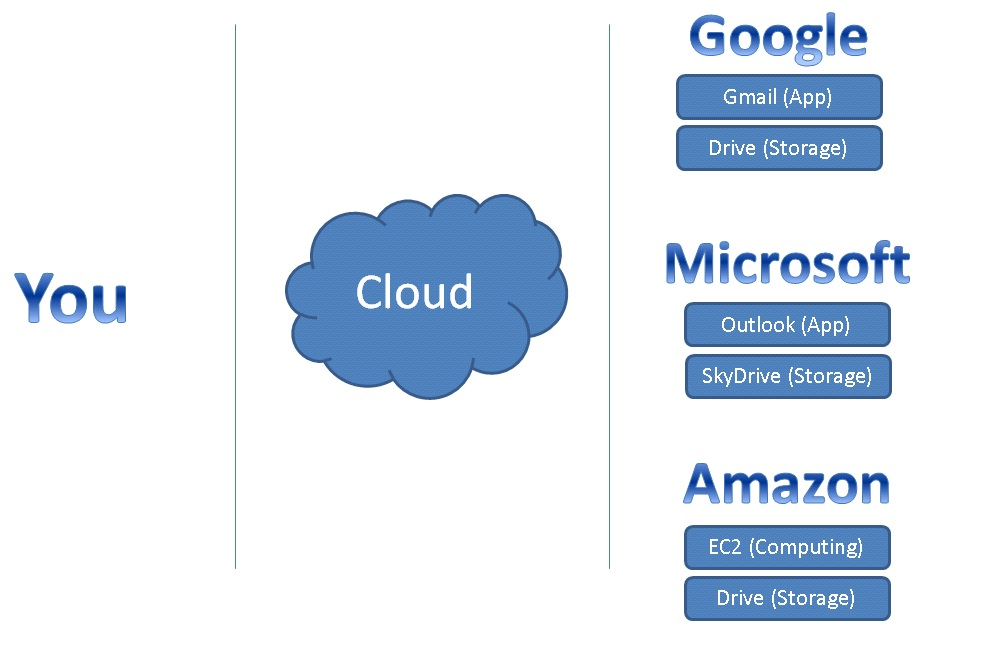
Simply put, cloud computing is the delivery of computing services—like servers, storage, databases, and software—over the internet. Instead of owning and maintaining your own computing infrastructure, you can access these services from a cloud provider like Amazon Web Services (AWS), Google Cloud, or Microsoft Azure.
Think of it like your home's electricity. You don't own a power plant. You just plug into the wall and pay for what you use. The cloud works on a similar principle for computing power.
The Five Key Traits
Cloud computing isn't just about accessing files online. A true cloud service has five specific characteristics that set it apart from traditional hosting.
| Characteristic | Description |
|---|---|
| On-Demand Self-Service | You can get computing resources like server time or network storage automatically, without needing human help from the provider. |
| Broad Network Access | Services are available over the network and can be accessed by any type of device, like a mobile phone, laptop, or tablet. |
| Resource Pooling | The provider's resources are pooled to serve many customers at once. You generally don't know or control the exact location of your data or applications. |
| Rapid Elasticity | You can quickly and easily scale your resources up or down. To you, the resources seem unlimited and can be purchased in any quantity at any time. |
| Measured Service | Cloud systems automatically control and optimize resource use by tracking it. You only pay for what you use, just like a water or electricity meter. |
These five traits work together to provide the flexibility and efficiency that make the cloud so powerful. You get the resources you need, when you need them, and only pay for what you consume.
The Road to the Cloud
Cloud computing didn’t appear overnight. It’s the result of a long evolution in how we handle computing power.
In the early days, we had mainframes. These were massive, room-sized computers that did all the processing. Users connected to them through “dumb terminals”—basically just a screen and a keyboard with no processing power of their own. All the intelligence was centralized in one place.
Next came the client-server model, powered by the rise of personal computers (PCs). In this setup, the “client” (your PC) had its own processing power but connected to a central “server” for things like storing files or running a shared database. This distributed the workload, but businesses still had to buy and maintain all their own server hardware.
Cloud computing is the latest step in this evolution. It takes the client-server idea and scales it massively. Instead of connecting to one server your company owns, you connect to a vast, global network of servers owned and operated by a provider. This eliminates the need to manage physical hardware and allows for the flexibility and on-demand access we discussed earlier.
Cloud computing is the delivery of computing services—servers, storage, databases, networking, software, analytics, and intelligence—over the internet (“the cloud”).
Now that we have a solid grasp of what the cloud is and where it came from, we're ready to explore the different ways these services are offered.