Cloud Computing Fundamentals
Introduction to Cloud Computing
What Is the Cloud Anyway?
Think about your music library. A decade ago, you probably stored all your songs on your computer's hard drive. If you wanted to listen on another device, you had to manually copy the files. Today, you likely use a service like Spotify or Apple Music. Your songs aren't on your device; they're somewhere else, and you just stream them over the internet.
That 'somewhere else' is the cloud. At its core, cloud computing is about accessing computing resources—like storage, software, and processing power—over the internet instead of from your own local hardware.
Cloud computing is a technology that provides on-demand access to computing resources like storage, servers, databases, software, and networking over the internet.
Instead of buying and maintaining your own expensive servers, you can rent access to someone else's. Big companies like Amazon, Google, and Microsoft have built massive data centers around the world, and they lease out space and power on those servers to individuals and businesses.
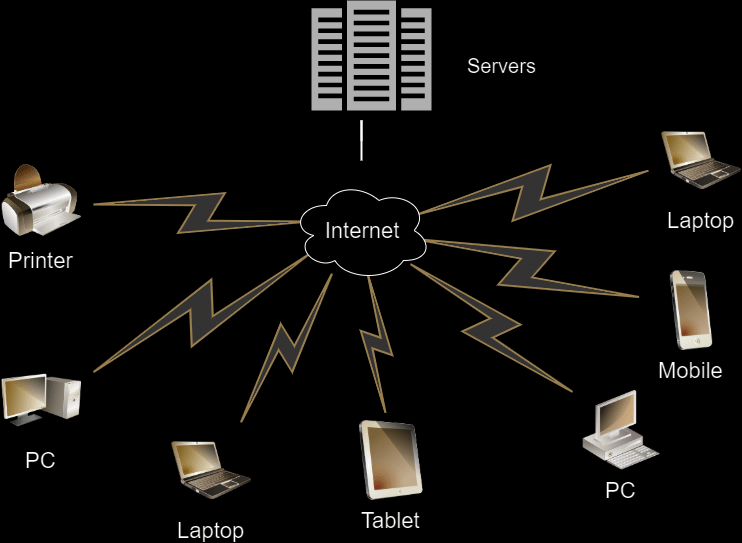
The Five Traits of Cloud
What truly makes a service a 'cloud' service? There are five key characteristics that define cloud computing. It's not just about storing files online; it's about how those services are delivered.
First is on-demand self-service. You can get computing resources whenever you need them, without having to talk to a human. Think of it like a vending machine for computing power. You swipe your card, and you get what you need instantly.
Next is broad network access. You can access your data and applications from anywhere with an internet connection, using a variety of devices like your phone, tablet, or laptop.
Then there's resource pooling. Cloud providers serve multiple customers using a shared pool of physical hardware. You don't know or care which specific server is running your application, and the provider can shift resources around to be more efficient. This is what allows them to serve so many people at a low cost.
Rapid elasticity is the ability to quickly and automatically scale your resources up or down. If your website suddenly gets a million visitors, the cloud can instantly provide more server power to handle the traffic. When the traffic dies down, it scales back down so you're not paying for resources you don't need.
Finally, cloud computing uses a measured service. You only pay for what you use, similar to a utility like electricity or water. If you use a lot of storage one month and very little the next, your bill will reflect that.
| Characteristic | What It Means |
|---|---|
| On-Demand Self-Service | Get computing power when you need it, without human help. |
| Broad Network Access | Access services from anywhere with an internet connection. |
| Resource Pooling | Providers serve many customers using a shared pool of resources. |
| Rapid Elasticity | Scale up or down quickly to meet demand. |
| Measured Service | Pay only for what you use, like a utility bill. |
How We Got Here
The journey to the cloud didn't happen overnight. In the early days of computing, massive mainframe computers filled entire rooms. A company would own one, and all its computing tasks ran on that single, powerful machine.
The personal computer (PC) revolution in the 1980s put a computer on every desk. This led to the client-server model, where individual PCs (clients) would connect to a central, more powerful server owned by the company to access shared files and applications. You still had to buy, house, and maintain all that hardware yourself.
Cloud computing is the next logical step. It takes the server out of your office and places it in a specialized data center, managed by a dedicated provider. This shift frees businesses from the burden of managing physical infrastructure and allows them to focus on building their products.
Benefits and Risks
Why do so many businesses love the cloud? The biggest reason is cost savings. Instead of spending a huge amount of money upfront on servers and software, companies can pay a smaller, predictable monthly fee. This turns a capital expense into an operational expense, which is much easier to manage.
Scalability is another major advantage. A small startup can start with minimal resources and scale up as it grows without having to buy new hardware. This flexibility allows companies to be more agile and respond to market changes faster.
Finally, the cloud often improves reliability. Cloud providers have teams of experts dedicated to keeping their data centers running 24/7. This level of security and maintenance is something most individual companies could never afford on their own.
Of course, the cloud isn't without its challenges. Handing over your data and infrastructure to a third party raises security concerns. If the cloud provider has a security breach, your data could be at risk. Companies must ensure their provider has robust security measures in place.
Compliance is another hurdle. Industries like healthcare and finance have strict regulations about how customer data is stored and handled. Businesses must be sure their cloud provider meets these legal requirements, which can vary by country.
Lastly, there's a risk of vendor lock-in. It can be difficult and expensive to move your applications and data from one cloud provider to another. This can leave companies dependent on a single vendor's pricing and technology.
Which statement best describes the fundamental concept of cloud computing?
A popular e-commerce website experiences a massive, unexpected surge in traffic during a flash sale. Which key characteristic of the cloud allows it to handle the increased load without crashing?
Understanding these core concepts is the first step. The cloud has changed how we build and use technology, moving us from owning products to accessing services.