Cloud Computing Essentials for Beginners
Cloud Fundamentals
What Is the Cloud?
Think about the electricity in your home. You don't own a power plant in your backyard. Instead, you just plug into an electrical grid and pay for what you use. Cloud computing works on a similar principle, but for computing resources instead of electricity.
In the past, if a company needed a new server for their website, they had to physically buy one. They'd purchase the hardware, install it in a dedicated room, manage its power and cooling, and hire people to maintain it. This was expensive, slow, and inefficient. If their website suddenly got popular, they'd have to rush to buy more servers. If traffic died down, the expensive servers they bought would just sit there, wasting energy and money.
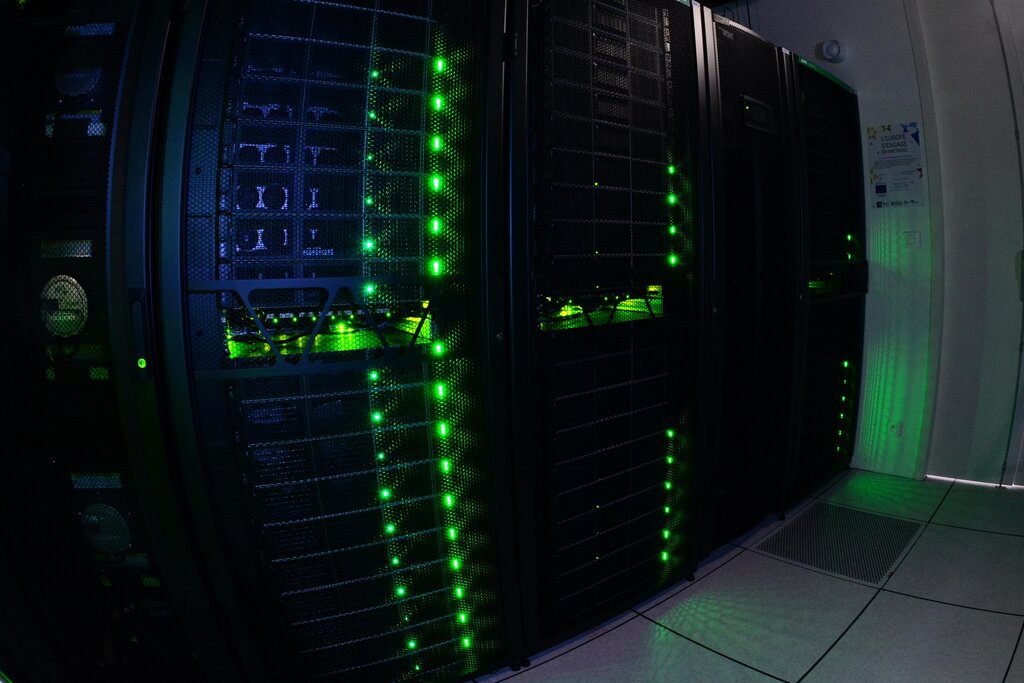
The cloud changes all that. Instead of buying your own physical hardware, you rent computing services—servers, storage, databases, networking, and more—from a cloud provider over the internet. That massive, physical infrastructure still exists, but it's housed in enormous data centers managed by companies like Amazon, Google, and Microsoft.
This shift from owning hardware to renting services isn't just a small change; it's a fundamental paradigm shift. To standardize what "cloud computing" actually means, the U.S. National Institute of Standards and Technology (NIST) created a formal definition.
Cloud computing is a model for enabling on-demand network access to a shared pool of configurable computing resources, such as networks, servers, storage, applications, and services that can be rapidly provisioned and released with minimal management effort or service provider interaction.
That definition might seem dense, but it boils down to five essential characteristics that make a service truly "cloud."
The Five Essential Characteristics
According to NIST, for a service to be considered cloud computing, it must have these five traits.
On-Demand Self-Service
noun
You can provision computing resources, like server time or network storage, automatically without requiring human interaction with the service provider.
Imagine wanting to create a new personal blog. Instead of emailing a company and waiting days for them to set up a server for you, you just go to a cloud provider's website, enter your credit card details, and have a server running in minutes. You are in control.
Broad Network Access
noun
Resources are available over the network and can be accessed through standard mechanisms by various devices like mobile phones, laptops, and tablets.
This means you aren't tied to a specific location or a proprietary device to manage your services. As long as you have an internet connection, you can access the cloud's power from your laptop at a coffee shop or your phone on a train.
Resource Pooling
noun
The provider's computing resources are pooled to serve multiple customers using a multi-tenant model. Different physical and virtual resources are dynamically assigned and reassigned according to consumer demand.
This is the secret behind the cloud's efficiency. A cloud provider doesn't dedicate one physical server to every single customer. Instead, they have a massive pool of servers, storage, and networking gear. Using a technique called , they can slice up these physical resources into smaller, isolated virtual resources for many different customers. You don't know or care which specific physical machine is running your code, and the provider can shuffle workloads around to maximize efficiency.
Rapid Elasticity
noun
Resources can be elastically provisioned and released, in some cases automatically, to scale rapidly outward and inward with demand. To the consumer, the resources available for provisioning often appear to be unlimited.
If your website is featured on the news and traffic suddenly increases 100 times over, the cloud can automatically provide more computing power to handle the load. This is called scaling out. When the traffic dies down, it automatically scales back in, so you're not paying for resources you don't need. This ability to grow and shrink on demand is one of the biggest advantages of the cloud.
Measured Service
noun
Cloud systems automatically control and optimize resource use by leveraging a metering capability. Resource usage can be monitored, controlled, and reported, providing transparency for both the provider and the consumer.
This goes back to the electricity analogy. Your power company measures exactly how much electricity you use and bills you for it. Cloud providers do the same thing for computing resources. You pay for what you use, whether it's hours of server time, gigabytes of storage, or network data transferred. This pay-as-you-go model is a radical departure from the old way of buying and owning hardware outright.
Ready to check your understanding?
The text compares cloud computing to an electrical grid. What is the core principle of this analogy?
According to the text, what was a major inefficiency of the traditional method of a company buying and managing its own physical servers?
These five characteristics work together to define the cloud model and separate it from traditional IT. Understanding them is the first step to mastering cloud computing.