Cloud Computing Essentials
Introduction to Cloud Computing
What is Cloud Computing?
Think about how you watch movies. A decade or two ago, you'd buy a DVD. You owned it, stored it, and were responsible for it. Now, you probably use a streaming service like Netflix. The movies are stored on someone else's computers, and you just access them over the internet whenever you want.
Cloud computing is a lot like that, but for computer resources instead of movies. Instead of owning and managing your own computing infrastructure—like physical servers and software—you can access these services from a cloud provider over the internet.
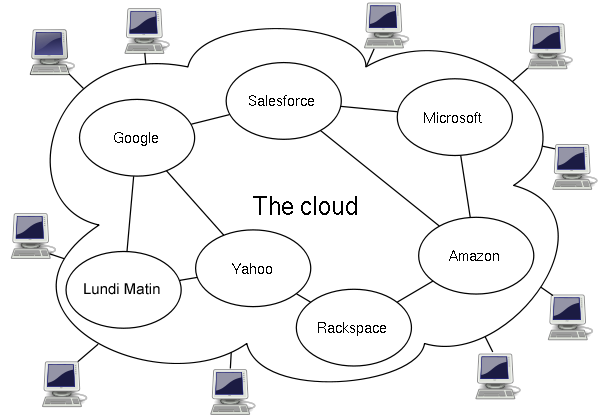
Cloud computing is the delivery of computing services (servers, storage, databases, networking, software, and more) over the internet (the cloud), offering faster innovation, flexible resources, and economies of scale.
This means you can get access to powerful computing resources, from simple data storage to complex machine learning tools, without having to buy and maintain the expensive hardware yourself. The 'cloud' is just a metaphor for the internet and the vast network of data centers that provide these services.
The Road to the Cloud
Cloud computing didn't appear overnight. It's the result of a long evolution in how we handle information and processing.
In the early days of computing, massive mainframe computers filled entire rooms. A single, powerful machine did all the work for an organization. Then came the personal computer (PC), which put computing power on individual desks, decentralizing everything.
Next, the client-server model connected these PCs to a central server. This was a step back toward centralization, allowing for shared resources like databases and files. Cloud computing is the next logical step. It takes the client-server idea and expands it on a global scale, creating a massive, shared pool of resources that anyone can access from anywhere.
Key Cloud Characteristics
Not just any online service can be called 'cloud computing.' To qualify, it needs to have five specific traits.
On-demand self-service: You can access computing resources like server time or storage automatically, without needing to talk to a person. It's like using an ATM to get cash instead of waiting for a bank teller.
Broad network access: Services are available over the internet and can be accessed through standard devices like laptops, tablets, and smartphones. If you can get online, you can get to the cloud.
Resource pooling: The provider's computing resources are pooled to serve multiple customers. You don't know or care exactly which physical server is running your application. The provider manages the hardware, and you just use a slice of its overall capacity.
Rapid elasticity: Cloud services can scale up or down quickly and, in some cases, automatically. If your website suddenly gets a surge in traffic, the cloud can allocate more resources to handle it. When traffic dies down, it scales back. You only use what you need, when you need it.
Measured service: Resource usage is monitored, controlled, and reported. This transparency allows providers to bill you for exactly what you use—a model often called pay-as-you-go. It's similar to how your utility company measures your electricity or water usage.
Why Bother with the Cloud?
These characteristics lead to some major benefits, which is why so many businesses have moved to the cloud.
| Benefit | Description |
|---|---|
| Cost Efficiency | Instead of buying expensive hardware and software, you pay a monthly fee or pay based on usage. This shifts costs from a large upfront investment to a manageable operating expense. |
| Scalability | You can scale your resources up or down to meet demand instantly. This means you don't have to over-provision for peak traffic, saving money and improving performance. |
| Flexibility & Speed | New resources are just a click away. This allows developers to spin up new servers in minutes, drastically speeding up the time it takes to test and deploy new applications. |
| Collaboration | Cloud-based applications allow teams to access, edit, and share documents and projects from anywhere, at any time. This fosters better teamwork and productivity, especially for remote teams. |
By handling the underlying infrastructure, cloud computing frees up organizations to focus on what really matters: building better products and serving their customers.
Time to check what you've learned.
The text compares the shift to cloud computing with the shift from owning DVDs to using a streaming service. What core concept does this analogy illustrate?
A popular online store experiences a massive, unexpected surge in traffic during a flash sale. Thanks to its cloud infrastructure, the website remains stable and responsive. Which essential characteristic of cloud computing does this demonstrate?