Cloud Architecture with Terraform Modules
Cloud Computing Basics
What Is Cloud Computing?
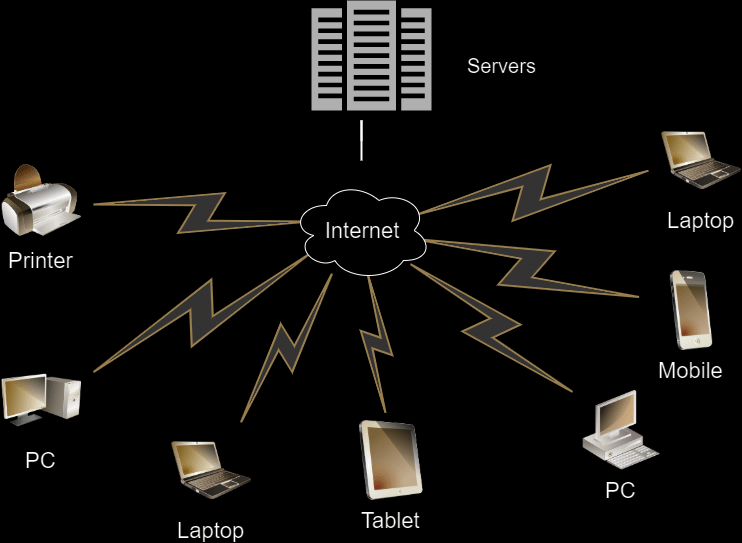
Think about how you get electricity at home. You don't own a power plant; you just plug into the wall and pay for what you use. Cloud computing applies the same idea to things like servers, storage, and software. Instead of buying and managing your own expensive computer hardware, you can access these services over the internet from a cloud provider.
Cloud computing is the on-demand delivery of IT resources over the internet with pay-as-you-go pricing.
This means you get access to a shared pool of resources, from applications to data centers, whenever you need them. You can start small and grow without a massive upfront investment. It’s a fundamental shift from owning your infrastructure to renting it.
Key Benefits
Why do so many businesses move to the cloud? The advantages are significant. The most obvious one is cost. Instead of buying, housing, and maintaining your own servers (a capital expense), you pay a monthly fee for services (an operational expense). This pay-as-you-go model means you only pay for the resources you actually consume.
Another huge benefit is scalability and elasticity. Scalability means you can easily increase your computing power as your needs grow. Elasticity is the cloud's ability to automatically add or remove resources to match demand. Imagine a retail website on Black Friday. With elasticity, the site can automatically scale up to handle the traffic spike and then scale back down when the rush is over, so the company doesn't pay for idle servers.
This efficiency leads to greater agility. Teams can spin up new servers in minutes, test an idea, and shut it down just as quickly. This speed allows for faster innovation and experimentation, which is a major competitive advantage.
Cloud Service Models
Cloud computing isn't one-size-fits-all. It's offered in three main service models, each providing a different level of control and convenience. A helpful analogy is ordering pizza.
| Service Model | Pizza Analogy | What You Manage | What Provider Manages |
|---|---|---|---|
| IaaS | You make pizza at home | Your applications, data, OS | Servers, storage, networking, virtualization |
| PaaS | Pizza delivered | Your applications, data | OS, servers, storage, networking |
| SaaS | You eat at a pizza restaurant | Nothing | Everything |
Infrastructure as a Service (IaaS) gives you the most control. The provider gives you the fundamental building blocks of computing: virtual servers, storage, and networking. It's like having all the ingredients and a kitchen to make a pizza yourself. You manage the operating system and what you build on top of it.
Platform as a Service (PaaS) goes a step further. It provides a platform where you can develop, run, and manage applications without worrying about the underlying infrastructure. This is like ordering a pizza for delivery. You don't have to worry about the oven or the ingredients, just what toppings you want.
Software as a Service (SaaS) is the most hands-off model. You simply use a complete application that runs on a cloud provider's infrastructure. Think of email services like Gmail or productivity software like Microsoft 365. This is like going to a restaurant and having pizza served to you. You just show up and eat.
Deployment Models
Besides the service model, you also choose how your cloud is deployed. This decision is about where the infrastructure lives and who has access to it.
Public Cloud: The infrastructure is owned and operated by a third-party cloud provider (like Amazon Web Services, Microsoft Azure, or Google Cloud). It delivers services over the public internet and is shared by multiple organizations. This is the most common model.
Private Cloud: The infrastructure is used exclusively by a single organization. It can be located at the company's own data center or hosted by a third-party provider. This offers more control and privacy but comes at a higher cost.
Hybrid Cloud: This model combines a private cloud with one or more public cloud services. It allows data and applications to be shared between them. A common use case is to run a primary application on a private cloud but use the public cloud for handling traffic spikes or for disaster recovery.
The choice of deployment model depends on factors like cost, security needs, performance requirements, and regulatory compliance.
What is the primary financial advantage of shifting from on-premise servers to cloud computing?
An e-commerce website experiences a massive surge in traffic during a holiday sale. The cloud infrastructure automatically adds more computing resources to handle the load and then removes them when the sale is over. This capability is known as: