Closures and State Persistence in React
Advanced Hook Architecture
Escaping the Closure
As we've seen, every render in React is a snapshot in time. Each function call captures the props and state as they existed for that specific render. This is the power of closures, but also their primary trap. useEffect and useCallback capture these snapshots, and the dependency array is our tool to tell React when to take a new picture.
But what happens when you can't, or shouldn't, create a new closure? Consider setting up a global event listener that should only ever be registered once.
If you set up a window.addEventListener('keydown', handleKeyPress) in a useEffect with an empty dependency array ([]), the handleKeyPress function is created only once. Any state it references will be from the initial render, forever stale. Adding the state to the dependency array would solve the stale closure, but it would also constantly remove and re-add the global event listener, which can be inefficient or even buggy.
This is where we need an 'escape hatch' — a deliberate way to break React's dependency model to access the latest state from within a persistent closure.
The Latest Ref Pattern
The solution lies in a clever use of useRef. We know useRef can hold a mutable value in its .current property, and crucially, changing this property does not trigger a re-render. It's a container that lives outside the render-snapshot cycle. This allows us to create a stable pointer to a value that is always up to date.
The pattern is simple yet powerful. First, we store our state in a ref. Then, we use an effect to keep that ref's value synchronized with the state on every render. Because the ref object itself is stable, we can safely use it inside a memoized callback or a one-time effect without adding it to the dependency array.
import { useState, useRef, useEffect, useCallback } from 'react';

function usePersistentCallback(callback) {
  const callbackRef = useRef(callback);

  // Step 1: Keep the ref updated with the latest callback
  // on every single render.
  useEffect(() => {
    callbackRef.current = callback;
  });

  // Step 2: Return a stable function that always calls
  // the latest version of the callback from the ref.
  // This useCallback has no dependencies, so it's created only once.
  return useCallback((...args) => {
    callbackRef.current(...args);
  }, []);
}
This custom hook, often called useEvent or usePersistentCallback, abstracts the pattern. It gives you a function with a stable reference that internally, and invisibly, always invokes the most recent version of the function you passed in. The component using this hook gets the best of both worlds: a stable callback that doesn't trigger downstream effects, but which never has a stale closure.
This technique is fundamental for architecting complex components, especially those interacting with timers, websockets, or browser APIs that require a single, long-lived callback function.
Architecting with Custom Hooks
Custom hooks are more than just a way to share logic. They are the primary tool for encapsulating complex state interactions and their associated closure management. A well-designed custom hook provides a clean API to the component, hiding the messy details of useEffect, useRef, and dependency arrays.
Imagine a useTimer hook. Internally, it might use the latest ref pattern to handle a setInterval callback that needs to access the latest delay prop without resetting the interval. The component using useTimer doesn't need to know about these mechanics; it just gets a stable API.
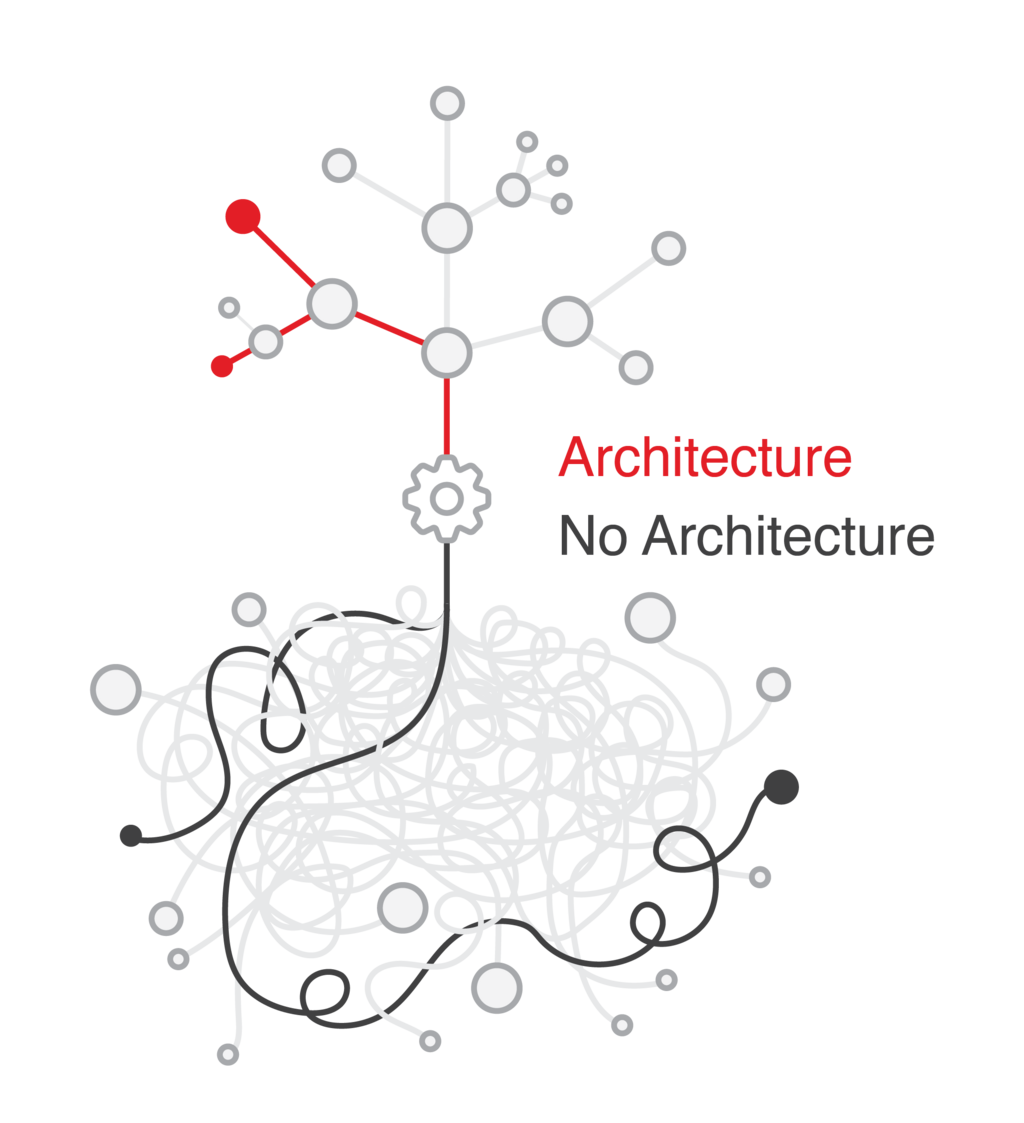
This approach leads to a clear separation of concerns. Components focus on rendering UI, while custom hooks manage the business logic and state transitions. This not only makes the code easier to read but also vastly improves its testability and predictability.
As applications grow, this architectural pattern becomes crucial. It prevents components from becoming monolithic monsters of interwoven state and effects. Instead, you compose functionality by combining focused, reusable hooks. This is a key principle for building performant and maintainable applications, especially with the rise of where predictable state logic is non-negotiable.
By mastering these advanced patterns, you move from simply using React to truly architecting with it. You learn to work with the grain of its rendering engine, using escape hatches only when necessary, and encapsulating that complexity to keep your application logic clean and robust.
Time to check your understanding of these advanced architectural patterns.
What is the primary problem that arises when a useEffect hook with an empty dependency array ([]) references a component's state?
You need to add a global window event listener that references the latest component state but should only be attached once for performance reasons. Adding the state to the useEffect dependency array is not an option because it would re-attach the listener on every state change. What is the recommended React pattern to solve this?
You've now seen how to move beyond the basic rules of hooks, using escape hatches to build powerful, predictable, and performant React applications. This deep understanding of closures, references, and the component lifecycle is what separates good React developers from great ones.