Clinical Foundations and Nursing Practice
Nursing Process Application
Putting the Process into Practice
You already know the nursing process is a systematic guide to patient-centred care. Represented by the acronym ADPIE, it stands for Assessment, Diagnosis, Planning, Implementation, and Evaluation. But this isn't a checklist you complete once and file away. It's a continuous, dynamic loop that refines itself with every piece of new information. Think of it less as a straight line and more as a circle, where the evaluation of one problem feeds directly into the assessment of the next.
From Data to Diagnosis
The process begins with Assessment, where you gather information. This data comes in two flavours. Subjective data is what the patient tells you—their symptoms, feelings, and perceptions. Objective data is what you observe and measure—vital signs, lab results, and the findings of your physical examination.
Your job is to synthesise these two streams. If a patient says, "I feel short of breath" (subjective), and you observe they are using accessory muscles to breathe with an oxygen saturation of 89% (objective), you're not just collecting facts. You are actively applying clinical reasoning to connect the dots. This isn't just critical thinking, which is a broad analysis of information. Clinical reasoning is the specific cognitive process nurses use to make judgements in a clinical setting, blending formal knowledge with practical experience to understand a patient's unique situation.
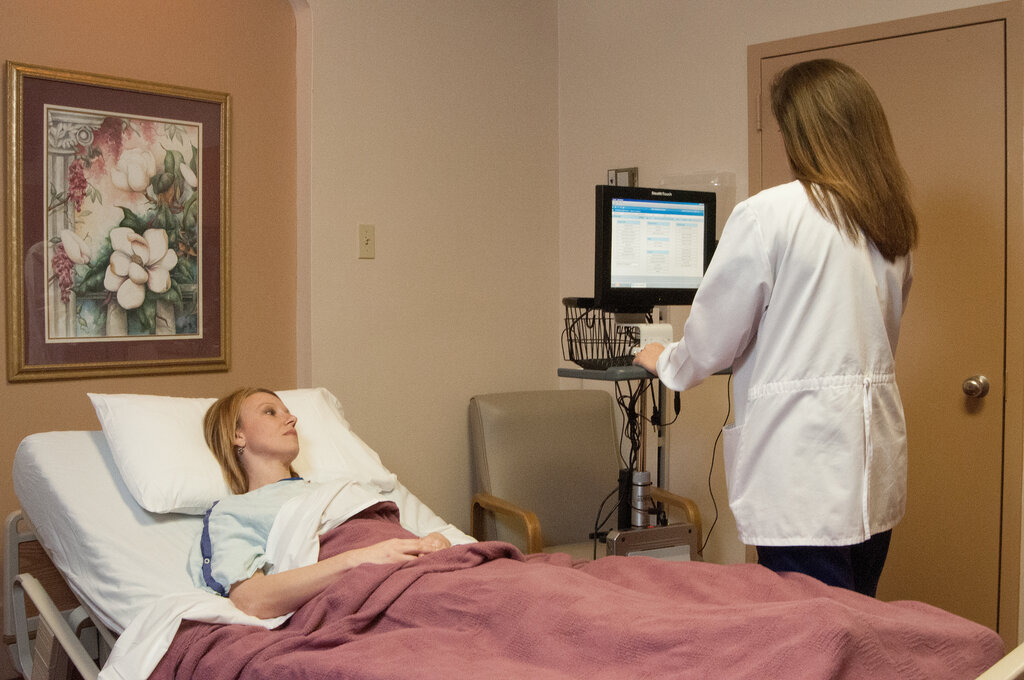
This synthesis leads to the Diagnosis phase. A nursing diagnosis is not a medical diagnosis like 'pneumonia'. Instead, it focuses on the human response to a health problem. For the breathless patient, a nursing diagnosis might be 'Ineffective Breathing Pattern' or 'Impaired Gas Exchange'. It identifies a problem you, as a nurse, can address with nursing interventions.
Prioritising Care
Once you have your nursing diagnoses, you move into Planning. A patient rarely has just one problem, so you need to prioritise. Two of the most effective frameworks for this are the ABCs and Maslow's Hierarchy of Needs.
The ABCs—Airway, Breathing, Circulation—are your first priority in any acute situation. A problem with breathing is more immediately life-threatening than a problem with pain. It’s a rapid triage tool for urgent needs.
For broader, less immediate planning, Maslow's Hierarchy of Needs provides a robust framework. This model arranges human needs in a pyramid, with the most fundamental needs at the base. You must address physiological needs (like breathing, food, and water) before you can move up to safety, love and belonging, esteem, and self-actualisation. If a patient is struggling to breathe, their need for social interaction takes a back seat.
With priorities set, you formulate patient goals. These goals must be SMART: Specific, Measurable, Achievable, Relevant, and Time-bound. A vague goal like "The patient will breathe better" is not actionable. A SMART goal would be: "The patient will maintain an oxygen saturation of 94% or greater on 2 litres of oxygen via nasal cannula by the end of the shift."
This goal is precise. You can measure it, it's realistic for the patient, it's relevant to the diagnosis of 'Impaired Gas Exchange', and it has a clear timeframe.
Action and Evaluation
Implementation is the action phase. This is where you carry out the interventions planned to achieve the goals. These actions might include administering oxygen, elevating the head of the bed, or teaching the patient deep-breathing exercises. It’s the hands-on part of the job, directly guided by the previous steps.
Finally, you Evaluate. Did your interventions work? Did the patient meet their goal? You check their oxygen saturation, observe their work of breathing, and ask how they feel. If the goal was met, you can move on to the next priority. If not, the process begins again. You reassess the situation. Was your diagnosis correct? Was the goal achievable? Did you need different interventions? This re-evaluation is a new Assessment, and the ADPIE cycle continues, ensuring your care is always responsive and tailored to the patient's changing condition.
Evaluation isn't the end of the process; it's the link that turns a linear checklist into a continuous loop of care.
Now, let's test your understanding of applying this process.
Which statement best describes the nursing process (ADPIE)?
A patient states, "I feel dizzy when I stand up." In the Assessment phase, how would a nurse classify this information?
Mastering the ADPIE cycle transforms your knowledge from a collection of facts into a powerful tool for delivering effective, patient-centred care. It’s the framework that underpins every decision you make at the bedside.