Clinical Dynamics of Diabetes
Cellular Signaling Defects
When the Signal Breaks Down
Normally, when insulin binds to its receptor on a cell, it triggers a precise chain of events. Think of it like a key turning in a lock, which then starts a Rube Goldberg machine inside the cell. A crucial first step in this machine is the activation of a molecule called Insulin Receptor Substrate-1, or IRS-1. When working correctly, IRS-1 gets a phosphate group added to it at a specific spot, a process called phosphorylation. This activates IRS-1, allowing it to pass the signal along to move glucose transporters to the cell surface.
However, chronic inflammation can throw a wrench in the works. Proinflammatory cytokines, particularly molecules like TNF-alpha and IL-6, are major culprits. These inflammatory signals are often elevated in states of metabolic stress, like obesity. They activate other signaling pathways that interfere with the insulin cascade. Instead of the normal activating phosphorylation, these pathways cause IRS-1 to be phosphorylated at the wrong locations. This incorrect phosphorylation acts like a stop signal, effectively inactivating IRS-1 and preventing it from relaying insulin's message.
Chronic inflammation can interfere with the normal functioning of insulin signaling pathways.
Fat in the Wrong Places
So where do these inflammatory cytokines come from? Often, the problem starts with fat. While adipose tissue is designed to store fat, other organs like skeletal muscle and the liver are not. When we consistently consume more energy than we use, fat can begin to accumulate in these non-adipose tissues, a condition known as ectopic fat accumulation.
This leads to a state called lipotoxicity, where the buildup of fat metabolites inside muscle and liver cells becomes toxic. These fat byproducts, such as diacylglycerols (DAGs) and ceramides, directly activate the same inflammatory pathways that inhibit IRS-1 signaling. In essence, the cell becomes so overwhelmed by internal fat-derived stress signals that it can no longer hear the external signal from insulin.
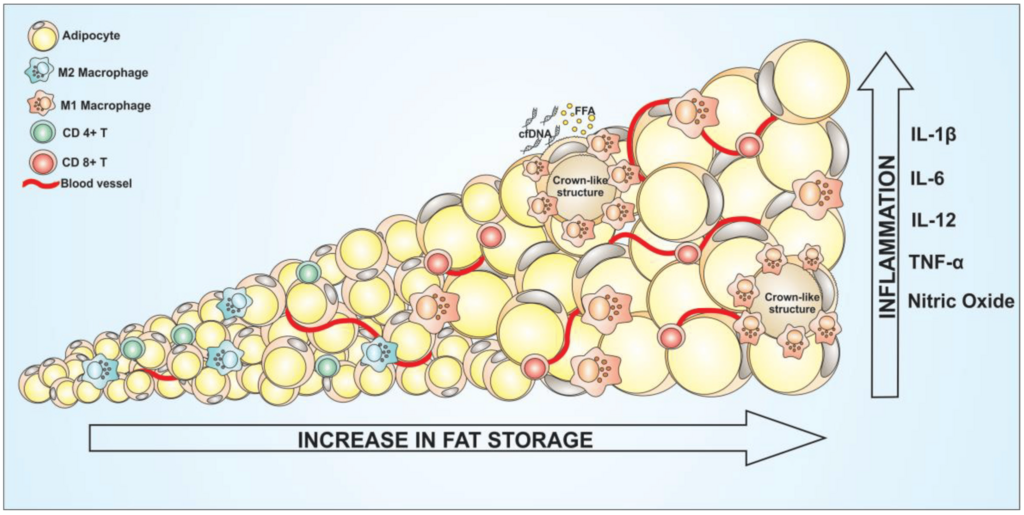
The ultimate consequence of this signaling breakdown is impaired glucose uptake. The main transporter responsible for bringing glucose into muscle and fat cells is GLUT4 (Glucose Transporter Type 4). In a healthy cell, insulin's signal tells vesicles containing GLUT4 to move to the cell membrane, creating doorways for glucose to enter. When the IRS-1 pathway is blocked by inflammation and lipotoxicity, this command is never received. The GLUT4 transporters remain stuck inside the cell, and glucose gets locked out, causing its levels in the bloodstream to rise.
Dysfunctional Communication
Adipose tissue isn't just a passive storage depot; it's an active endocrine organ that releases hormones called adipokines. These hormones help regulate metabolism, inflammation, and appetite. In a lean, healthy state, fat cells release beneficial adipokines like adiponectin, which actually improves insulin sensitivity.
However, as fat mass expands and becomes inflamed, this communication system goes haywire. This is known as adipokine dysregulation. Production of helpful adiponectin plummets, while the secretion of harmful, pro-inflammatory adipokines like leptin (in excess) and resistin shoots up. This shift further fuels the cycle of systemic inflammation and insulin resistance.
| Adipokine | Role in Healthy State | Change in Obesity/Insulin Resistance |
|---|---|---|
| Adiponectin | Increases insulin sensitivity | Decreases |
| Leptin | Suppresses appetite | Increases (Leptin resistance develops) |
| Resistin | Linked to inflammation | Increases |
| TNF-α & IL-6 | Low levels | Increases |
Together, these cellular defects create a vicious cycle. Ectopic fat causes local inflammation, which disrupts insulin signaling. This is amplified by dysfunctional adipokine signals from expanding fat tissue, leading to systemic inflammation. The result is a body that is actively resisting insulin's attempts to manage blood glucose, a key milestone on the path to type 2 diabetes.
What is the direct impact of pro-inflammatory cytokines like TNF-alpha on the Insulin Receptor Substrate-1 (IRS-1) molecule?
Why does lipotoxicity, the accumulation of fat byproducts in muscle and liver cells, contribute to insulin resistance?