Clinical Antibiotics and Microbial Resistance
Cell Wall Synthesis Inhibition
Targeting the Bacterial Wall
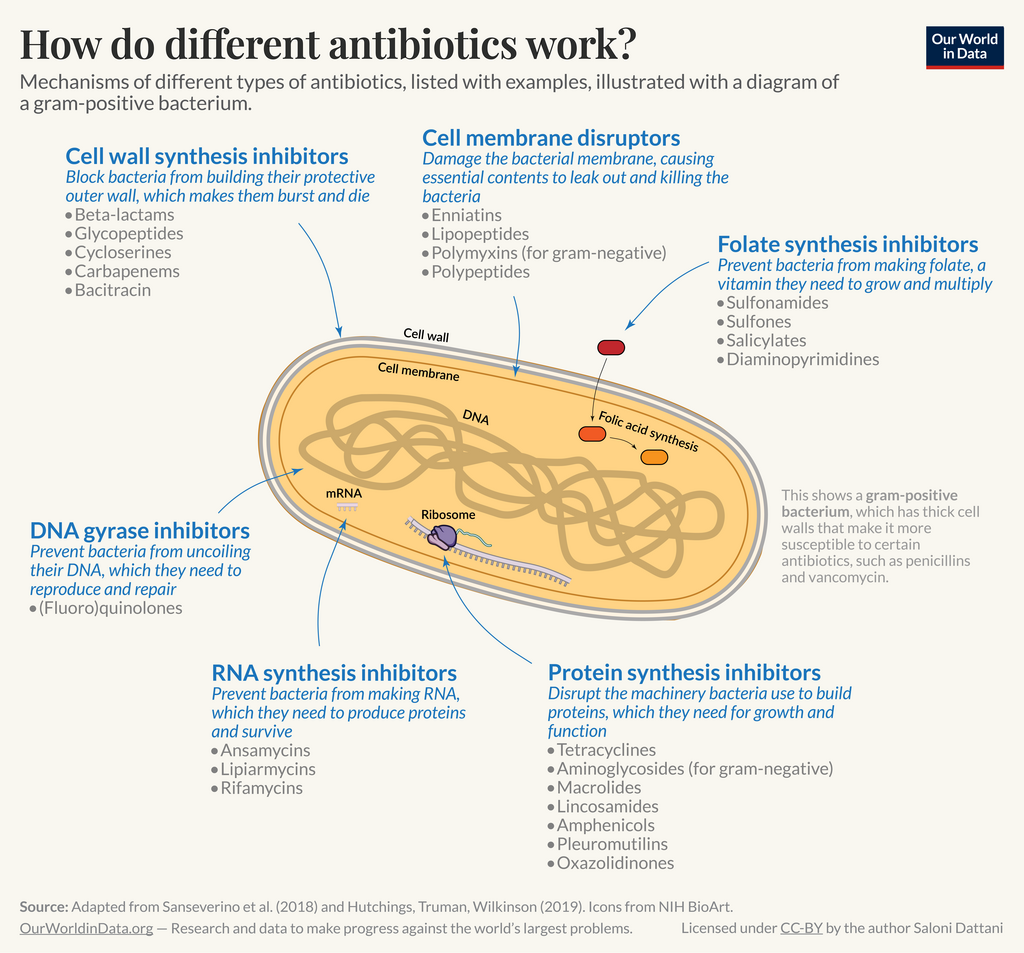
One of the most effective strategies for antimicrobial drugs is to attack structures that bacterial cells have but human cells don't. This principle, known as selective toxicity, is perfectly illustrated by antibiotics that target the bacterial cell wall. Human cells have a flexible cell membrane, but they lack the rigid outer cell wall that bacteria rely on for structural integrity and protection from osmotic pressure. By targeting this unique structure, we can create drugs that are lethal to bacteria while leaving our own cells unharmed.
Beta-Lactams: The Broken Key
The most famous family of cell wall inhibitors are the beta-lactams, which include penicillin and its many derivatives. Their target is a group of bacterial enzymes called (PBPs). The normal job of a PBP is to build and reinforce the cell wall by cross-linking strands of a mesh-like polymer called peptidoglycan. Think of a PBP as a construction worker meticulously linking steel bars together to form a strong concrete wall.
Beta-lactam antibiotics have a molecular structure that cleverly mimics the shape of the building blocks PBPs normally work with. When a PBP encounters a beta-lactam molecule, it tries to bind to it, just as it would with a piece of peptidoglycan. However, the beta-lactam drug binds irreversibly, effectively jamming the enzyme's active site. It's like a key breaking off in the lock. The PBP is permanently disabled, and cell wall synthesis grinds to a halt.
Without the ability to repair and expand its cell wall, a growing bacterium is in a fatal position. The internal pressure of the cell, known as turgor pressure, pushes against the weakened wall until it ruptures, a process called lysis. This is why beta-lactams are considered bactericidal, meaning they actively kill bacteria, and are most effective against bacteria that are rapidly growing and dividing.
Glycopeptides: Capping the Bricks
Another class of cell wall inhibitors, the glycopeptides, takes a different approach. The best-known example is a large, complex molecule. Instead of targeting the PBP enzyme, vancomycin targets the building material itself.
Specifically, vancomycin binds to the very end of the peptide side chains on the peptidoglycan precursors, a specific two-amino-acid sequence called D-Ala-D-Ala. By latching onto these precursors, vancomycin acts like a cap, physically blocking the PBP from accessing its binding site. The construction worker (PBP) is still functional, but it can't get to the bricks (D-Ala-D-Ala) to add them to the wall. The end result is the same: cross-linking is inhibited, the wall weakens, and the cell lyses.
The Gram Divide
The effectiveness of these drugs is heavily influenced by the type of cell wall the bacterium has. Gram-positive bacteria have a very thick, exposed layer of peptidoglycan. This makes them highly susceptible to both beta-lactams and glycopeptides, which can easily access their targets.
Gram-negative bacteria are a different story. They have a thin peptidoglycan layer, but it is protected by an outer membrane. This outer membrane acts as a selective barrier. Many beta-lactams are small enough to pass through channels called porins in this membrane to reach the PBPs. However, large molecules like vancomycin are too bulky to get through. This is a primary reason why vancomycin is effective almost exclusively against Gram-positive bacteria, while the spectrum of beta-lactams is much broader.
A key takeaway: the structural difference between Gram-positive and Gram-negative cell walls is a critical factor in determining an antibiotic's spectrum of activity.
Ready to test your knowledge on these cell wall inhibitors?
What is the primary principle that allows antibiotics targeting the bacterial cell wall to be safe for human consumption?
How do beta-lactam antibiotics, such as penicillin, lead to the death of a bacterial cell?
Understanding these specific mechanisms of action is fundamental to clinical microbiology, guiding how we choose the right drug to fight a bacterial infection.