Clinical Anatomy of the Gluteal Region
Osteofascial Compartment Architecture
The Gluteal Compartment
The gluteal region is more than just a collection of muscles; it's a precisely organized osteofascial space. The posterior wall of the pelvis isn't a solid sheet of bone. Instead, the ilium and ischium form two large indentations: the greater and lesser sciatic notches. These notches are open gaps until two strong ligaments span across them, transforming them into crucial passageways.
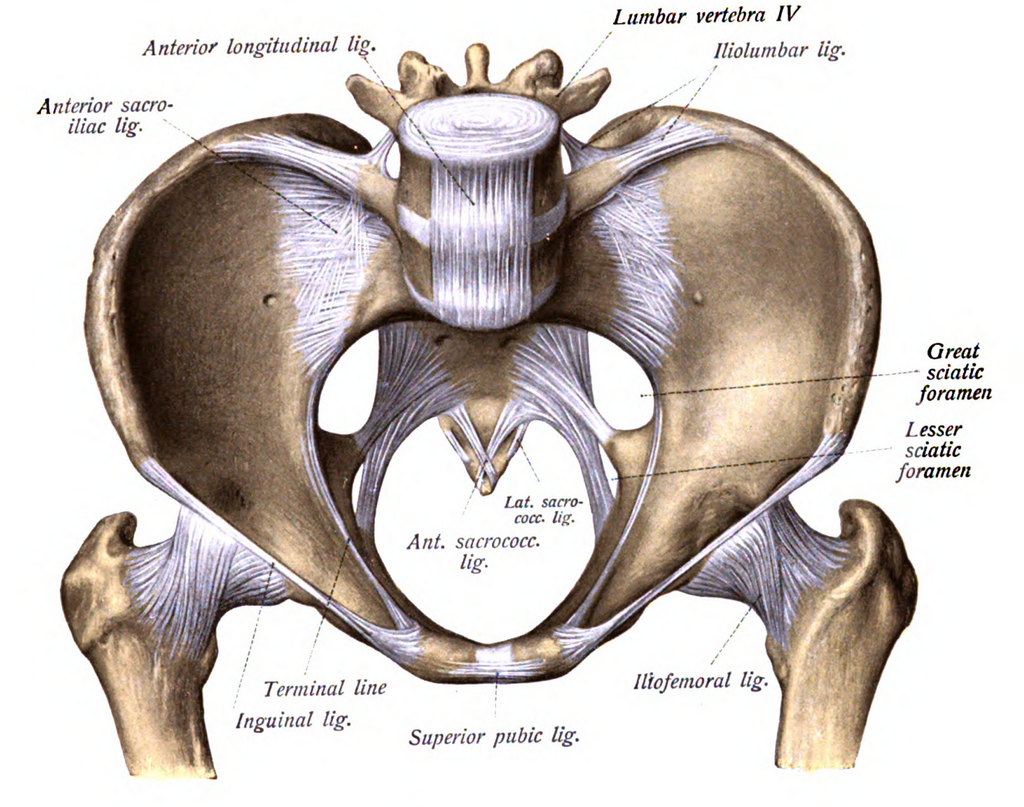
The first is the sacrospinous ligament, a tough, triangular band that runs from the lateral edge of the sacrum and coccyx to the ischial spine. Just inferior and posterior to it lies the much larger sacrotuberous ligament, which extends from the posterior ilium and the sacrum down to the ischial tuberosity.
Together, these ligaments create the greater and lesser sciatic foramina. Think of them as turning two open bays into two distinct tunnels. These foramina are the primary conduits for nerves and vessels entering or leaving the gluteal region and perineum from the pelvic cavity.
The mechanical tension of these ligaments is critical. They act like guy-wires, stabilizing the sacrum relative to the hip bone and preventing it from tilting forward under the weight of the upper body. This structural role is essential for efficient force transfer during walking and running.
Fascial Boundaries
Superficial to the muscles, the entire gluteal region is enveloped in a strong sheet of connective tissue called the gluteal fascia. This isn't an isolated structure; superiorly, it attaches to the iliac crest, and inferiorly, it is directly continuous with the fascia lata, the deep fascia of the thigh.
This fascial layer plays a key role in compartmentalization. Over the gluteus maximus, the fascia splits into two layers that encase the muscle. This creates a distinct, well-defined superficial compartment. Anteriorly, this fascia thickens significantly to form the iliotibial tract (IT band), a critical structure for stabilizing the hip and knee.
The gluteal fascia separates the large, powerful gluteus maximus from the deeper abductor group, which includes the gluteus medius and minimus. This deep compartment is bound by the fascia on the outside and the ilium bone on the inside.
This osteofascial architecture is clinically significant. An infection, bleed (hematoma), or swelling due to injury within the deep gluteal compartment is contained by these tough fascial and bony walls. This can lead to a rapid increase in pressure, potentially compressing the nerves and blood vessels that pass through the space, a condition known as compartment syndrome.
Which two ligaments are primarily responsible for converting the greater and lesser sciatic notches into foramina?
The gluteal fascia is a continuous sheet of tissue that becomes the fascia lata in the thigh.