Clinical Anatomy of the Gluteal Region
Superficial Gluteal Topography
Mapping the Surface
To understand the gluteal region clinically, we start on the surface. Palpable bony landmarks are our guides to the complex structures lying beneath. The most prominent is the iliac crest, the superior ridge of the pelvis you can feel at your waist. Following it posteriorly leads to a small dimple in the lower back, which marks the posterior superior iliac spine (PSIS). Another key point is the greater trochanter of the femur; you can feel this bony prominence on the side of your hip when you stand.
These landmarks are not just points on a map; they are the corners of a grid we can use to divide the gluteal region for clinical procedures. A common method is to divide the buttock into four quadrants. An imaginary horizontal line is drawn from the upper border of the intergluteal cleft (the top of the buttock crack) outwards, and a vertical line is drawn down the middle of the buttock.
This division is critical for procedures like intramuscular (IM) injections. The goal is to deliver medication deep into the muscle while avoiding major nerves and blood vessels. The upper outer quadrant is the preferred target in the traditional dorsogluteal approach because it is generally free of these vital structures.
Safe Injection Sites
The primary concern during a gluteal injection is avoiding the sciatic nerve, the largest nerve in the body. Accidentally hitting it with a needle can cause intense pain and long-term motor or sensory deficits. The quadrant system is a reliable, though not foolproof, method to steer clear of this nerve, which typically runs through the lower quadrants.
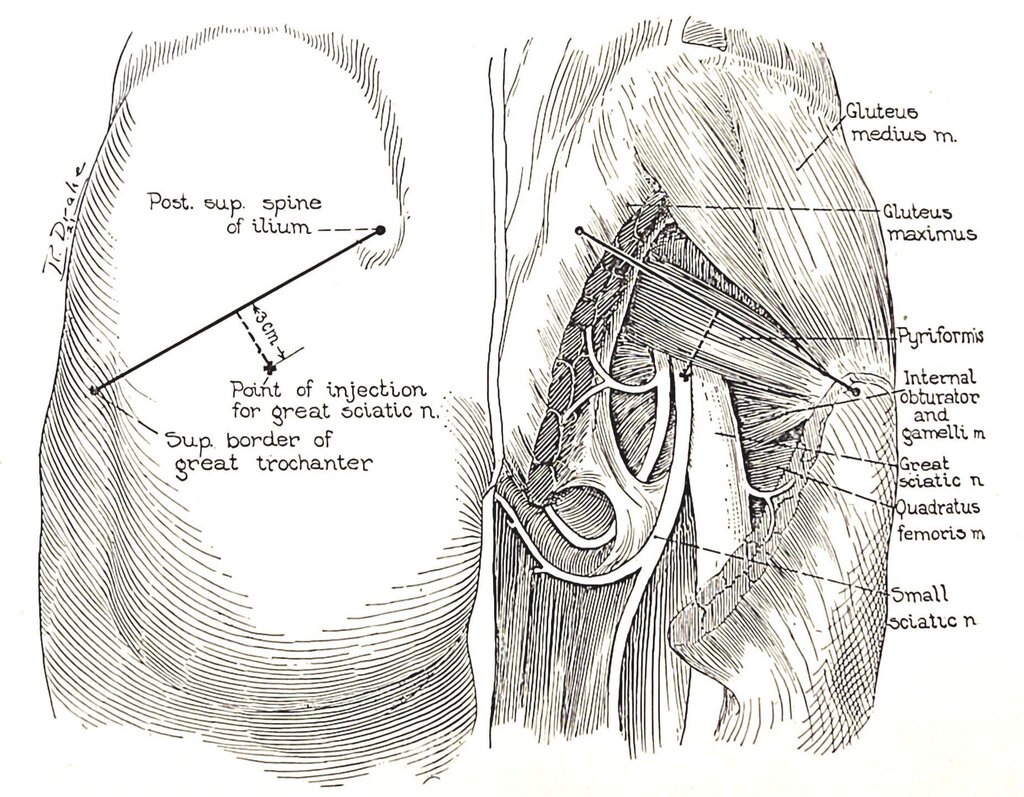
While the dorsogluteal site (the upper outer quadrant of the buttock) has been used for decades, a safer alternative is the ventrogluteal site. This site targets the gluteus medius and minimus muscles, which are located more on the side of the hip.
To locate the ventrogluteal site, place the heel of your opposite hand on the patient's greater trochanter. Your thumb should point towards the groin and your fingers towards the patient's head. Point your index finger to the anterior superior iliac spine (ASIS) and spread your middle finger back along the iliac crest, forming a 'V'. The injection site is in the middle of this 'V'.
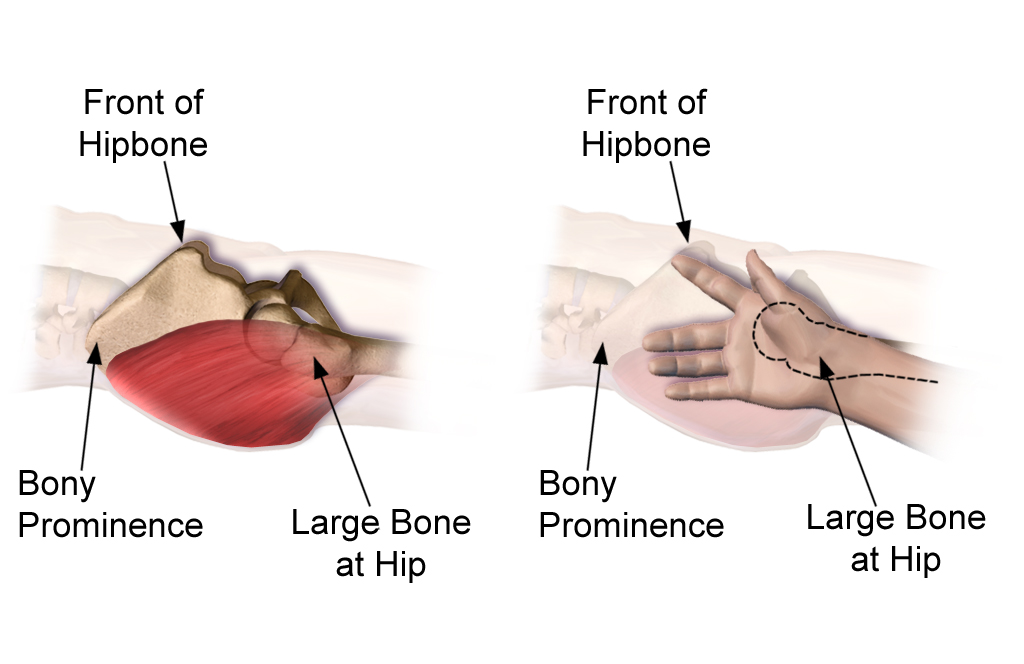
This method, known as von Hochstetter’s site, is considered safer because it is further away from the sciatic nerve and major blood vessels. The muscle tissue is also thick and well-suited for absorbing medication.
| Site | Primary Muscle | Key Advantage | Key Disadvantage |
|---|---|---|---|
| Dorsogluteal | Gluteus Maximus | Large muscle mass | Proximity to sciatic nerve |
| Ventrogluteal | Gluteus Medius | Away from major nerves | Less familiar to some practitioners |
Gluteus Maximus Anatomy
The gluteus maximus is the largest and most superficial of the three gluteal muscles. It's covered by a tough layer of connective tissue called the gluteal fascia. Understanding this muscle's structure is key to appreciating its function and the logic behind injection sites.
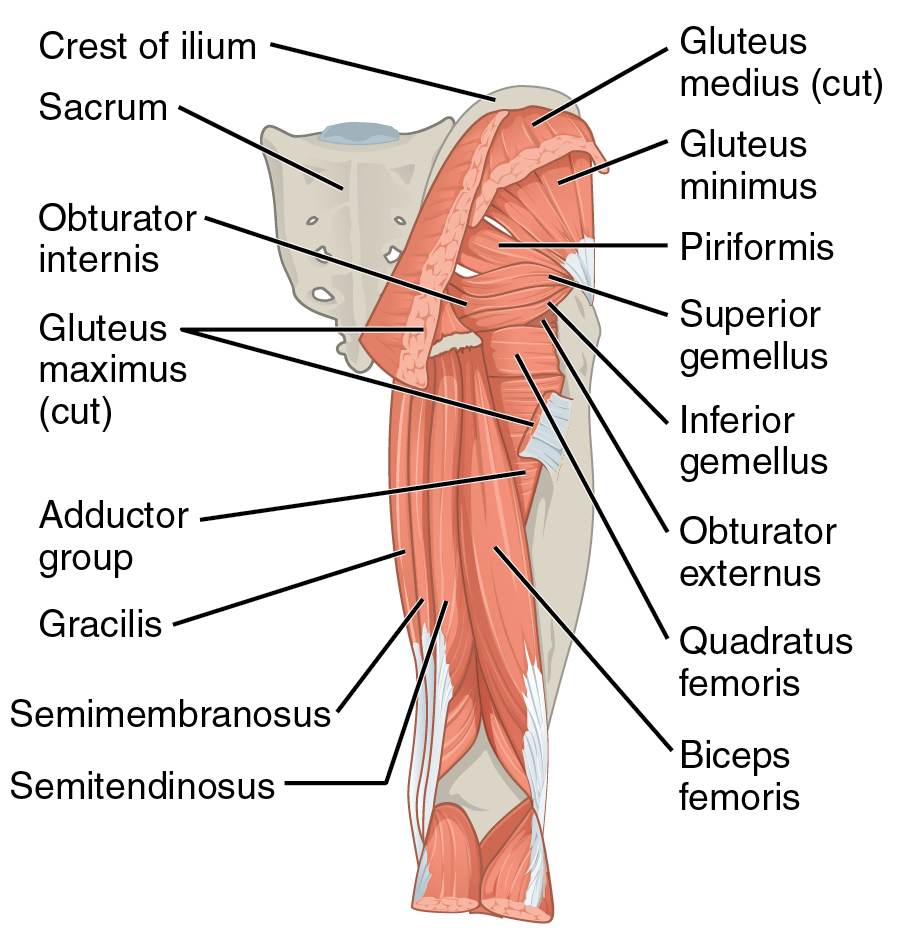
The muscle fibers of the gluteus maximus are large and coarse, running obliquely downwards and outwards from their origin on the ilium and sacrum to their insertion on the femur and iliotibial tract. This inferolateral orientation is what gives the muscle its powerful ability to extend and externally rotate the hip.
The fiber orientation is not just an anatomical detail. It dictates the muscle's line of pull and its significant power, making it a primary driver for movements like climbing stairs and rising from a seated position.
When administering a dorsogluteal injection, the needle must pass through the skin, subcutaneous fat, the dense gluteal fascia, and finally into the gluteus maximus muscle itself. The thickness of these layers can vary significantly between individuals, which is another reason the ventrogluteal site is often preferred, as the overlying tissue is typically thinner.
Let's review what we've covered.
Which bony landmark is a key reference point felt on the side of the hip?
For a traditional dorsogluteal intramuscular injection, which quadrant of the buttock is the preferred site?
By understanding the surface landmarks and the underlying anatomy, we can safely navigate the gluteal region for clinical procedures, transforming a simple area of the body into a well-defined clinical map.