Clinical Analysis of Penile Physiology and Enhancement Methods
Physiological Growth Limits
The Hormonal Window Closes
During puberty, a surge of androgens, primarily testosterone, instructs the body to develop secondary sexual characteristics. This includes penile growth. This process is mediated by androgen receptors on cells, which act like locks waiting for the right hormonal key. Once testosterone binds to these receptors, it triggers a cascade of genetic instructions leading to growth.
However, this is a time-sensitive event. Think of it as a construction project with a strict deadline. By the end of puberty, typically in the late teens or early twenties, these androgen receptors become saturated and less responsive to further growth signals. The hormonal 'window' for growth effectively closes. While testosterone continues to be crucial for maintaining sexual function and other bodily processes, its ability to initiate substantial new tissue growth in the penis is finished. The blueprint has been fulfilled, and the construction crew has packed up.
Structural Scaffolding
The penis has an internal structural sheath called the tunica albuginea that encases the erectile tissues. This layer is made of dense, collagen-rich connective tissue. During an erection, this sheath is crucial. It traps blood within the erectile chambers, allowing them to become rigid. Its flexibility allows for this expansion, but it is not infinitely elastic.
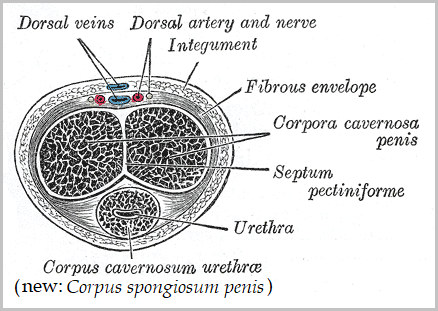
The tunica albuginea has a fixed structural limit. After the growth phase of puberty, its fibrous matrix is set. It can stretch to accommodate blood flow for an erection, but it cannot be permanently elongated or expanded through natural means. This creates a hard physical boundary, preventing the internal tissues from growing any larger. It's like trying to inflate a balloon inside a rigid plastic bottle—the bottle's walls will dictate the balloon's maximum size.
No Room to Multiply
Inside the tunica albuginea are the two main erectile chambers, the corpora cavernosa . These are sponge-like columns of tissue that fill with blood to cause an erection. During puberty, these tissues grow through a process of cellular hyperplasia, which is an increase in the number of cells.
Once adulthood is reached, the capacity for hyperplasia in these tissues dramatically reduces. The cells that make up the spongy structure are largely fixed in number. While they can expand and contract to accommodate blood flow (a process related to hypertrophy, where existing cells swell), they do not readily divide to create more tissue. This cellular stasis is a fundamental reason why adult penile size is stable. There are simply no more building blocks being produced to expand the structure from within.
It is important to note that penile size is influenced by a combination of genetic, hormonal, and environmental factors.
Ultimately, final penile size is a result of genetics setting the potential, and hormones acting as the catalyst during a specific developmental period. The genetic code provides the blueprint, dictating the potential length and girth. The hormonal surges during puberty are the builders that work to realise that blueprint. Once that period is over, the combination of desensitised receptors, a rigid structural sheath, and limited cellular division locks in the final dimensions.
Now that you understand the biological limits on growth, let's test your knowledge.
What is the primary hormonal reason that penile growth ceases after puberty, despite the continued presence of testosterone?
Which structural component of the penis is described as a 'rigid plastic bottle', setting a fixed physical limit on the size of the erectile tissues within?
These biological constraints are fundamental to understanding why claims of significant penile growth in adulthood are not supported by medical science. The body's developmental processes have clear start and end points.