Climate Policy Making Unveiled
Introduction to Climate Policy
What Is Climate Policy?
Climate policy refers to the collection of laws, regulations, and government actions designed to tackle climate change. Think of it as the official rulebook for how a country, or the world, plans to reduce greenhouse gas emissions and adapt to the climate shifts already happening.
Climate Policy
noun
The set of governmental actions, including laws, regulations, and international agreements, aimed at mitigating climate change and adapting to its impacts.
Why is it so important? Without coordinated policies, efforts to combat climate change would be scattered and inefficient. Individuals and companies might take some steps, but large-scale problems require large-scale, organized solutions. Policy sets clear targets, creates incentives for clean technology, and ensures that everyone is moving in the same direction.
The core goal of climate policy is to steer society toward a low-carbon, resilient future.
A Brief History of Climate Action
The idea of climate policy isn't new. Scientists began warning about the potential for human activities to alter the climate as far back as the 19th century. By the 1980s, the scientific evidence was becoming difficult to ignore.
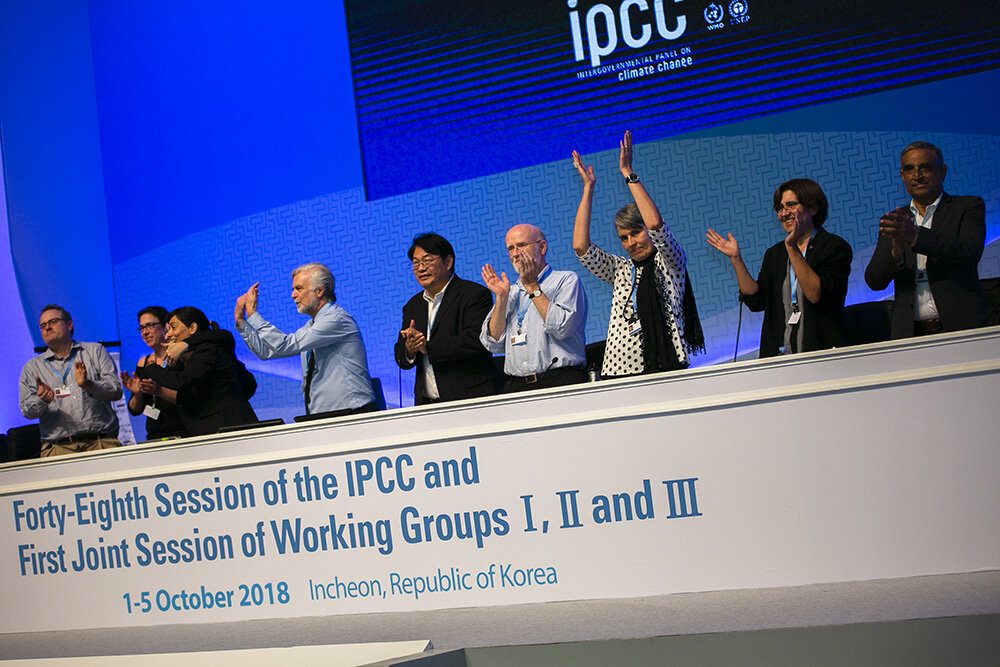
In 1988, the world's leading scientific bodies came together to form the Intergovernmental Panel on Climate Change (IPCC). The IPCC's job isn't to conduct new research, but to review and synthesize the thousands of scientific studies published each year. Its reports represent the global consensus on climate science and provide a crucial foundation for policy makers.
The first major political step came in 1992 at the Earth Summit in Rio de Janeiro. This conference produced the United Nations Framework Convention on Climate Change (UNFCCC), an international treaty that set the stage for all future climate negotiations.
Global Agreements
The UNFCCC established the goal of stabilizing greenhouse gas concentrations, but it didn't set binding emission targets. That was left to later agreements, known as "protocols" or "agreements," negotiated at annual meetings called Conferences of the Parties (COP). Three agreements stand out.
| Agreement | Year | Key Feature |
|---|---|---|
| UNFCCC | 1992 | A foundational treaty that established a framework for international cooperation on climate change. |
| Kyoto Protocol | 1997 | The first agreement with legally binding emission reduction targets, but only for developed nations. |
| Paris Agreement | 2015 | A universal agreement where all countries set their own emission reduction pledges, known as Nationally Determined Contributions (NDCs). |
The Kyoto Protocol was a landmark first step, but its top-down approach, which dictated targets for a small group of countries, had its limits. The Paris Agreement changed the game. It works from the bottom up, with each country determining its own contribution to the global effort. Its central aim is to keep the global temperature rise this century well below 2°C above pre-industrial levels, while pursuing efforts to limit it to 1.5°C.
Guiding Principles
International climate negotiations are guided by a few core principles. The most important one is the idea of "common but differentiated responsibilities and respective capabilities" (CBDR-RC). This is a formal way of saying that while every nation must take part in solving climate change, the wealthier countries that have historically emitted the most greenhouse gases have a greater responsibility to lead the way and help developing nations.
This principle acknowledges that a country's ability to act on climate change depends on its level of economic development. Other key principles include promoting sustainable development, ensuring a just transition for workers in carbon-intensive industries, and basing all actions on the best available science.
Today, the need for effective climate policy is more urgent than ever. As emissions continue to rise and the impacts of climate change, from extreme weather to rising sea levels, become more severe, policies must evolve to meet the challenge. They are the primary tool we have to navigate the transition to a safer, more sustainable world.
What is the primary purpose of climate policy?
What is the main function of the Intergovernmental Panel on Climate Change (IPCC)?