Climate Change Explained
Introduction to Climate Change
Defining Climate
You’ve probably heard the term “climate change” a lot. But what does it actually mean? At its core, climate change refers to long-term shifts in temperatures and weather patterns. These shifts can be natural, but the term is now most often used to describe the changes happening to our planet today.
Climate
noun
The long-term average of weather in a specific area, typically calculated over a period of 30 years or more. It includes patterns of temperature, precipitation, humidity, wind, and seasons.
To really get it, we first need to understand the difference between two words we often use interchangeably: weather and climate.
Weather vs. Climate
Think of it this way: weather is like your mood on any given day, while climate is like your overall personality. Your mood can change from happy to sad in a few hours, but your personality is a much more stable, long-term pattern of behavior.
Similarly, weather is what’s happening in the atmosphere right now or over a short period. Is it sunny, rainy, windy, or cold today? That’s the weather. It can change quickly. A sunny morning can turn into a rainy afternoon.
Climate is what you expect, like a hot summer. Weather is what you get, like a rainy day in July.
Climate, on the other hand, is the average weather in a place over many years. When scientists talk about climate, they're looking at long-term averages of temperature, rainfall, and sunshine, usually over 30 years or more. So, a single unusually hot day is weather. A pattern of hotter-than-average years over a few decades is a change in climate.
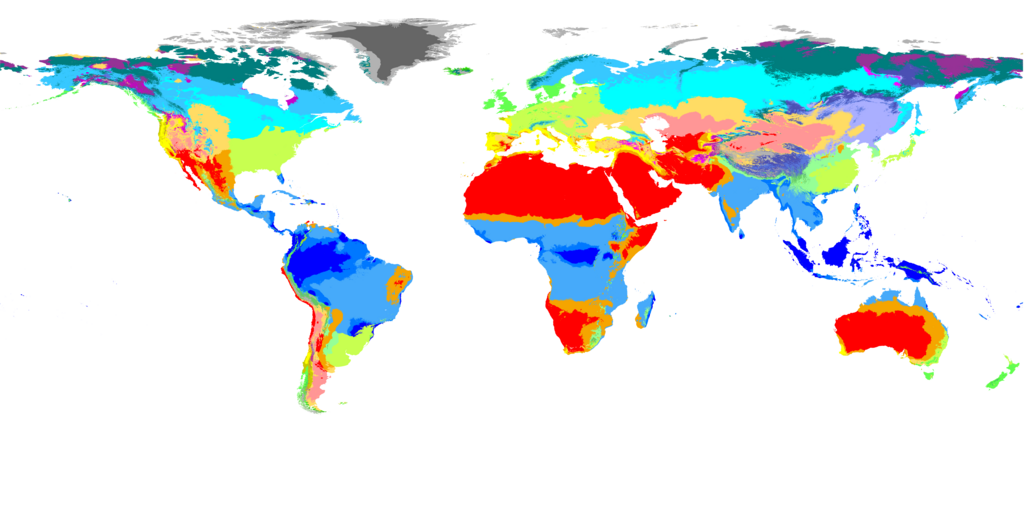
This map shows the world's different climate zones, from tropical rainforests to polar ice caps. Each colored area represents a distinct long-term pattern of weather, defining its climate.
Earth's Shifting Past
Change is nothing new for Earth’s climate. Our planet's history, stretching back billions of years, is filled with dramatic climate shifts. There have been times when the Earth was much warmer than it is today, with no ice at the poles. There have also been multiple ice ages, when massive glaciers covered large parts of North America and Europe.
These past changes were driven by natural causes. For example, slight wobbles in Earth's orbit around the sun, called Milankovitch cycles, have triggered the start and end of ice ages. Massive volcanic eruptions have also played a role, spewing particles into the atmosphere that can temporarily cool the planet.
Understanding these natural cycles provides a crucial baseline. It helps scientists see that the climate can and does change on its own. It also helps them compare past changes with the rapid shifts we are observing now.
Which of the following statements best describes the difference between weather and climate?
A news report states, "For the third consecutive decade, average summer temperatures in Europe have been higher than the 20th-century average." This statement is describing an aspect of:
This historical perspective is key to understanding the conversations around climate today.