Climate Change Explained
Introduction to Climate Change
What Is Climate Change?
Think about the difference between your mood and your personality. Your mood can change from day to day, even hour to hour. That's like the weather. Your personality, however, is your long-term pattern of behavior. That's like the climate.
Climate change refers to significant, long-term shifts in the global weather patterns. It's not about a single hot summer or a particularly snowy winter. It's about changes in the average conditions—like temperature and rainfall—in a region over many years or decades.
Climate Change
noun
A long-term change in the average weather patterns that have come to define Earth's local, regional, and global climates.
These shifts involve more than just warming temperatures. They also include changes in precipitation, wind patterns, and the frequency of extreme weather events. Essentially, the entire system that governs our planet's weather is being altered.
Natural vs. Human-Made Change
The Earth's climate is not static; it has always been in flux. Throughout its long history, our planet has gone through ice ages and warm periods. These natural cycles are driven by factors like variations in the Earth's orbit, volcanic eruptions, and changes in the sun's energy. This is natural climate variability, and it happens over very long timescales, often spanning thousands or millions of years.
However, the climate change we're experiencing now is different. It's happening much, much faster. Scientists refer to this as anthropogenic climate change, meaning it's caused by human activities. The story of this rapid change begins around the Industrial Revolution in the 18th and 19th centuries, when humans began burning large amounts of fossil fuels like coal, oil, and natural gas to power their homes, factories, and vehicles.
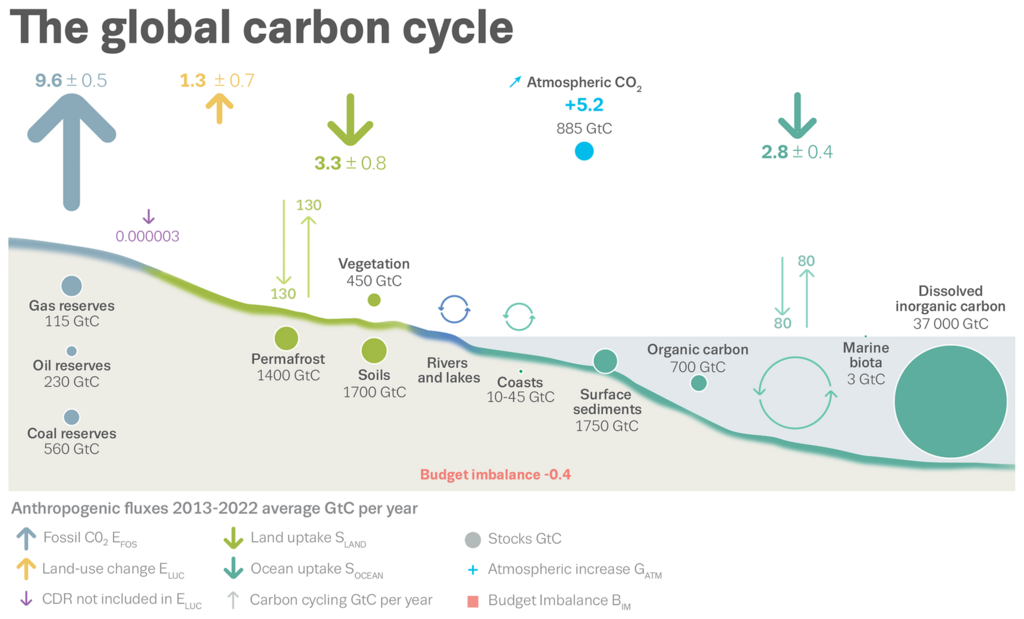
This diagram shows how carbon moves through the Earth's systems. While there's a natural cycle of carbon moving between the land, ocean, and atmosphere, human activities add a huge extra amount of carbon into the air. This addition disrupts the natural balance and is the primary driver of the rapid climate change we see today.
The key difference is speed. Natural climate shifts happen over millennia. Anthropogenic climate change is happening over decades.
Why It Matters
For thousands of years, humanity has thrived in a relatively stable climate. This stability allowed us to develop agriculture, build cities, and create complex societies. A changing climate threatens this stability.
Understanding climate change is crucial for both environmental sustainability and our own well-being. It affects the food we eat, the water we drink, and the places we live. By studying these changes, we can better prepare for the future and work towards solutions that protect our planet and our communities.
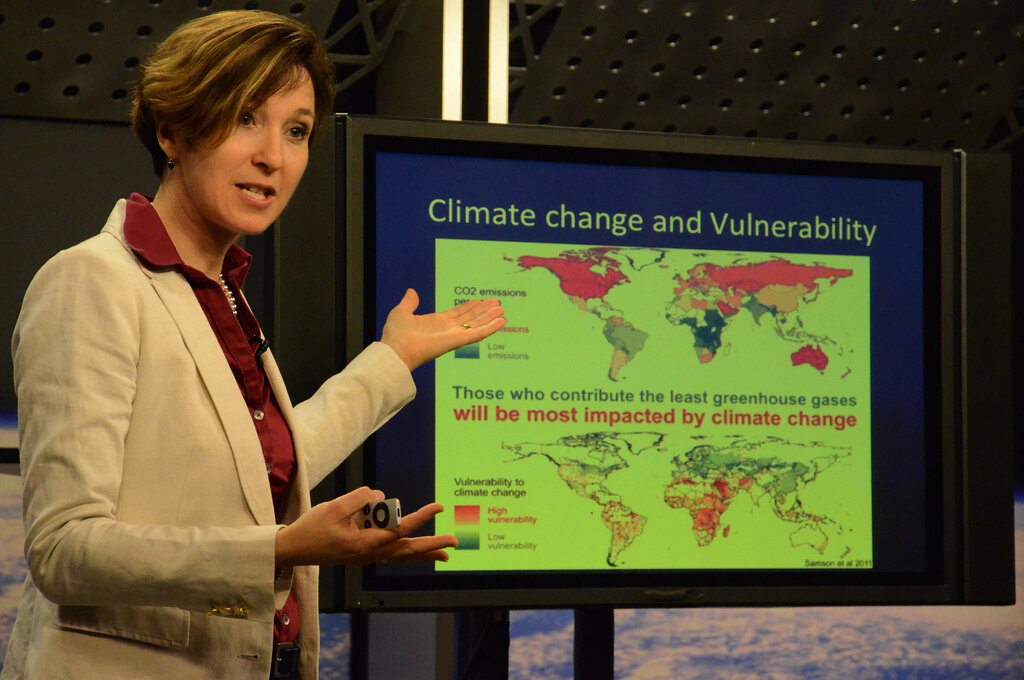
As the image above highlights, the impacts of climate change are not felt equally. Often, the populations that have contributed the least to the problem are the most vulnerable to its effects. This makes understanding climate change not just a scientific issue, but a social and ethical one as well.
The text uses an analogy to explain the difference between climate and weather. In this analogy, what does 'mood' represent?
Which of the following best describes anthropogenic climate change?
In the following sections, we'll dive deeper into the specific causes and effects of our changing climate.