Climate and Energy Fundamentals for Advanced Discussions
Introduction to Climate Science
Earth's Energy Budget
Think of Earth's climate like a giant balancing act with energy. The planet is constantly receiving energy from the sun. To keep its temperature stable, it has to send an equal amount of energy back out into space. This flow of energy in and out is called Earth's energy budget.
Most of the sun's energy arrives as visible light. Some of this light bounces off clouds and surfaces like ice and snow, reflecting straight back into space. The rest is absorbed by the land, water, and atmosphere, warming the planet. In response, Earth radiates its own energy back out, but not as visible light. Instead, it emits thermal energy, also known as infrared radiation. It’s the same kind of heat you feel coming off a hot sidewalk after the sun goes down.
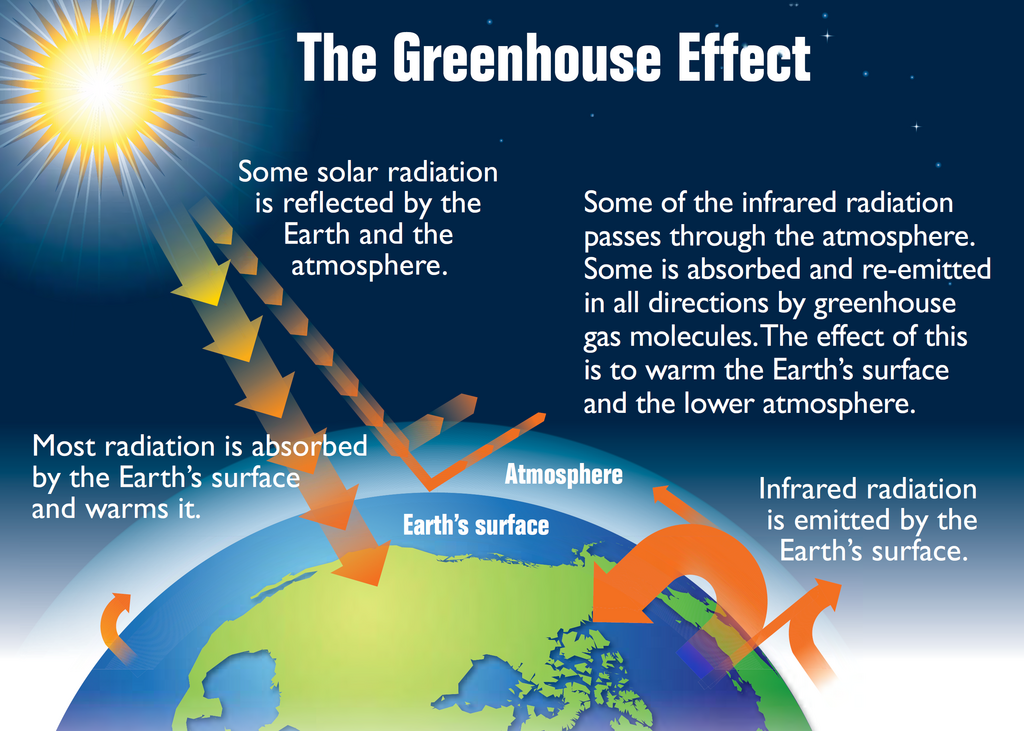
For millennia, this budget was more or less balanced. The amount of energy coming in was roughly equal to the amount going out, which kept the global temperature relatively stable. But what happens if something prevents that outgoing energy from escaping?
The Greenhouse Effect
That's where the greenhouse effect comes in. It's a natural process that warms the Earth's surface. When the planet's outgoing infrared radiation travels up through the atmosphere, some of it is captured by certain gases. These gases then re-radiate the heat in all directions, including back down toward the surface. This acts like a blanket, trapping heat and keeping our planet much warmer than it would be otherwise. Without this natural greenhouse effect, Earth’s average temperature would be a frigid -18°C (0°F), and life as we know it couldn't exist.
The problem isn't the greenhouse effect itself, but the enhancement of it. By adding more heat-trapping gases to the atmosphere, we're making the blanket thicker, causing the planet to warm.
Meet the Greenhouse Gases
The gases responsible for this warming effect are called greenhouse gases. While many gases make up our atmosphere, only a few have this heat-trapping ability. The most significant ones are:
| Gas | Formula | Key Characteristic |
|---|---|---|
| Water Vapor | The most abundant greenhouse gas. It acts as a feedback, increasing as the atmosphere warms. | |
| Carbon Dioxide | The primary driver of recent climate change due to its long-lasting presence in the atmosphere. | |
| Methane | Less abundant than , but much more potent at trapping heat over shorter time scales. |
These gases are a tiny fraction of our atmosphere, which is mostly nitrogen and oxygen. Yet their ability to absorb and re-emit infrared radiation gives them an outsized impact on Earth's climate. Understanding this fundamental mechanism is the first step to understanding modern climate change.
What is the fundamental concept behind Earth's energy budget?
The energy Earth receives from the sun is primarily in the form of visible light. How does the energy Earth radiates back into space primarily differ?