ClickHouse Open Source Setup and Performance Tuning
Introduction to ClickHouse
What is ClickHouse?
ClickHouse is an open-source database designed for speed. Specifically, it's built for online analytical processing, or OLAP. Think of it as a specialist for analyzing massive amounts of data and giving you answers in real-time.
Most databases you might be familiar with, like MySQL or PostgreSQL, are row-oriented. They store all the information for a single record together in a row. If you have a table of users, one row contains a user's ID, name, email, and sign-up date all grouped together. This is great for transactional tasks, like fetching all the information for one specific user.
ClickHouse works differently. It's a column-oriented, or columnar, database. Instead of storing data by rows, it stores all the values from a single column together. All the user IDs are stored together, all the names are stored together, and so on. This simple change has massive implications for analytics.
Core Features
The columnar approach is the secret to ClickHouse's power. When you run an analytical query, you rarely need every piece of information about every record. You might just want to know the average number of daily sign-ups. A traditional row-based database would have to read every full user record from the disk just to access the sign-up date field.
ClickHouse only reads the columns it needs. For our query, it would only scan the sign-up date column, ignoring all the user IDs, names, and emails. This dramatically reduces the amount of data it has to process, making queries incredibly fast.
This structure also leads to another major benefit: superior data compression. When all the data in a block is of the same type (like integers or strings), it's much easier to compress than a mix of different data types. ClickHouse can use specialized algorithms for each data type, shrinking the data footprint on disk and speeding up reads even more.
Other key advantages include:
- Scalability: ClickHouse was built to be a distributed system from the ground up. It can easily scale across hundreds of servers to handle petabytes of data.
- Vectorized Query Execution: It processes data in chunks, or vectors, rather than single values. This is far more efficient and takes better advantage of modern CPU capabilities.
- SQL Support: While it has its own dialect, ClickHouse uses a familiar SQL interface. This makes it relatively easy for analysts and developers to get started.
How It Compares
It's important to remember that ClickHouse is a specialized tool. It's not designed to replace traditional databases that handle transactions (known as OLTP, for online transaction processing). For example, you wouldn't use ClickHouse to process individual customer orders on an e-commerce site. For that, you need a row-based database that excels at reading and writing single rows quickly.
Where ClickHouse shines is in analyzing the data those transactions create. Here’s a quick comparison:
| Feature | Traditional Row Database (OLTP) | ClickHouse (OLAP) |
|---|---|---|
| Primary Goal | Record transactions quickly | Analyze large datasets quickly |
| Data Structure | Row-oriented | Column-oriented |
| Best For | High-frequency reads & writes of single records | Aggregations, reports, and complex analytical queries |
| Example | Processing a sale | Analyzing sales trends over the last 5 years |
Common Use Cases
Because of its incredible speed with large-scale aggregations, ClickHouse is popular in fields that generate massive amounts of data and need real-time insights.
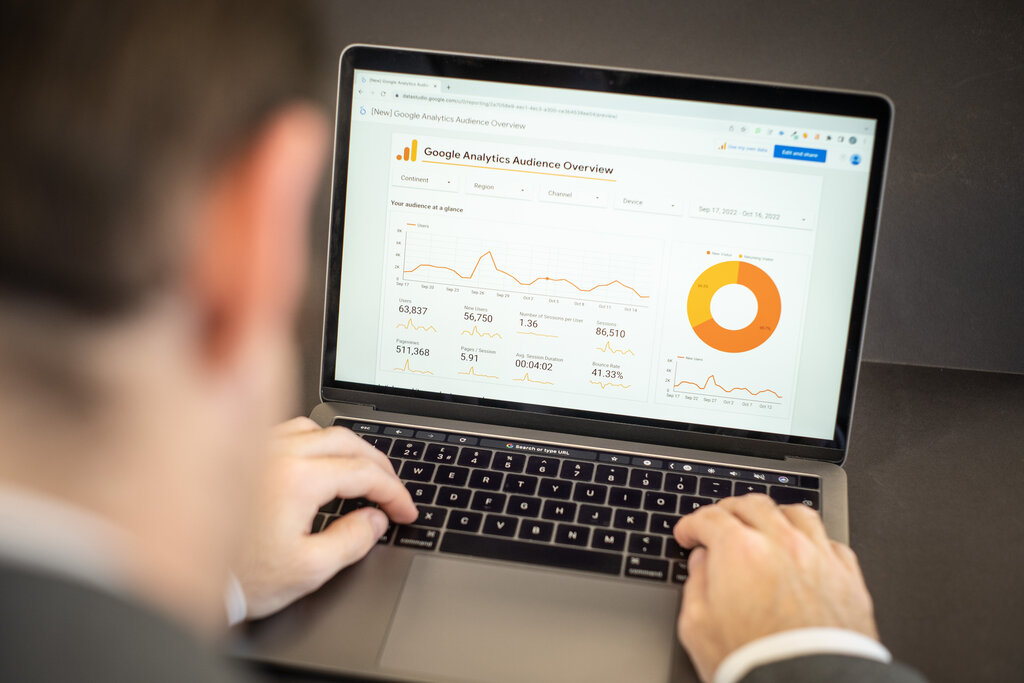
Some common applications include:
- Web and App Analytics: Powering dashboards that analyze user behavior, traffic sources, and conversion funnels with billions of events.
- Business Intelligence (BI): Allowing analysts to run complex, ad-hoc queries on huge datasets without having to wait hours for a result.
- Log and Telemetry Analysis: Ingesting and analyzing machine-generated data from servers, applications, and IoT devices in real-time for monitoring and troubleshooting.
- Financial and Time-Series Data: Analyzing stock market data, sensor readings, or any other data where time is a key component.
In short, if your goal is to ask complex questions of very large datasets and get answers now, not later, ClickHouse is a tool worth considering.
Now that you understand the what and why of ClickHouse, let's test your knowledge.
What type of workload is ClickHouse specifically designed to handle?
What is the primary advantage of ClickHouse's columnar storage model for analytical queries?
Understanding these core concepts is the first step toward using this powerful database effectively.