Claude API Essentials
Introduction to Large Language Models
What Are Large Language Models?
Large Language Models, or LLMs, are a type of artificial intelligence designed to understand and generate human-like text. Think of them as incredibly sophisticated prediction engines. They've been trained on a massive amount of text data from the internet, books, and other sources, allowing them to learn the patterns, grammar, context, and nuances of language.
At their core, LLMs work by predicting the next word in a sequence. Given the text "The cat sat on the...", an LLM calculates the most probable word to come next, which in this case would likely be "mat." By repeatedly doing this, they can generate coherent sentences, paragraphs, and even entire articles. This core capability allows them to perform a wide range of tasks, from answering questions and summarizing long documents to translating languages and writing code.
A Brief History
The idea of teaching machines language isn't new. Early models, known as statistical models, simply counted word frequencies to guess the next word. They were useful but limited, unable to grasp the deeper context of a sentence.
Later, neural networks, particularly Recurrent Neural Networks (RNNs), brought improvement. RNNs could remember previous words in a sentence, giving them a better sense of short-term context. However, they struggled to maintain context over long paragraphs, a bit like forgetting the beginning of a story by the time you reach the end.
The major breakthrough came in 2017 with the invention of the Transformer architecture.
The Transformer Architecture
The key innovation of the Transformer is the self-attention mechanism. This allows the model to weigh the importance of different words in an input text when processing and generating language. Instead of just looking at the preceding words, it can look at the entire sentence, or even the whole document, to understand the context.
For example, in the sentence "The robot picked up the heavy metal block because it was strong," the attention mechanism helps the model understand that "it" refers to the "robot," not the "block." In contrast, for "The robot picked up the heavy metal block because it was in the way," attention helps connect "it" to the "block."
This ability to dynamically assess relationships between words, no matter how far apart they are, is what gives modern LLMs their power and nuance.
Transformer-based models typically have two main parts: an encoder, which reads and understands the input text, and a decoder, which generates the output text. The attention mechanism is used in both parts to ensure the model maintains a rich contextual understanding throughout the process.
Training and Ethics
Training an LLM is a two-stage process. First is pre-training, where the model learns general language patterns from a vast, diverse dataset. This is computationally intensive, requiring enormous processing power and data.
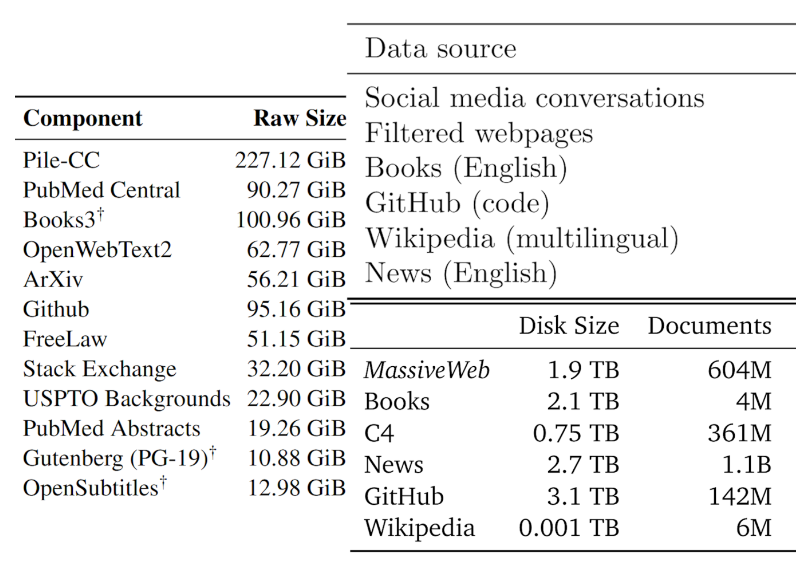
The second stage is fine-tuning. Here, the pre-trained model is further trained on a smaller, more specific dataset to optimize it for a particular task, like customer service conversations or medical text summarization. This makes the model more accurate and useful for its intended application.
However, the data these models learn from reflects the real world, including its biases. If the training data contains stereotypes or misinformation, the LLM can learn and reproduce these harmful patterns. This is a major ethical concern. Researchers and developers are actively working on techniques to identify and mitigate these biases, but it remains a significant challenge.
Other ethical considerations include the potential for misuse in creating propaganda or fake news, the environmental impact of training these massive models, and questions about data privacy and consent.
Now that you understand the basics of what LLMs are, how they evolved, and the principles behind how they work, let's test your knowledge.
What is the fundamental task that Large Language Models (LLMs) perform at their core?
What key innovation in the Transformer architecture allows modern LLMs to understand context over long passages of text?
Understanding these foundational concepts is the first step toward effectively working with powerful language models.