Classical Sociological Theory Synthesis
Industrial Origins
The Great Rupture
Before the late 18th century, the rhythms of life had been broadly consistent for generations. Society was agricultural, local, and bound by tradition. The Industrial Revolution was not just an economic shift; it was a societal earthquake. It tore apart the fabric of feudal life, replacing tight-knit rural communities with sprawling, anonymous cities. This massive upheaval, what historian Karl Polanyi called the Great Transformation, created a new and terrifying landscape. Old certainties anchored in religion and monarchy crumbled, leaving a vacuum. For the first time, society itself—'The Social'—became a visible, problematic entity that demanded explanation.
Thinkers of the time were grappling with unprecedented questions. What holds society together when traditional bonds dissolve? How does this new industrial world work, and where is it heading? The sheer scale of change, from mass urbanisation to the birth of the factory system, created social problems that existing frameworks like philosophy and theology could not address. Society was no longer a given; it was a puzzle.
A Science of Society
In this chaotic environment, the French philosopher Auguste Comte proposed a radical new idea: a science for studying society. He called it 'sociology' and believed it could uncover the laws governing social life, just as physics had uncovered the laws of nature. His ambition was to restore order and stability. Comte's central theory was the Law of Three Stages, which argued that societies evolve from a theological stage (explaining the world through gods and spirits), through a metaphysical stage (using abstract philosophical principles), to the final, 'positive' stage. In this positivist stage a society would rely on scientific observation and evidence to understand and manage itself. This was a direct response to the turbulence of the post-revolutionary era, an attempt to build a new, rational foundation for social order.
Comte’s 'positivism' was an attempt to make sense of the chaos by applying the rigor of natural sciences to human society.
Conflict and Interdependence
While Comte sought stability, other thinkers saw conflict and fundamental change at the heart of the new industrial world. Karl Marx viewed the collapse of feudalism not just as a cultural shift but as a necessary precondition for capitalism. The new system created two main classes: the bourgeoisie, who owned the factories and means of production, and the proletariat, the workers who sold their labour. For Marx, the engine of history was the struggle between these classes.
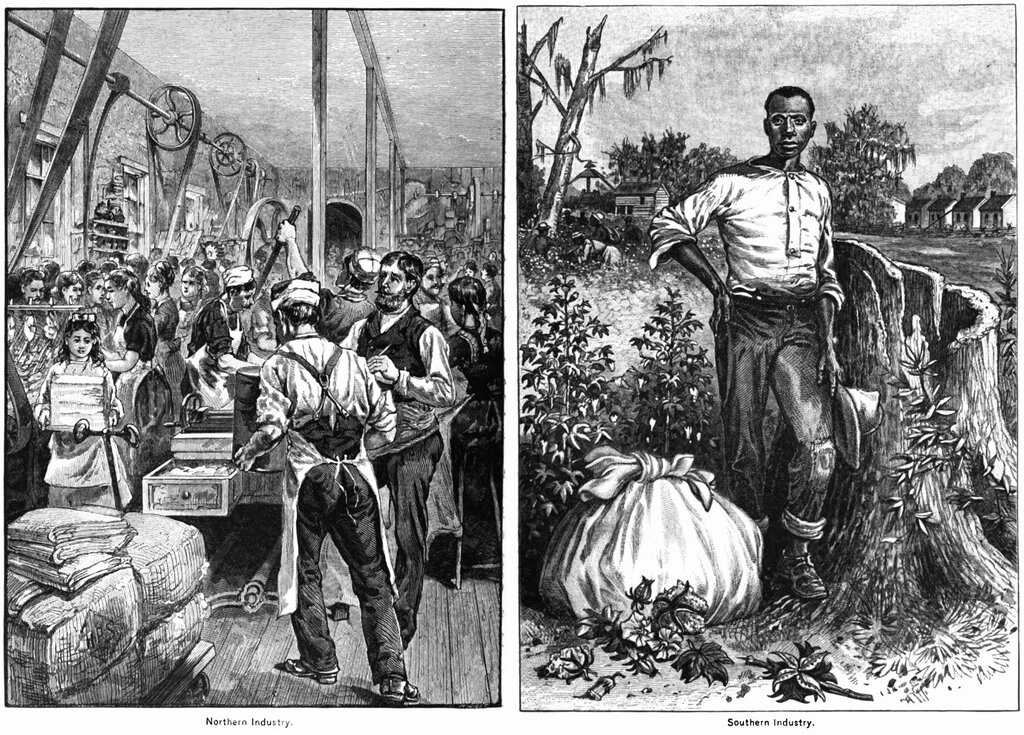
Émile Durkheim offered a different perspective. He was also fascinated by the new industrial order but focused on social cohesion. He argued that pre-industrial societies were held together by 'mechanical solidarity'—a bond based on shared beliefs, traditions, and a simple division of labour. Everyone was a generalist, and the collective consciousness was strong. The Industrial Revolution shattered this, replacing it with 'organic solidarity'. In this new model, society functions like a complex organism. People have highly specialised jobs and are interdependent, connected not by sameness but by their mutual need for each other’s skills. A baker needs a shoemaker, who needs a factory worker. This complex web of economic ties became the new social glue.
These foundational thinkers—Comte, Marx, and Durkheim—were all responding to the same historical moment. They witnessed the birth of a new world and dedicated themselves to understanding its logic, its conflicts, and its future. Their theories, though different, all spring from the fertile, chaotic ground of the Industrial Revolution.
According to the provided text, what major historical event created the 'societal earthquake' that led to the development of sociology?
Auguste Comte proposed that societies evolve towards a final 'positive' stage. What characterises this stage?