Classical Sociological Theory Masterclass
Industrial Modernity Transitions
A Science of Society
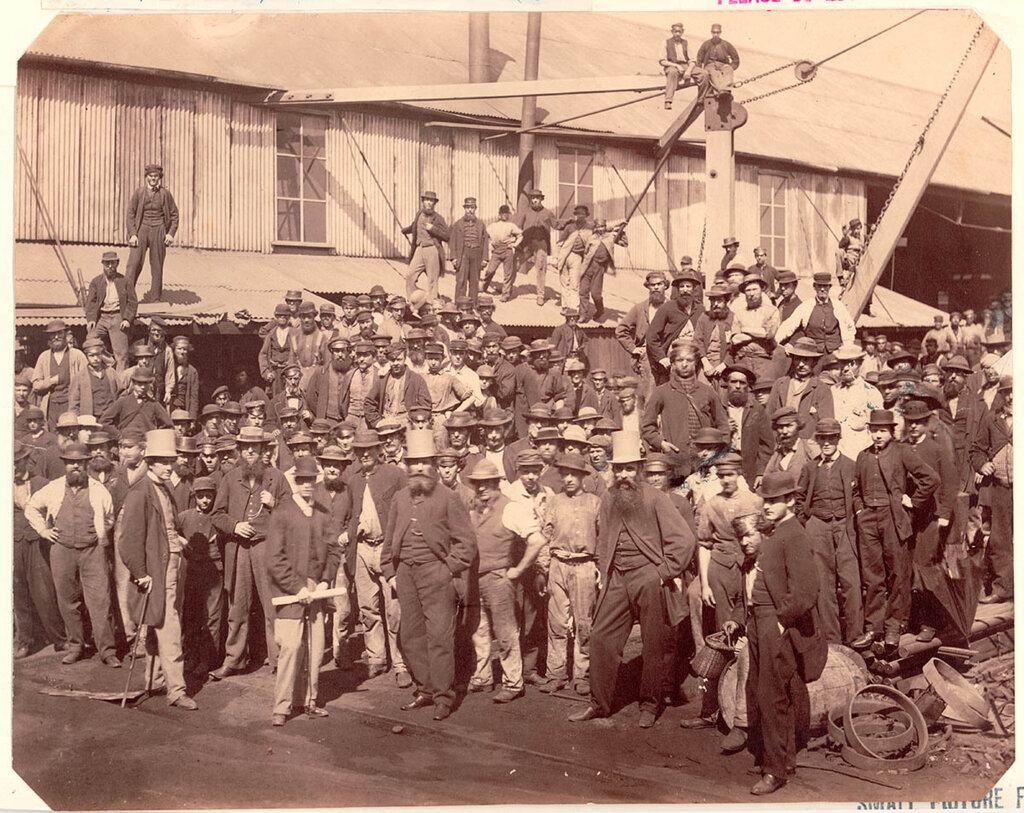
The shift from farm to factory wasn't just a change in scenery. It was a complete rewiring of society. As the Industrial Revolution gained steam, cities swelled, new social classes emerged, and old certainties about religion, community, and power began to crumble. This widespread upheaval left many people feeling adrift, and old philosophical traditions offered few satisfying answers for the chaos of modern life.
In response, a new field of inquiry was born: sociology. Early sociologists weren't content with just describing these changes; they wanted to build a genuine science of society. Their goal was to uncover the underlying laws that governed social life, much like physicists had uncovered the laws of nature. By understanding these principles, they hoped to explain the past, understand the present, and perhaps even guide the future.
The Engine of History
Karl Marx offered a powerful and radical explanation for this social transformation. He argued that the engine of history isn't driven by great ideas or political leaders, but by the material conditions of life. This theory is known as s.
Imagine society as a building. The economic 'infrastructure'—the tools, factories, resources, and the relationships between owners and workers—is the foundation. The 'superstructure'—law, government, art, religion—is everything built on top of that foundation. According to Marx, you can't change the building without changing the foundation first. The transition from feudalism to capitalism was, for Marx, a fundamental shift in this economic base.
Under feudalism, the primary productive force was land, and the key social relation was between lord and serf. Industrial capitalism replaced this with factories and the relationship between the capitalist owner (bourgeoisie) and the wage-labourer (proletariat).
This wasn't a peaceful evolution. Marx argued that as technology and productive forces develop, they come into conflict with the existing social relations. The rise of new manufacturing techniques and markets made the old feudal system of obligations and land tenure obsolete. It became a 'fetter' on progress, leading to a period of social revolution that gave rise to a new capitalist society.
Order from Chaos
While Marx focused on conflict as the driver of change, French philosopher Auguste Comte sought to find a source of order. Living in the wake of the French Revolution, Comte was deeply troubled by the social anarchy he saw around him. He believed the only way to heal society was to establish a new intellectual consensus based on science.
He called his new science 'sociology' and its method s. The core idea is that we should only concern ourselves with observable facts. Just as astronomers observe planets to deduce the laws of gravity, sociologists should observe social phenomena to discover the laws of society. Speculation about unseeable forces or divine will was to be discarded in favour of rigorous, empirical observation.
Comte divided his new science into two parts: social statics and social dynamics. Social statics is the study of social order. It examines the institutions that hold society together, like family, religion, and language, asking how they create stability. Social dynamics is the study of social progress. It looks at how societies change and evolve over time.
Comte's most famous theory belongs to social dynamics: the s. He proposed that every society—and every field of knowledge—inevitably progresses through three phases.
| Stage | Dominant Belief System | Social Basis |
|---|---|---|
| Theological | Events are explained by the will of gods or spirits. | Priests and military figures hold power. |
| Metaphysical | Events are explained by abstract, impersonal forces (e.g., 'Nature'). | Philosophers and lawyers hold power. |
| Positive | Events are explained by scientific laws based on observation and experiment. | Industrial administrators and scientists hold power. |
For Comte, the chaos of his time was a symptom of society being stuck between the metaphysical and the positive stages. The old ways of thinking had been discredited, but the new scientific worldview had not yet fully taken hold. Sociology's mission was to complete this transition, ushering in an era of order, progress, and stability based on scientific principles.
According to the text, what was the primary reason for the birth of sociology as a new field of inquiry?
Karl Marx's theory that the economic 'infrastructure' (tools, factories, class relations) forms the foundation for the 'superstructure' (law, government, religion) is known as ________.