Classical Architecture Through the Centuries
Ancient Greek Architecture
The Language of Columns
Ancient Greek architects didn't just build structures; they followed a strict set of design rules called orders. Think of an order as a complete architectural style guide, defining the proportions, profiles, and details of a building. Everything from the column base to the roofline was dictated by the chosen order. The Greeks perfected three distinct styles.
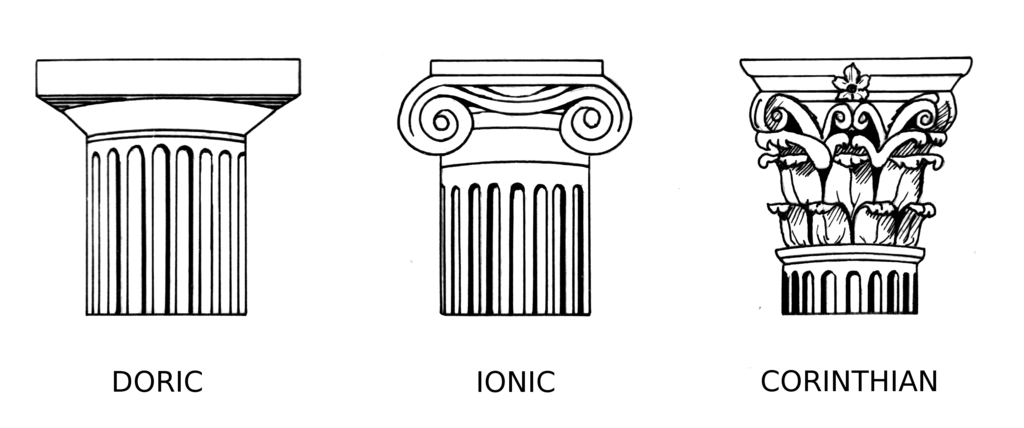
The oldest and simplest is the Doric order. It’s sturdy and powerful, with a plain, saucer-shaped capital at the top of the column. Doric columns have no base; they sit directly on the temple floor. Above the columns, the frieze is decorated with alternating panels called triglyphs and metopes.
Next came the Ionic order. It's more slender and elegant than the Doric. Its most recognizable feature is the pair of volutes, or scrolls, on its capital. Ionic columns also stand on a decorative base, separating them from the floor.
Finally, there's the Corinthian order, the most ornate of the three. Its capital is elaborately decorated with carved acanthus leaves, giving it a lush, organic feel. While developed by the Greeks, it was used more sparingly by them and became much more popular later with the Romans.
The Greeks developed the three classical orders of architecture (Doric, Ionic, and Corinthian), characterized by different styles of columns and entablatures
How They Built It
The primary material for grand temples was stone, especially marble. Builders prized marble for its beauty and durability. The blocks were quarried and then transported to the building site, often over long distances. What's remarkable is the precision of their work. Greek stonemasons cut blocks so perfectly that they fit together without any mortar. To secure them, they used iron clamps coated in molten lead to prevent rusting.
This method of dry-stone construction, relying on perfect fit and metal clamps, made the structures both strong and flexible enough to withstand earthquakes.
Lifting these massive blocks into place was a feat of engineering. The Greeks used a combination of ramps, levers, and cranes powered by human and animal labor. Grooves and protrusions were sometimes carved into the blocks to help with lifting, and then smoothed out once the block was in its final position.
But the true genius of Greek architecture lies in its optical refinements. Architects knew that perfectly straight, rigid lines could appear distorted to the human eye. To compensate, they introduced subtle curves and inclines.
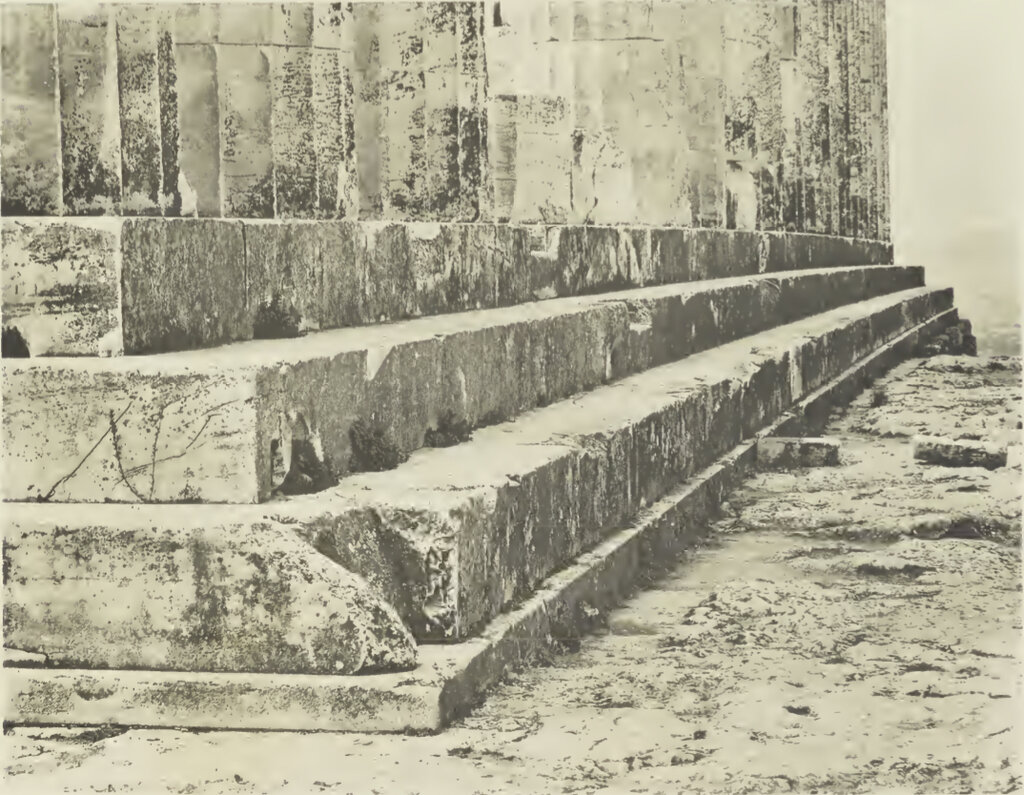
Greeks pioneered the use of optical illusions in architecture (slight upward curvature of the Parthenon's base) to create a sense of perfection influencing modern architectural techniques
For example, the platform of a temple, the stylobate, curves slightly upward in the middle. Columns swell gently in the middle (a technique called entasis) and lean slightly inward. These adjustments are almost imperceptible, but together they make the building feel more alive and visually perfect.
Temples and Theaters
Greek public buildings were designed for specific functions that reflected the culture's values. Temples were not places for public worship like a modern church or mosque. Instead, a temple was considered the house of a specific god or goddess. Inside, a magnificent cult statue of the deity would stand, but most religious ceremonies and sacrifices took place on an altar outside.
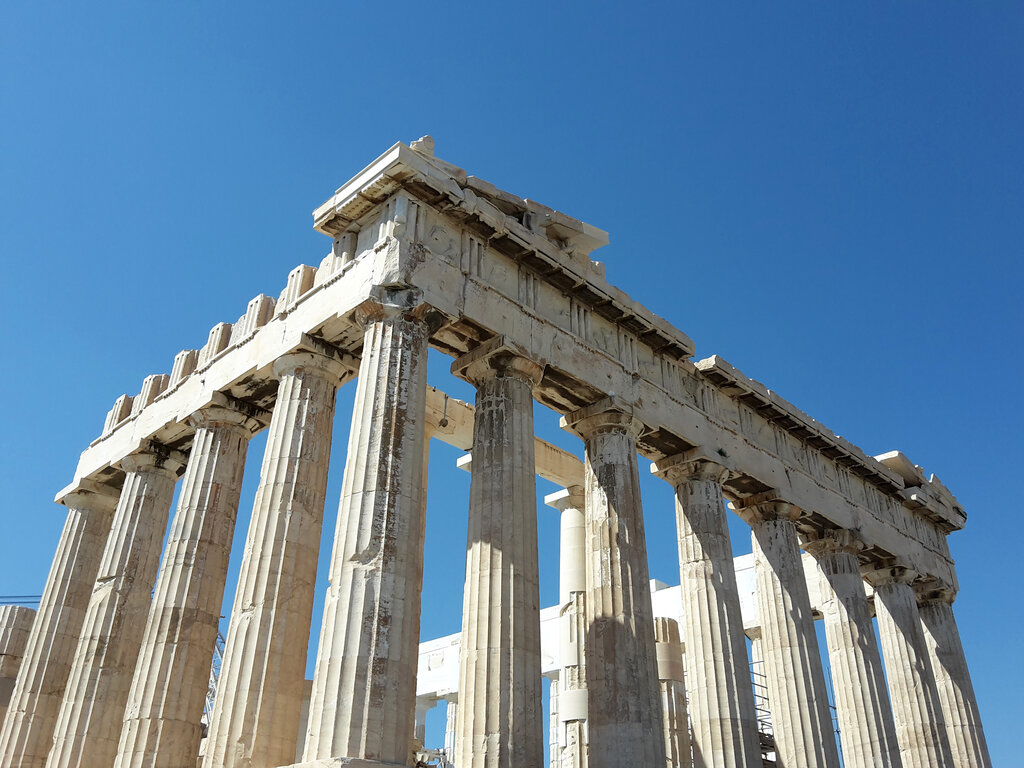
The Parthenon in Athens is the most famous example. It's a Doric temple dedicated to Athena Parthenos (Athena the Virgin). While its exterior is a masterful example of the Doric order, it cleverly incorporates Ionic elements, such as a continuous frieze that ran around the inner chamber. This blending of styles showcased the Athenians' architectural confidence and wealth.
Another important structure was the theater. Built into hillsides, Greek theaters had semi-circular seating (the theatron) that provided excellent acoustics and views of the performance area (orchestra). They were central to civic and religious life, hosting dramatic festivals that were as much a community ritual as they were entertainment.
This design was so effective that it became the standard for theaters for centuries. The acoustics were so good that an actor speaking normally in the orchestra could be heard clearly by everyone in the top row.
Which Greek architectural order is distinguished by a capital elaborately decorated with carved acanthus leaves?
What was the primary method used by Greek stonemasons to secure large marble blocks together in their temples?
The principles established by ancient Greek architects, from the three orders to the use of optical refinements, created a timeless language of design that has been studied and imitated ever since.