Class 7 Science Exam Mastery
Nutrition Mechanisms
How Plants Make Food
Plants are the planet's ultimate chefs, creating their own food from sunlight, water, and air. This process, called photosynthesis, is the foundation of most life on Earth. It's a chemical reaction that converts light energy into chemical energy stored in glucose, a type of sugar.
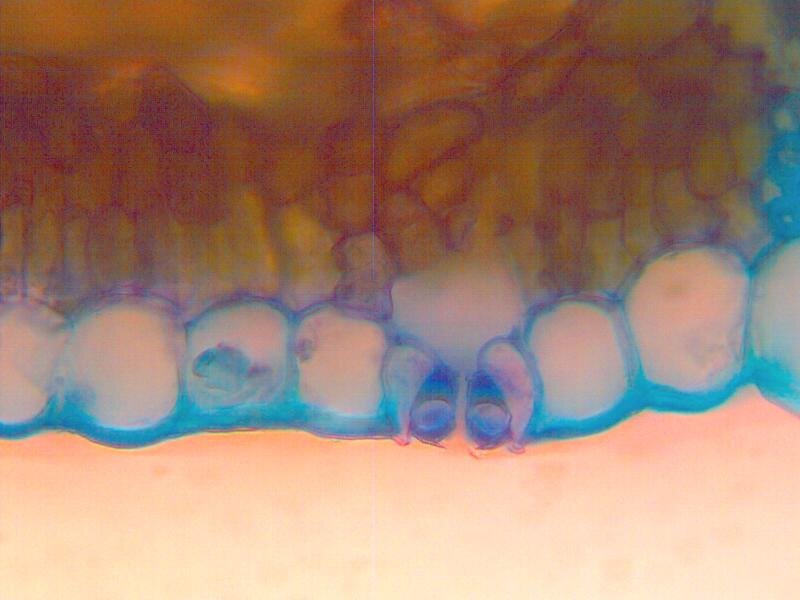
For this recipe to work, a plant needs to get carbon dioxide from the atmosphere. It does this through tiny pores on its leaves called stomata, which are like microscopic mouths. Each stoma is flanked by two specialised cells that control its opening and closing.
Guard Cells
noun
A pair of curved cells that surround a stoma, becoming larger or smaller according to the pressure within the cells.
When a plant has plenty of water, these guard cells swell up like balloons, opening the stoma to let carbon dioxide in. But if the plant is losing too much water, the guard cells become limp and collapse, closing the pore to conserve moisture. This regulation is a constant balancing act between getting CO₂ for food and preventing dehydration.
But what if a plant lives in soil that lacks essential nutrients, like nitrogen? Some have evolved a dramatic solution: they eat insects. Plants like the Venus flytrap or pitcher plant are still autotrophs—they perform photosynthesis for energy. They trap insects to supplement their diet with minerals that are missing from their environment.
Beyond the Usual Meal
Not all organisms eat in the way we typically imagine. Some have unique strategies for getting nutrition. Fungi, like mushrooms, practise saprotrophic nutrition (from the Greek sapros for 'rotten'). They don't have mouths; instead, they grow on dead and decaying organic matter.
Fungi act as nature's recyclers. They release powerful digestive enzymes into their surroundings, breaking down complex materials like wood or dead leaves into simpler molecules. They then absorb these pre-digested nutrients directly through their cell walls.
Other organisms form partnerships. A lichen, which you might see growing on a tree trunk or a rock, isn't a single organism. It's a symbiotic relationship between a fungus and an alga (or a cyanobacterium). The alga performs photosynthesis, providing food for both partners. In return, the fungus provides a protected home, absorbing water and minerals from the environment. They are a classic example of two different life forms co-operating to survive.
The Human Digestive Journey
In humans, getting nutrients is a multi-step process. We take food in (ingestion), break it down (digestion), take the nutrients into our bloodstream (absorption), use those nutrients in our cells (assimilation), and get rid of the waste (egestion). Let's focus on the chemical breakdown.
Digestion starts in the mouth, but the real chemical heavy lifting happens in the stomach and small intestine. The stomach produces hydrochloric acid, which kills bacteria and creates the perfect environment for an enzyme called pepsin to start breaking down proteins into smaller pieces.
Once this acidic mixture moves into the small intestine, two other organs get involved. The liver produces bile, which is stored in the gall bladder. Bile acts like a detergent, breaking down large globs of fat into smaller droplets. This process is called emulsification, and it gives digestive enzymes a larger surface area to work on. At the same time, the pancreas releases a cocktail of juices containing enzymes like amylase (for carbohydrates), trypsin (for proteins), and lipase (for fats).
| Gland/Organ | Secretion | Target Nutrient | Function |
|---|---|---|---|
| Stomach | Pepsin, HCl | Proteins | Breaks proteins into smaller polypeptides. |
| Liver | Bile | Fats | Emulsifies fats into smaller droplets. |
| Pancreas | Amylase, Trypsin, Lipase | Carbs, Proteins, Fats | Completes the breakdown into simple sugars, amino acids, and fatty acids. |
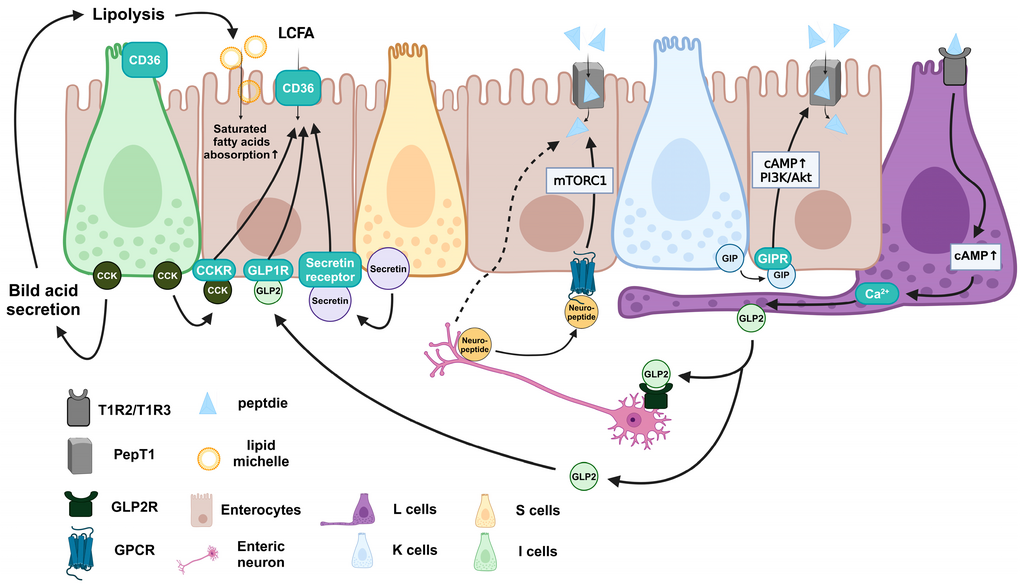
After digestion, absorption begins. The inner wall of the small intestine is covered in millions of tiny, finger-like projections called villi. These villi dramatically increase the surface area available for absorption, making it incredibly efficient. Each villus has a rich network of blood capillaries and a vessel called a lacteal. Simple sugars and amino acids pass into the blood, while fatty acids enter the lacteal.
Some animals have digestive systems adapted for very specific diets. Ruminants, like cows and sheep, eat tough, fibrous plants that are hard to digest. They have a stomach with four compartments. When a cow first eats, it swallows the food into the rumen, the largest compartment, where microbes begin to break down the cellulose. Later, the cow regurgitates this partially digested food, called cud, chews it again to break it down further, and re-swallows it for final digestion. This process allows them to extract maximum nutrition from grass.
Let's review what we've covered about these fascinating nutritional strategies.
Ready to test your knowledge?
What is the primary reason carnivorous plants, like the Venus flytrap, have evolved to trap and digest insects?
In a lichen, what is the main role of the algal partner?
From the microscopic pores on a leaf to the complex four-chambered stomach of a cow, the methods organisms use to get nutrition are incredibly diverse and perfectly adapted to their environment.