Class 12 Indian History Masterclass
Harappan Urbanism
Cities by Design
Harappan cities were not accidental sprawls. They were masterpieces of urban planning, built on grids with streets intersecting at right angles. This orderly layout is found in major sites like Mohenjo-daro and Harappa, suggesting a strong central authority capable of enforcing sophisticated building codes across a vast territory.
Planned Cities on a GridAt a time when most ancient cities grew organically and chaotically, Indus Valley cities like Mohenjo-daro, Harappa, Dholavira, and Lothal stood out for their carefully laid-out street grids, uniform building codes, and centralized authority.
This uniformity extended to the very building blocks of the civilization: their bricks. Whether in modern-day Pakistan or India, Harappan bricks were consistently produced in a 4:2:1 ratio of length, width, and height. This standardization simplified construction and the transport of materials across different settlements. Every city was built from the same blueprint.
Most Harappan cities were divided into two main parts: a raised western mound known as the Citadel and a larger, lower eastern section called the Lower Town. This physical separation wasn't just for show; it reflected a clear social hierarchy.
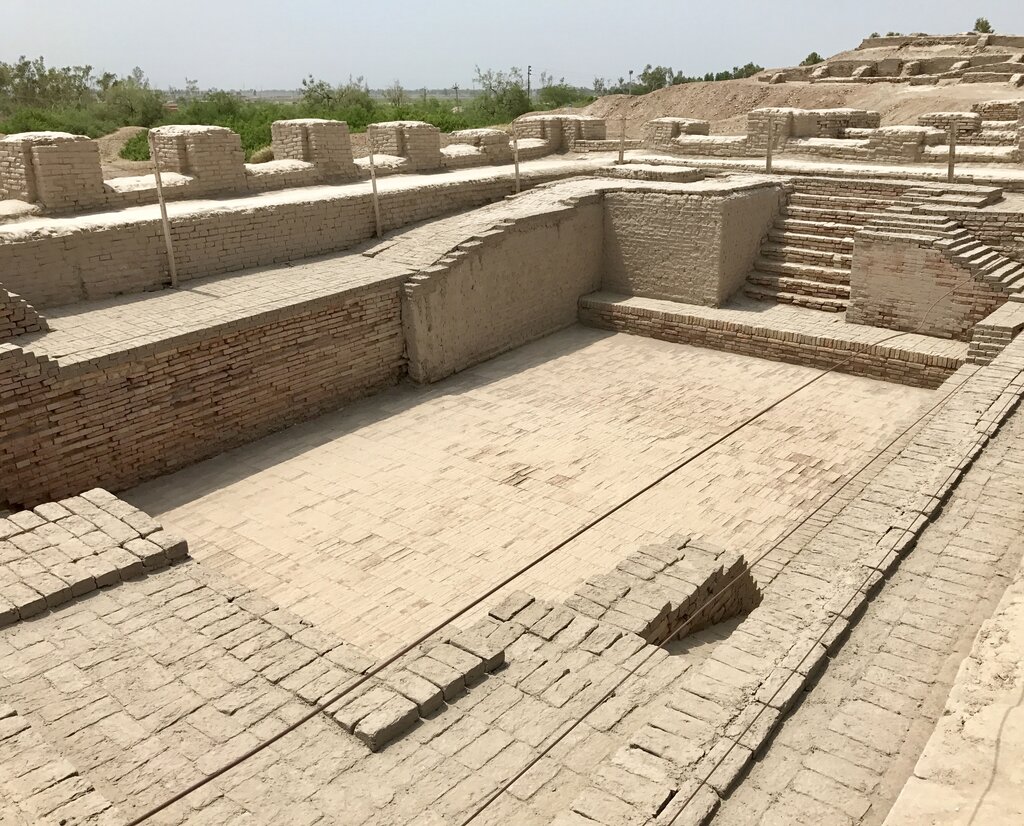
The Citadel was a fortified area containing major public structures like granaries for storing food surpluses and the famous at Mohenjo-daro. These buildings suggest it was the seat of a ruling class, whether priests or administrators. The Lower Town was the residential heart of the city, where merchants, artisans, and laborers lived and worked. Even here, order prevailed. Amazingly sophisticated drainage systems, with covered channels running from individual houses to main street drains, kept the city clean—a level of civic planning unrivaled in the ancient world.
Trade and Standardization
The Harappan economy was as organized as its cities. Archaeologists have found standardized weights and measures across the entire civilization. The most common weights followed a binary system for lower denominations (1, 2, 4, 8) and a decimal system for higher ones (16, 32, 64). This unified system was crucial for regulating trade, collecting taxes, and ensuring fairness in transactions from the mountains of the north to the coasts of the south.
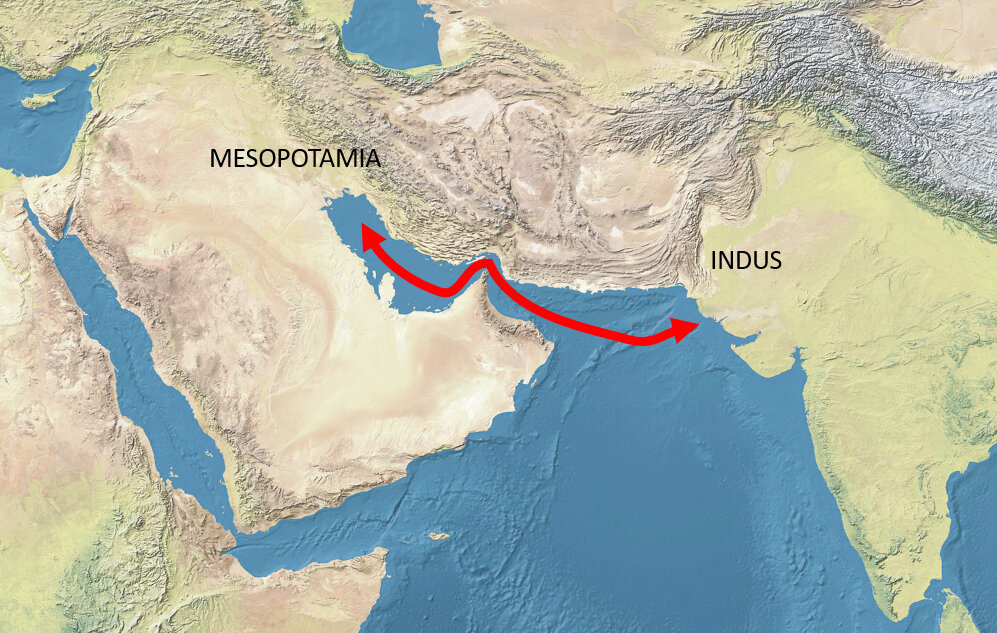
This economic organization powered a vast trade network. The Harappans traded not only among their own cities but also with distant lands. Archaeological evidence, such as Harappan seals found in Mesopotamian cities and Mesopotamian texts mentioning a trading partner named "Meluhha," strongly suggests a thriving maritime trade route.
Key resources were exchanged. The Indus Valley exported goods like carnelian beads, timber, and cotton, while importing copper from Oman and other precious materials from Mesopotamia and the Persian Gulf. This long-distance trade highlights the complexity and reach of the Harappan economy.
The End of an Era
Around 1900 BCE, the great urban centers of the Indus Valley began to decline. The reasons for this collapse are still debated, but evidence points toward a combination of factors rather than a single event. There was no single invasion or catastrophe that wiped them out.
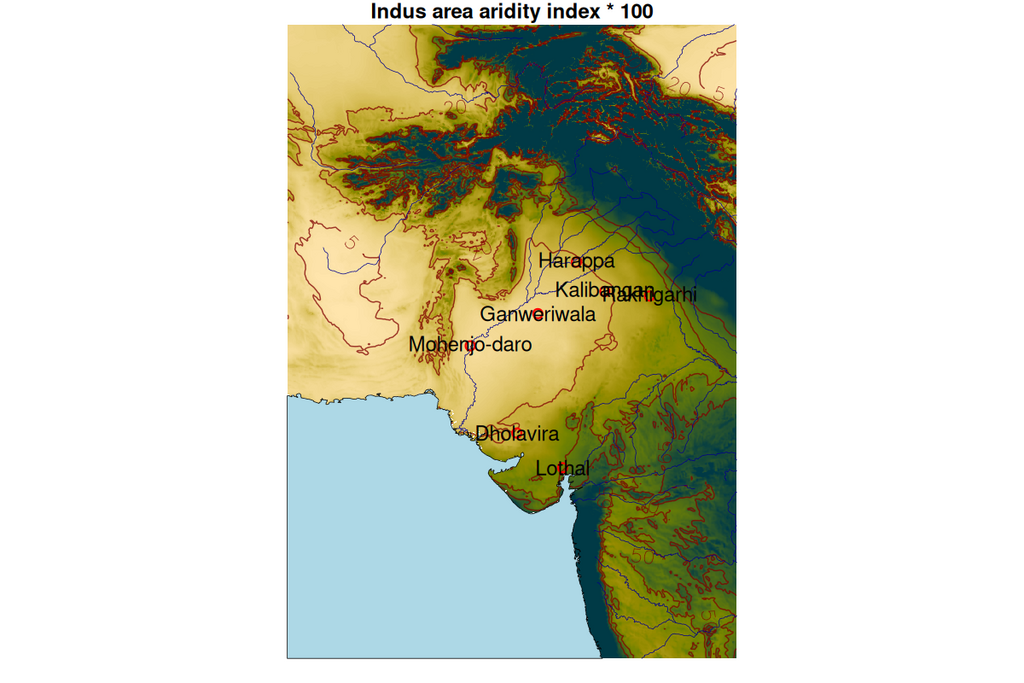
One leading theory is ecological change and climate shift. The gradual drying of the Ghaggar-Hakra river system, which was once a mighty river supporting many settlements, would have devastated agriculture. Changes in monsoon patterns could have also led to floods or droughts, destabilizing the food supply that the large urban populations depended on.
Other theories suggest a breakdown in the socio-political structure. The decline in long-distance trade with Mesopotamia around the same time may have weakened the authority of the ruling elite whose power was tied to controlling luxury goods. Without this economic glue, the centralized administration that maintained the cities' infrastructure and standardized systems may have crumbled.
Rather than a sudden end, it was more likely a gradual de-urbanization. People began abandoning the large cities and moving into smaller, more rural settlements. The sophisticated, unified culture of the Harappan civilization slowly faded, but its legacy continued in the cultures that followed.
What was the most defining characteristic of the layout of major Harappan cities like Mohenjo-daro and Harappa?
The standardized bricks used across the Harappan civilization followed a consistent ratio of length to width to height. What was this ratio?
The Harappan civilization represents a unique chapter in human history, marked by incredible foresight in urban planning and economic organization. While its script remains a mystery, the ruins of its great cities speak volumes about a complex and ordered society.