Civil Work Company Operations Mastery
Project Management
Defining the Blueprint
Every construction project, whether it's a skyscraper or a simple pedestrian bridge, begins with a single question: What are we actually building? The answer to this is the project's scope. Think of the scope as the project's detailed blueprint. It outlines everything that is included in the project—the boundaries, the deliverables, and the key features.
A well-defined scope is crucial. It acts as a guide for the entire team, ensuring everyone is working towards the same outcome. Without it, a project can easily stray off course. For example, if the scope for a new park is simply "build a park," you'll get endless questions. How big is it? Does it need a playground? What about a pond? A clear scope would specify the exact size, list every feature like "one modular playground, two park benches, and a 500-meter paved walking path," and define the precise property lines.
This clarity prevents a common problem known as scope creep.
Scope Creep
noun
The tendency for a project's requirements to expand or change in an uncontrolled way after it has started.
Setting the Stakes
Once you know what you're building, you need to define why. This is where objectives come in. Objectives are the specific, measurable goals that a project aims to achieve. They turn the broad vision of the scope into a checklist of success. If the scope is the blueprint, objectives are the pass/fail criteria for the final inspection.
A great way to set clear objectives is by using the SMART framework. This ensures each goal is well-thought-out and actionable.
| Acronym | Meaning | Example Objective for a Bridge Project |
|---|---|---|
| Specific | State exactly what you want to accomplish. | Construct a two-lane, 100-meter-long concrete bridge over the river. |
| Measurable | How will you know when you've reached your goal? | The bridge must support a load capacity of 40 tons. |
| Achievable | Is the goal realistic with the available resources? | The project is fully funded and the necessary engineering expertise is available. |
| Relevant | Does this goal align with the overall project needs? | The bridge will connect two communities, reducing commute times as intended. |
| Time-bound | What is the deadline? | The bridge must be open to traffic within 24 months. |
Mapping the Timeline
With a clear scope and objectives, the next step is to figure out when everything will get done. This is scheduling. A schedule breaks down the entire project into individual tasks and maps them out on a timeline. It helps project managers track progress and see how different tasks depend on each other.
One popular tool is the Gantt chart, a type of bar chart that illustrates the project schedule from start to finish. Another key technique is the Critical Path Method (CPM). CPM identifies the longest sequence of dependent tasks that must be completed on time for the entire project to finish on schedule. Any delay on this "critical path" will delay the whole project.
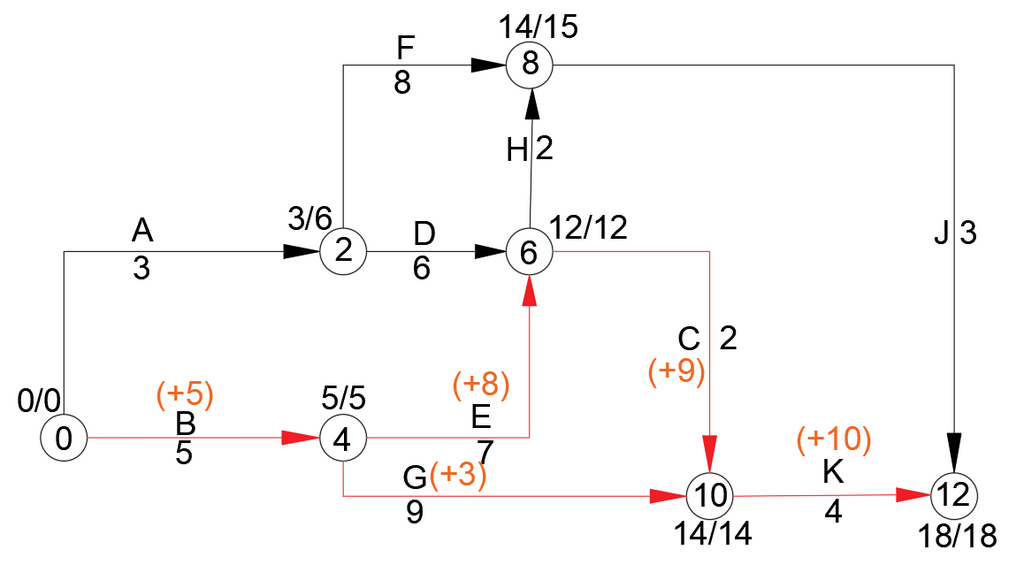
Understanding this path helps managers focus their attention on the most crucial tasks to keep the project on track.
Counting the Costs
Every project needs a budget. Budgeting is the process of estimating the total cost of the project and allocating funds for all the required tasks, materials, and labor. An accurate budget is essential for making sure the project is financially viable and doesn't run out of money halfway through.
There are several ways to create a budget. One is the "bottom-up" approach, where you estimate the cost of every single task and add them all up to get a total. This is very detailed but time-consuming. Another is the "top-down" approach, where a total budget figure is set first and then broken down and allocated to different parts of the project. This is faster but can be less accurate.
Preparing for Problems
No matter how well you plan, things can go wrong. A supplier might deliver materials late, a critical piece of equipment could break down, or unexpected bad weather could halt work for days. This is why risk management is a core part of project management.
Risk management is the process of identifying, analyzing, and responding to potential problems that could impact the project. The goal isn't to eliminate all risk—that's impossible. Instead, it's about being prepared.
First, the team brainstorms potential risks. Then, they analyze how likely each risk is to happen and what its impact would be. Finally, they develop a plan. For some risks, the plan might be to avoid them entirely. For others, it might be to have a contingency plan ready, like having a backup generator on site in case of a power outage.
Planning for what could go wrong is just as important as planning for what should go right.
Now, let's test your knowledge on these core principles.
What is the primary purpose of a project's scope?
A project manager is creating a budget by first estimating the cost of every individual task and then summing those costs to get a total. What is this approach called?
Mastering these principles of scope, objectives, scheduling, budgeting, and risk management provides the foundation needed to guide a civil engineering project from an idea to a finished structure.