Civic 1.8 vs Xpander Comparison
Vehicle Specifications
Under the Hood
Comparing cars isn't just about how they look or feel to drive. The spec sheet tells a story of its own, revealing the engineering choices that define a vehicle's character. Let's dive into the technical details of two popular but very different vehicles: the 2016 Honda Civic sedan and the Mitsubishi Xpander MPV.
The Heart of the Machine
At the core of any car is its engine. Both the Civic and the Xpander use an "inline-four" engine, which means they have four cylinders arranged in a straight line. The main difference lies in their size, or displacement.
The Honda Civic is equipped with a 1.8-liter engine. The Mitsubishi Xpander, on the other hand, has a slightly smaller 1.5-liter engine. This difference in size has a direct impact on how much power and torque each engine can produce.
Power is measured in horsepower (hp), which gives you a sense of the car's overall strength and potential for speed. Torque, measured in Newton-meters (Nm), is a bit different. It's the rotational force the engine produces, which you feel as pulling power, especially when accelerating from a standstill.
torque
noun
A twisting force that causes rotation. In cars, it represents the engine's rotational strength and is crucial for acceleration.
The Civic's 1.8L engine generates around 141 horsepower and 174 Nm of torque. The Xpander's 1.5L engine produces about 103 horsepower and 141 Nm of torque.
Think of it this way: horsepower is like a runner's top speed, while torque is their explosive power off the starting blocks. The Civic has a higher top end and more pulling power overall, which is typical for a car designed to feel responsive and agile.
Getting Power to the Wheels
An engine's power is useless unless it can be sent to the wheels. That's the job of the transmission.
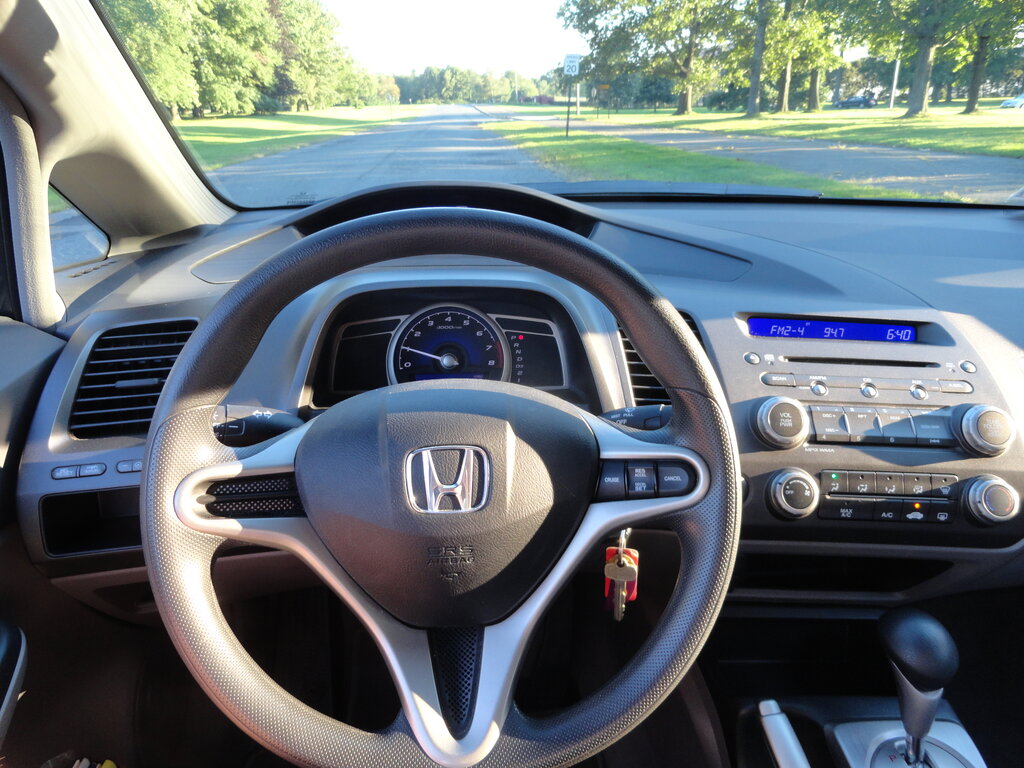
The 2016 Civic primarily uses a Continuously Variable Transmission, or CVT. Unlike traditional automatic transmissions that have a set number of gears (like 4 or 6), a CVT uses a system of belts and pulleys to provide a seamless range of gear ratios. This results in incredibly smooth acceleration without the noticeable 'jolt' of a gear change.
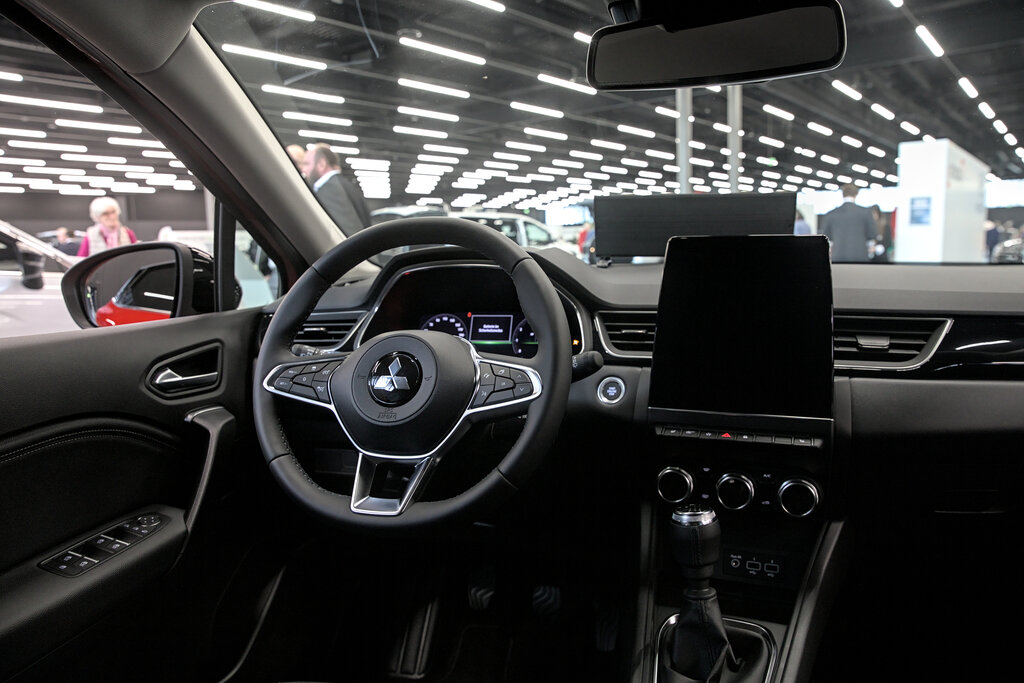
The Mitsubishi Xpander typically offers a more traditional choice: a 4-speed automatic transmission. This is a proven, straightforward design that provides reliable performance. While it might not be as smooth as a CVT, it's a simple and effective way to manage the engine's power for a family-oriented vehicle.
Size and Shape
The most obvious difference between these two vehicles is their design, which is reflected in their dimensions. The Civic is a compact sedan, built to be sleek and efficient, while the Xpander is a Multi-Purpose Vehicle (MPV), designed for space and practicality.
| Specification | 2016 Honda Civic 1.8 | Mitsubishi Xpander |
|---|---|---|
| Length | ~4,630 mm | ~4,475 mm |
| Width | ~1,800 mm | ~1,750 mm |
| Height | ~1,416 mm | ~1,700 mm |
| Wheelbase | ~2,700 mm | ~2,775 mm |
The Civic is longer but significantly shorter in height, giving it a lower, more aerodynamic profile. The Xpander is much taller, which is key to its spacious, family-friendly interior. Interestingly, the Xpander has a longer wheelbase (the distance between the front and rear wheels). A longer wheelbase generally contributes to a smoother ride and more interior space, which is a clear priority for an MPV.
Which statement accurately compares the engines of the 2016 Honda Civic and the Mitsubishi Xpander based on the provided text?
According to the analogy in the text, horsepower is like a runner's top speed, while torque is like their...
These numbers paint a clear picture. The Civic is engineered for a more dynamic, performance-oriented experience with its more powerful engine and lower stance. The Xpander, with its focus on space, a longer wheelbase, and a taller build, is designed from the ground up to be a practical people-mover.