Cisco Routing Essentials
Routing Basics
What is Routing?
Routing is the process of selecting a path for data to travel from a source to a destination across interconnected computer networks. Think of it like a digital postal service. When you send a letter, you don't need to know the exact route the mail truck will take. You just put the address on it, and the postal system figures out the best way to get it there.
In a network, data is broken down into small pieces called packets. Each packet has a destination address. The devices responsible for reading these addresses and forwarding the packets along the best path are called routers.
At its core, routing is the process of determining the best path for data to travel from its source to its destination.
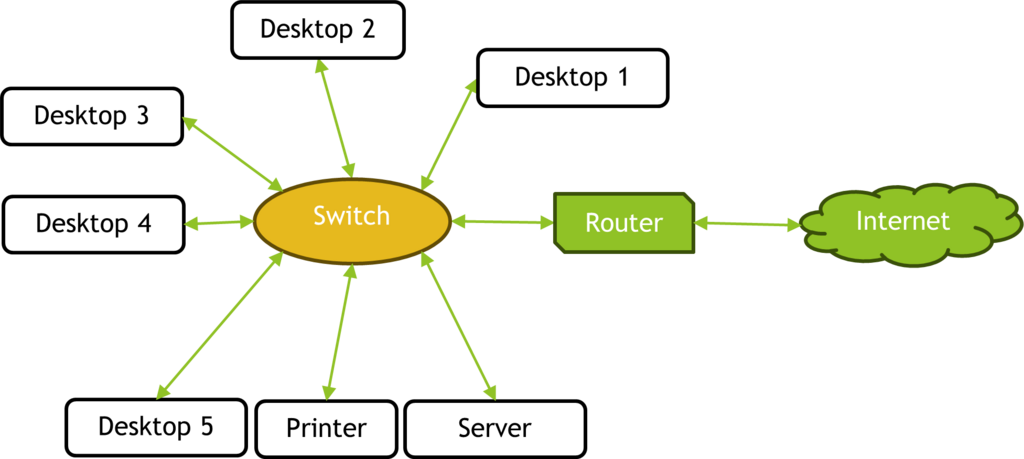
Routers are the traffic cops of the internet. They sit at the junctions between different networks—like your home network and the internet—and direct the flow of packets. Without routing, your computer could only talk to devices on your local network, but it couldn't send an email or load a webpage from a server across the world.
The Router's Map
How does a router know where to send a packet? It uses a special map called a routing table. This table, stored in the router's memory, contains a list of all the networks the router knows about and the best way to reach them.
Each entry in the table typically includes:
- Destination Network: The network the packet is trying to reach.
- Subnet Mask: Helps define the size of the destination network.
- Next Hop: The address of the next router in the path to the destination.
- Interface: The physical port on the router that the packet should be sent out of.
When a packet arrives, the router examines its destination IP address, looks for the best match in its routing table, and forwards the packet out of the correct interface towards the next hop.
| Destination Network | Subnet Mask | Next Hop | Interface |
|---|---|---|---|
| 10.1.1.0 | 255.255.255.0 | Directly Connected | GigabitEthernet0/1 |
| 192.168.5.0 | 255.255.255.0 | 10.1.1.2 | GigabitEthernet0/1 |
| 0.0.0.0 | 0.0.0.0 | 203.0.113.1 | Serial0/0/0 |
The last entry, 0.0.0.0, is a special route called the default route. It acts as a catch-all. If a router receives a packet for a destination not specifically listed in its table, it sends it to the next hop specified in the default route—usually another router that's closer to the internet.
Two Ways to Build the Map
A router isn't born knowing all the routes. It has to learn them. There are two primary ways a router can build its routing table: statically and dynamically.
Think of it as the difference between getting a fixed, printed set of driving directions versus using a live GPS app that updates based on traffic.
Static Routing
With static routing, a network administrator manually programs every route into the router's table. They tell the router, "To get to Network X, send packets to Router Y." This method is straightforward and secure because the paths are predictable and controlled.
However, it's very rigid. If a link in the network goes down, the router won't automatically find a new path. The administrator has to manually update the routing table. Because of this, static routing is best suited for very small, simple networks that don't change often.
Dynamic Routing
Dynamic routing is the automated alternative. Routers running a dynamic routing protocol talk to each other, sharing information about the networks they can reach. They constantly update their routing tables based on the information they receive from their neighbors.
If one router goes offline or a connection is lost, the other routers detect the change and automatically calculate new, optimal paths. This makes the network resilient and scalable. Dynamic routing is essential for large, complex networks where manual configuration would be impossible to manage.
| Feature | Static Routing | Dynamic Routing |
|---|---|---|
| Configuration | Manual | Automatic |
| Scalability | Low (best for small networks) | High (for any size network) |
| Adaptability | None (routes are fixed) | High (adapts to changes) |
| Resource Use | Very low | Higher (CPU and bandwidth) |
What is the primary function of a router in a computer network?
In a routing table, what is the purpose of the 'Next Hop' entry?
Understanding these core concepts is the first step toward managing any network. By knowing how routers use their tables and how those tables are built, you have the foundation needed to direct the flow of traffic effectively.