Circuit Analysis Fundamentals
Introduction to Circuit Components
The Building Blocks of Circuits
Every complex electronic device, from your phone to a satellite, is built from a handful of basic components. Think of them as the fundamental ingredients in a recipe. Once you understand what each one does, you can start to see how they work together to create amazing things.
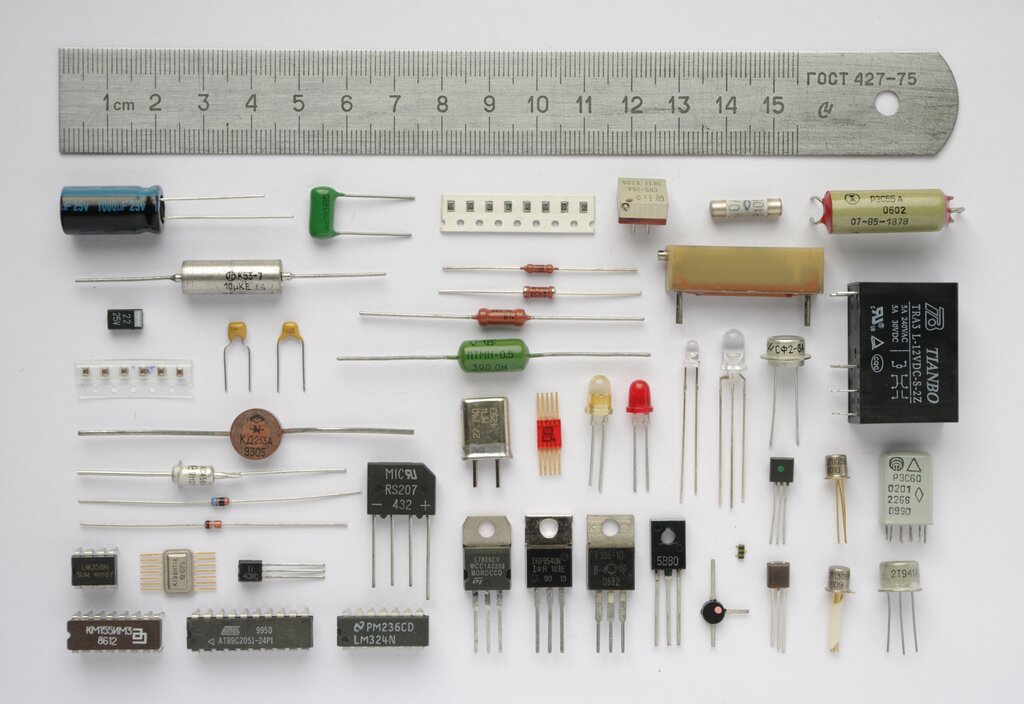
We can group these components into two main categories: those that provide energy and those that use or store it.
Energy Providers
First, let's look at the components that power the circuit. Without them, nothing happens. These are called sources.
A voltage source is a component that provides a constant voltage, or electrical pressure, to a circuit. The most common example is a battery. A 9-volt battery, for instance, maintains a 9-volt difference between its positive and negative terminals, pushing current through the circuit.
A current source is a bit different. Instead of providing constant electrical pressure, it supplies a constant flow of current, regardless of the voltage. While you won't find a pure current source at the hardware store, they are essential inside integrated circuits for tasks like powering LEDs or creating stable references.
The Passive Players
Next are the components that consume, store, or otherwise manage the energy provided by the sources. These are called passive components.
Resistor
noun
A passive electrical component with two terminals that implements electrical resistance as a circuit element.
The job of a resistor is simple: it resists the flow of current. Think of it as a narrow section in a pipe that restricts the flow of water. Resistors are used everywhere in electronics, often to control the amount of current going to another component or to divide voltage.
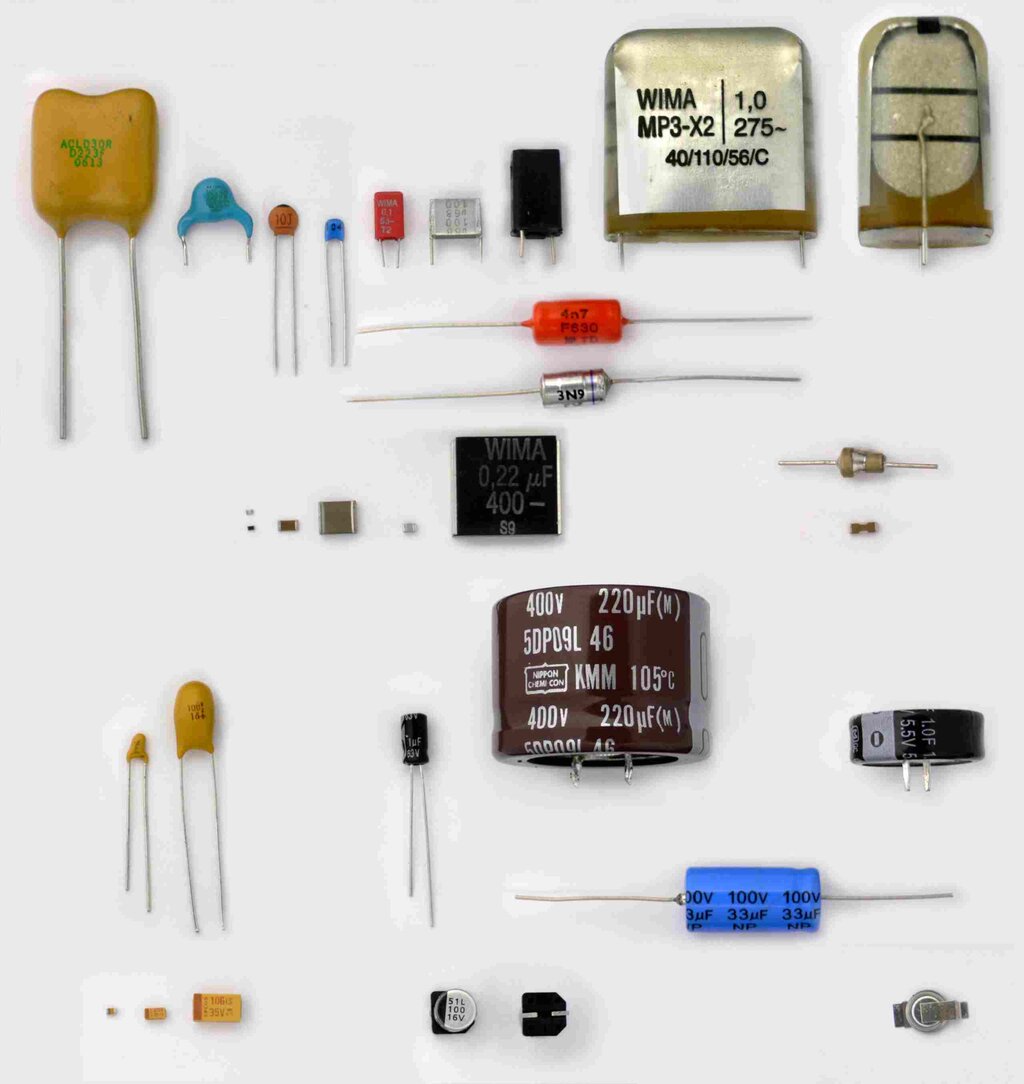
Next up is the capacitor. A capacitor stores energy in an electric field. It's like a tiny, rechargeable battery that can charge and discharge very quickly. You can think of it as a small water tank with a flexible membrane in the middle; it can store pressure (voltage) and release it when needed.
Capacitors are crucial for filtering out noise from power supplies, in timing circuits, and for blocking direct current while letting alternating current pass.
Finally, we have the inductor. An inductor stores energy in a magnetic field when current flows through it. It's typically a coil of wire. Inductors resist changes in current. If you try to change the current flowing through an inductor, it will push back.
This property makes them useful in power supplies, filters, and radio circuits for tuning to specific frequencies.
| Component | Symbol | Primary Function |
|---|---|---|
| Voltage Source | Ⓥ | Provides constant voltage |
| Current Source | Ⓐ | Provides constant current |
| Resistor | zigzag | Resists current flow |
| Capacitor | capacitor symbol | Stores energy in an electric field |
| Inductor | coil symbol | Stores energy in a magnetic field |
These five components are the foundation. By combining them in different ways, engineers can build every electronic device you use today. Now, let's test your understanding of these building blocks.
What is the primary function of a resistor in an electronic circuit?
Which component is best described as a tiny, rechargeable battery that can charge and discharge very quickly?