Cinematography Essentials
Introduction to Cinematography
The Art of Visual Storytelling
Cinematography is the language of film. It’s not just about pointing a camera and hitting record; it's the art of making deliberate choices about what the audience sees and how they see it. Every frame is crafted to tell a story, evoke an emotion, and guide the viewer's attention.
The person responsible for this is the cinematographer, also known as the Director of Photography (DP). They work with the director to translate the script's words into compelling visuals. Think of them as the painter of the film, using the camera as their brush to create a world on screen.
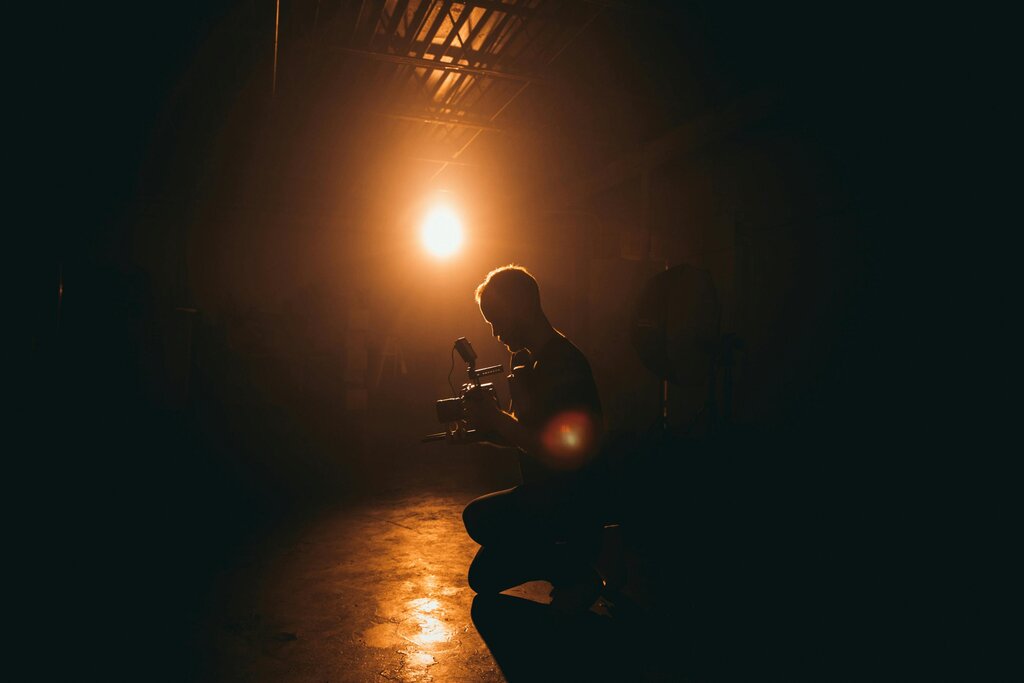
Cinematography is more than just pointing a camera and hitting record—it’s the art of visual storytelling.
These visual choices have a powerful, often subconscious, effect on us. A scene can feel intimate and tense, or vast and lonely, all based on how it's filmed. A character might seem powerful or vulnerable depending on the camera's perspective. Cinematography shapes our understanding of the story and our connection to the characters without a single word of dialogue.
Framing the Story
One of the most fundamental tools in cinematography is framing. The frame is the border of the image, and what the cinematographer decides to put inside it—and what to leave out—is a critical storytelling decision. Framing tells the audience exactly where to look.
A key part of framing is choosing the shot size, which determines how close or far away the subject appears. Different shot sizes serve different purposes and create distinct emotional responses.
Let's look at three of the most common shot sizes: the wide shot, the medium shot, and the close-up.
A Wide Shot (or Long Shot) shows the subject's entire body, often with a lot of the surrounding environment visible. This shot is great for establishing a location or showing a character's relationship to their surroundings. It can make a character feel small or isolated in a vast space.
A Medium Shot typically frames a character from the waist up. This is a more personal shot that mimics how we see people in a real conversation. It's excellent for showing body language and interaction between characters, balancing the person with their environment.
A Close-Up fills the screen with the subject's face. This is the most intimate shot size. It forces the audience to connect with the character's emotions, showing subtle expressions that might be missed in a wider shot. Close-ups are used to build tension, show internal thoughts, or emphasize a reaction.
By moving between these shot sizes, a filmmaker can control the rhythm of a scene and guide the audience's emotional journey.
These are just the building blocks. The art of cinematography lies in knowing when to use each tool to best serve the narrative. A simple choice in framing can change the entire meaning of a scene.
Time to test your knowledge on these core concepts.
What is the primary role of a Director of Photography (DP)?
A director wants to film a tense, emotional confession where the audience sees every subtle change in the character's expression. Which shot size would be most effective?
Understanding these fundamentals of visual language is the first step toward appreciating how filmmakers craft the stories we love.