Cinematic Frame Rates and NTSC Standards
Sound Standardization
The Sound Revolution
In the silent film era, speed was a flexible concept. Projectors were often hand-cranked, and the playback rate could vary from around 16 to 22 frames per second (fps). A projectionist might speed up a chase scene for dramatic effect or slow down a tender moment. This variability was a feature, not a bug, until sound arrived. Synchronizing audio to a picture that changes speed from theater to theater, or even reel to reel, was an impossible task.
The first attempts at synchronized sound used a sound-on-disc system. The most famous was Western Electric's Vitaphone, which played a large phonograph record alongside the film projector. It worked, but it was fragile. If the needle skipped or the projector and turntable fell out of sync, the illusion was shattered. A more robust solution was needed.
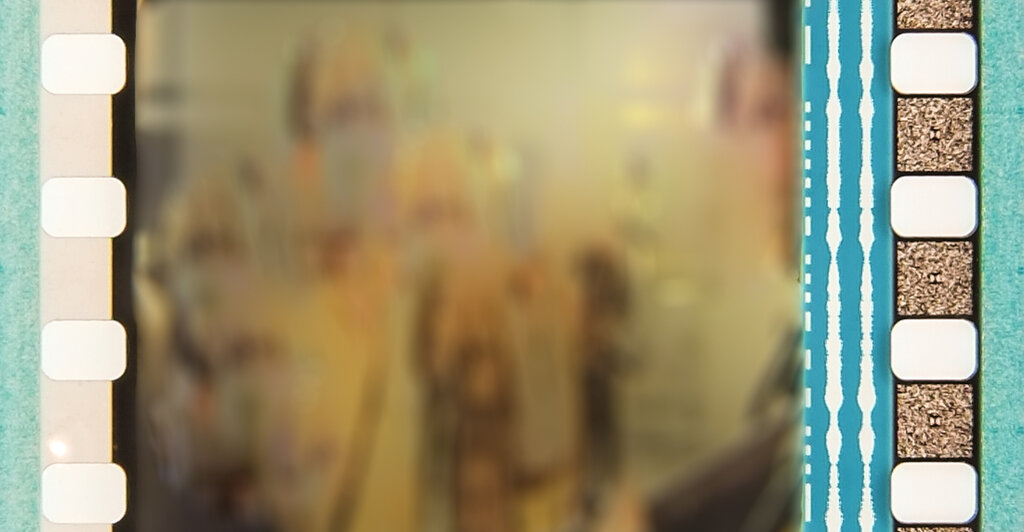
The winning technology was -on-film, pioneered by systems like RCA's Photophone. Instead of a separate record, the audio was printed directly onto the film strip as a transparent, wavy line running alongside the image frames. As the film passed through the projector, a light beam shone through this optical track. The variations in the track modulated the light, which was then read by a photoelectric cell and converted back into electrical signals and, finally, sound. For the first time, the picture and its audio were physically locked together.
Finding the Magic Number
With the technology in place, the next challenge was settling on a speed. The decision was a careful balancing act between audio fidelity and cost. For an optical track to reproduce sound clearly, especially higher frequencies that give audio its crispness, the film needs to move past the sound reader at a sufficient speed. Slower speeds would result in muffled, low-quality audio.
Faster was better for sound, but terrible for studio budgets. Film was a physical commodity, and a higher frame rate meant burning through more film stock for every minute of screen time. The industry needed to find the sweet spot: the slowest possible speed that could deliver acceptable high-fidelity audio. Through experimentation, that number was determined to be 90 feet per minute. For 35mm film, this translated to exactly 24 frames per second.
With the addition of sound synchronization and widespread film distribution all over the world, motion picture frame rates were standardized to 24 fps in the late 1920s.
This wasn't an arbitrary choice; it was a technical necessity driven by the physical properties of film and the requirements of the human ear. At 24 fps, the film was moving quickly enough to resolve the audio information printed on the strip into sound that was clear and rich enough for audiences. It became the unwavering global standard for cinema, ensuring a film shot in Hollywood would look and sound the same in a theater in Paris or Tokyo.
The Legacy of 24 FPS
The adoption of 24 fps had a profound economic impact. It standardized production workflows and exhibition, but it also significantly increased the amount of film stock consumed by the industry. A 10-minute silent film reel shot at 18 fps used about 1,080 feet of film. The same 10-minute sequence at 24 fps required 1,440 feet. This 33% increase in material cost was the price of sound.
Even today, in the age of digital cinematography, 24 fps remains the dominant frame rate for filmmaking. It's no longer a technical requirement for audio, but it has become an aesthetic choice. Decades of moviegoing have conditioned audiences to associate the motion blur and cadence of 24 fps with the 'cinematic look.' It's a standard born from a technical constraint that has evolved into a creative signature.
What was the primary technical challenge that led to the standardization of film projection speed?
The winning technology for synchronized sound was optical sound-on-film, where the audio was printed directly onto the film strip.