Chromosomal Translocations Explained
Chromosomal Translocations
When Chromosomes Swap Parts
Imagine your genetic information is organized into a set of encyclopedias, with each volume representing a chromosome. Normally, all the pages stay within their correct volumes. But sometimes, a page or even a whole chapter gets torn out of one volume and stuck into another. This is essentially what happens in a chromosomal translocation.
translocation
noun
A type of chromosomal abnormality in which a chromosome breaks and a portion of it reattaches to a different chromosome.
In this process, a segment of one chromosome breaks off and attaches to a non-homologous chromosome—meaning one that isn't its matching pair. This mix-up can have significant effects on how genes function.
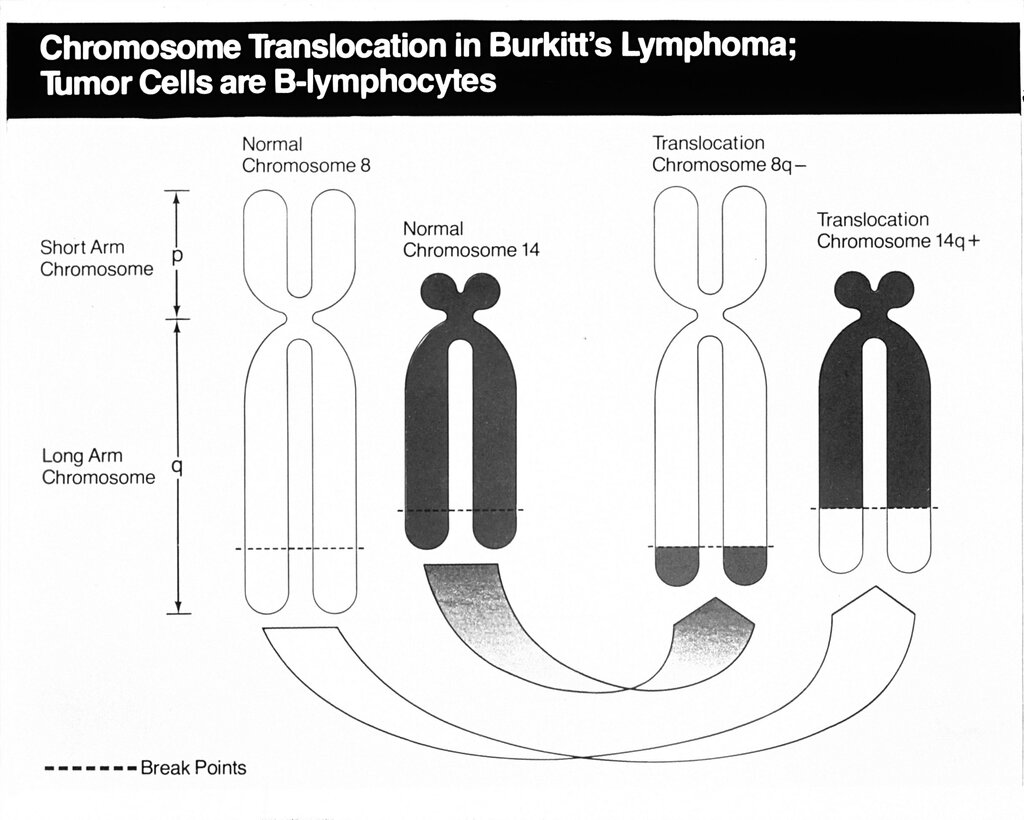
Types of Translocations
Translocations come in two main varieties: reciprocal and non-reciprocal.
A reciprocal translocation is like a trade. A segment from chromosome A breaks off and attaches to chromosome B, while a segment from B breaks off and attaches to A. It's a two-way exchange of genetic material.
In a reciprocal translocation, two different chromosomes exchange segments.
A non-reciprocal translocation is more of a one-way move. A piece of one chromosome breaks off and joins another, but no material is exchanged back to the original chromosome. This is less common than the reciprocal type.
The Genetic Ripple Effect
Even if no genetic material is lost, a translocation can cause serious problems by changing a gene's location. The position of a gene on a chromosome is important for its proper function and regulation.
Here’s how translocations can disrupt things:
-
Gene Disruption: The break in the chromosome can occur right in the middle of a gene. This can damage the gene, preventing it from producing a functional protein, much like tearing a recipe in half.
-
Fusion Genes: A translocation can cause two previously separate genes to merge. This new "fusion gene" may produce a novel protein with a new, and often harmful, function. It's like accidentally combining two different recipes to create an entirely new dish, which may not be edible.
-
Changes in Gene Regulation: A gene might be moved to a new chromosomal neighborhood that has different rules for gene expression. A gene that was normally quiet could be moved to a region where it's always active, or vice versa. This is called a position effect. It's like moving a light switch from a bedroom to a factory floor—its context changes how and when it's used.
By moving genes to new locations, translocations can alter their expression and function, sometimes leading to disease.
These changes can have a profound impact on an individual's health, contributing to a range of genetic disorders and playing a key role in the development of certain types of cancer.