Christianity and Greek Philosophy
Introduction to Greek Philosophy
The Birth of Questioning
Long before science gave us detailed answers, people in ancient Greece began asking huge questions. What is the world made of? What is a good life? How do we know what's true? Instead of relying on myths about gods and monsters, they started using reason and observation to find answers. This new way of thinking was called philosophy, from the Greek words for "love of wisdom."
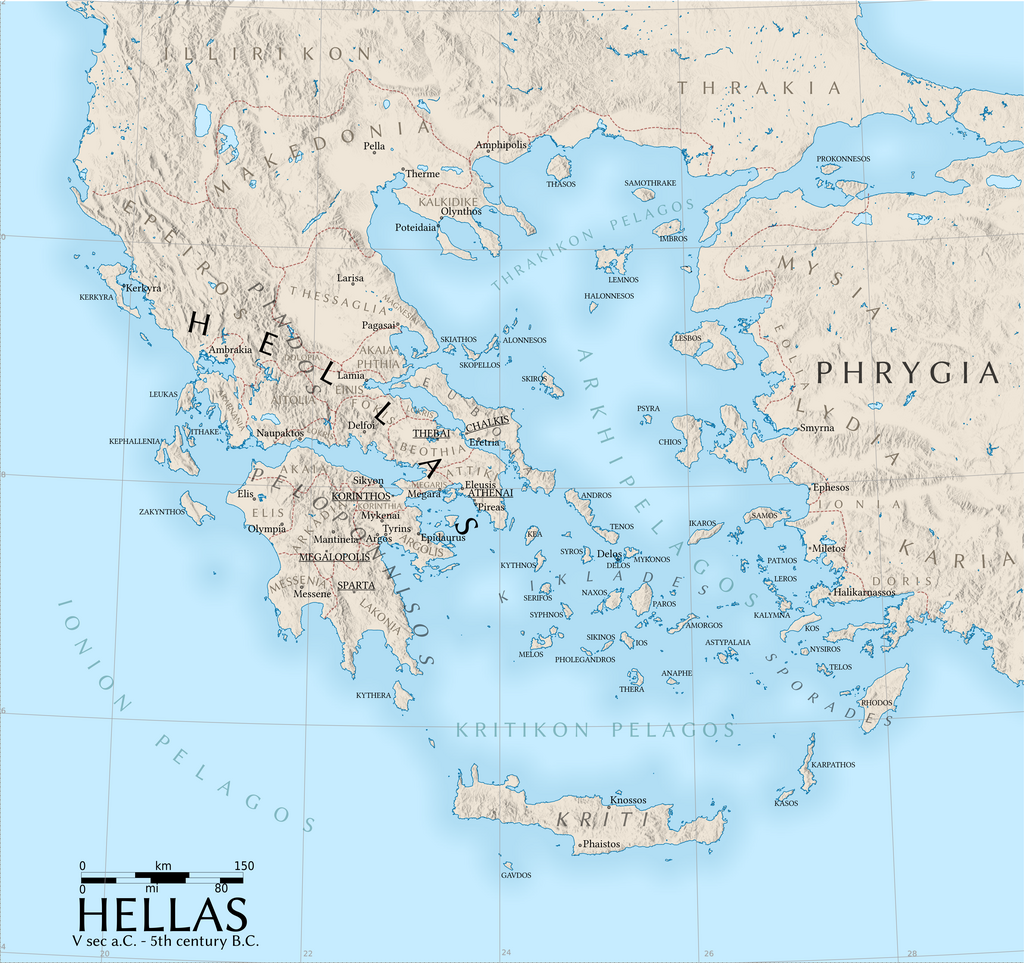
This intellectual revolution didn't happen overnight. Early thinkers, known as the Pre-Socratics, were the pioneers. They lived before the famous Socrates and were mostly concerned with the nature of the physical world. One philosopher, Thales, proposed that everything was made of water. Another, Heraclitus, argued that everything is in a constant state of change, like a river you can never step in twice. They didn't always get the answers right, but they were the first to ask the right kind of questions, kicking off a tradition of critical inquiry that would shape the Western world.
The Athenian Trio
The heart of Greek philosophy beat strongest in Athens, home to three of the most influential thinkers in history: Socrates, his student Plato, and Plato's student Aristotle. Their ideas built upon one another, creating a rich foundation for thousands of years of thought.
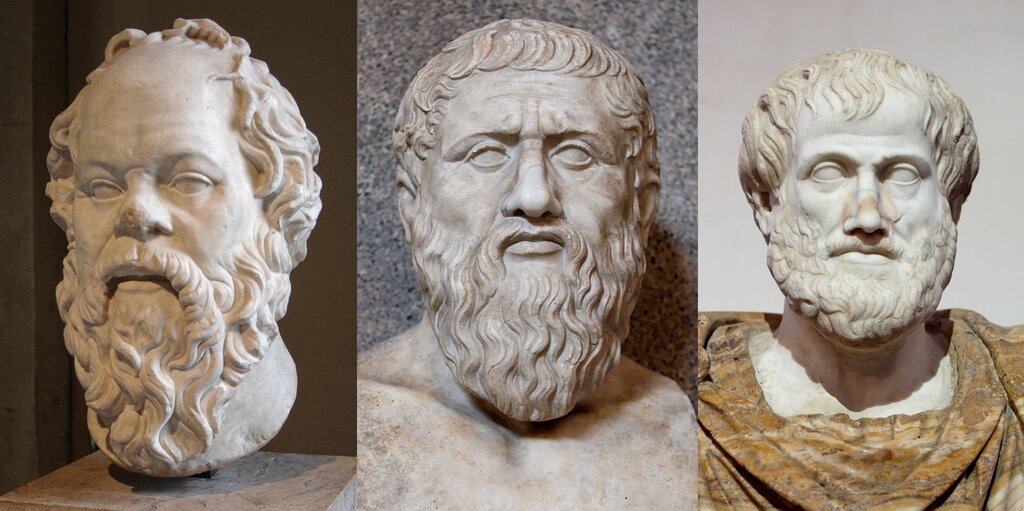
First came Socrates, an endlessly curious and famously annoying man who wandered the streets of Athens asking people questions. He didn't lecture; he simply asked probing questions that forced people to examine their own beliefs about justice, virtue, and knowledge. This technique, the Socratic method, revealed that many people couldn't logically defend their own convictions. Socrates believed true wisdom was recognizing the limits of your own knowledge. His famous motto? "The unexamined life is not worth living."
Next was Plato. After his teacher Socrates was sentenced to death, Plato became distrustful of Athenian democracy. He founded a school called the Academy, where he wrote down his philosophical ideas in the form of dialogues, often starring Socrates. Plato's most famous idea is the Theory of Forms. He argued that the physical world we perceive is just a shadow of a higher, perfect reality. This higher reality contains the ideal "Forms" of everything—the perfect concept of Justice, Beauty, and even a simple chair. We can only grasp these perfect Forms through reason, not our senses.
Finally, there was Aristotle. He studied at Plato's Academy for 20 years but came to very different conclusions. Unlike Plato, who looked to an unseen world of Forms, Aristotle was fascinated by the tangible world around him. He was a master of observation and classification, studying everything from biology to politics. He invented a system of formal logic to analyze arguments and believed that knowledge comes from experience and careful observation of the world we live in. He founded his own school, the Lyceum, where he would walk and discuss ideas with his students.
Schools and Big Ideas
The legacy of these thinkers branched out into various schools of thought, each tackling fundamental questions about reality, knowledge, and how to live.
Philosophy in ancient Greece wasn't just an academic subject; it was a way of life. The questions these thinkers asked fall into three main categories that philosophers still debate today.
-
Metaphysics: This is the study of reality itself. What is existence? What is the world made of? Plato's Theory of Forms is a metaphysical theory. He believed reality was fundamentally split into two realms: the physical world and the world of Forms. Aristotle had a different take. He thought reality was right here in the physical objects we can see and touch.
-
Epistemology: This is the theory of knowledge. How do we know what we know? Is knowledge based on sense experience or pure reason? Plato was a rationalist; he thought true knowledge came from using our minds to grasp the perfect Forms. Aristotle was an empiricist; he argued that knowledge begins with information we gather through our senses.
-
Ethics: This is the study of morality. What is the right way to live? What is virtue? Socrates focused intensely on ethics, believing that if people truly knew what was good, they would do it. Aristotle also wrote extensively on ethics, proposing that the ultimate goal of human life is to achieve eudaimonia, a state often translated as "happiness" or "flourishing," by living a life of reason and virtue.
| School | Key Idea |
|---|---|
| Platonism | The physical world is a shadow of a higher, perfect reality of Forms. |
| Aristotelianism | Knowledge is gained through observation of the natural world and logical reasoning. |
| Stoicism | Live in harmony with nature and reason; control your emotions and accept what you cannot change. |
Beyond Platonism and Aristotelianism, other schools also emerged. One of the most enduring was Stoicism, founded by Zeno of Citium. The Stoics taught that virtue is the only good and that we should live in accordance with nature and reason. They believed we can't control external events—only our responses to them. By mastering our emotions and accepting our fate with calm rationality, we can achieve inner peace.
Ready to test your knowledge of these foundational concepts?
What was the fundamental shift in thinking introduced by the earliest Greek philosophers?
The Socratic method is best described as:
The questions first asked by these ancient Greek thinkers about the nature of the world, the basis of knowledge, and the meaning of a good life are still with us. They laid the groundwork for a conversation that has continued for over two thousand years.