Choosing Your Tech Specialization
Introduction to Artificial Intelligence
What Is Artificial Intelligence?
Artificial intelligence is the science of making machines that can think and learn like humans. The goal is to create systems that can perform tasks that normally require human intelligence, such as understanding language, recognizing patterns, and solving problems.
Artificial Intelligence
noun
A field of computer science dedicated to creating systems capable of performing tasks that typically require human intelligence. This includes learning, reasoning, problem-solving, perception, and language understanding.
Think of it like teaching a computer to ride a bike. You wouldn't give it a step-by-step manual. Instead, it would learn by observing, trying, falling, and adjusting, just like a person does. AI systems learn from vast amounts of data, identifying patterns and making decisions with minimal human intervention.
A Brief History of AI
The dream of creating intelligent machines has been around for centuries, but the formal field of AI research began in the 1950s. Early AI, often called symbolic AI or "Good Old-Fashioned AI," focused on writing explicit rules for computers to follow. For example, a chess program would be given rules about how each piece moves and some basic strategies.
This approach worked for well-defined, logical problems, but it struggled with the messiness of the real world, like understanding speech or recognizing a cat in a photo. The field went through periods of high excitement followed by "AI winters," when funding and interest dried up due to slow progress.
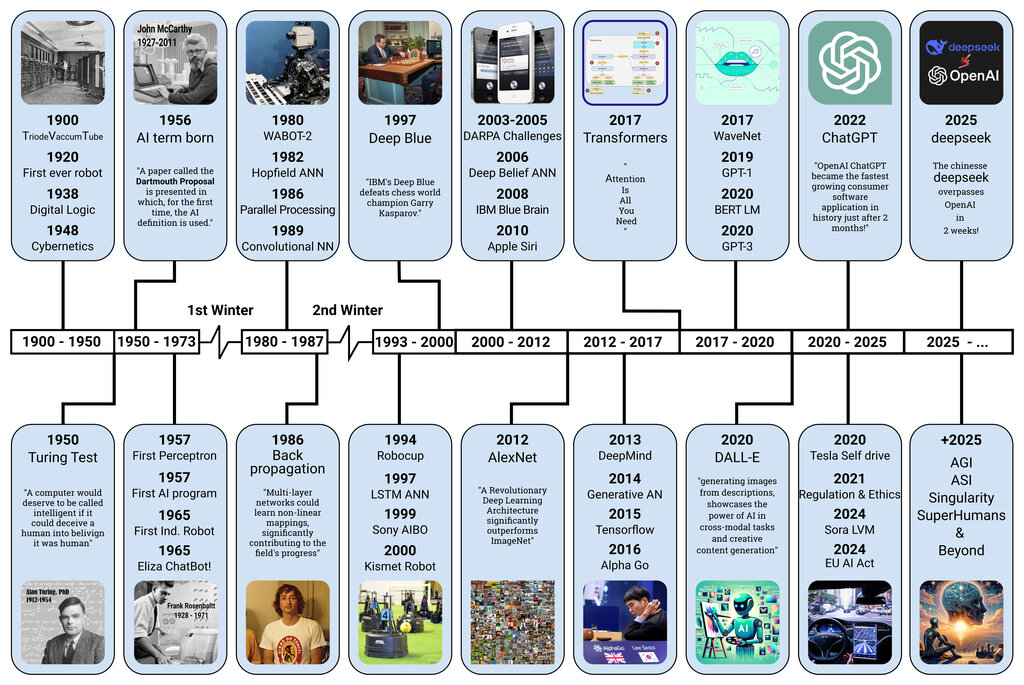
The modern era of AI was kicked off by two key developments: the availability of massive datasets (thanks to the internet) and huge increases in computing power. This combination fueled the rise of machine learning and, later, deep learning, which allow computers to learn from examples instead of just following programmed rules.
The Branches of AI
Artificial intelligence is a broad field with several specialized subfields. The most important ones to know are machine learning, deep learning, and natural language processing. They are not separate disciplines, but rather nested concepts.
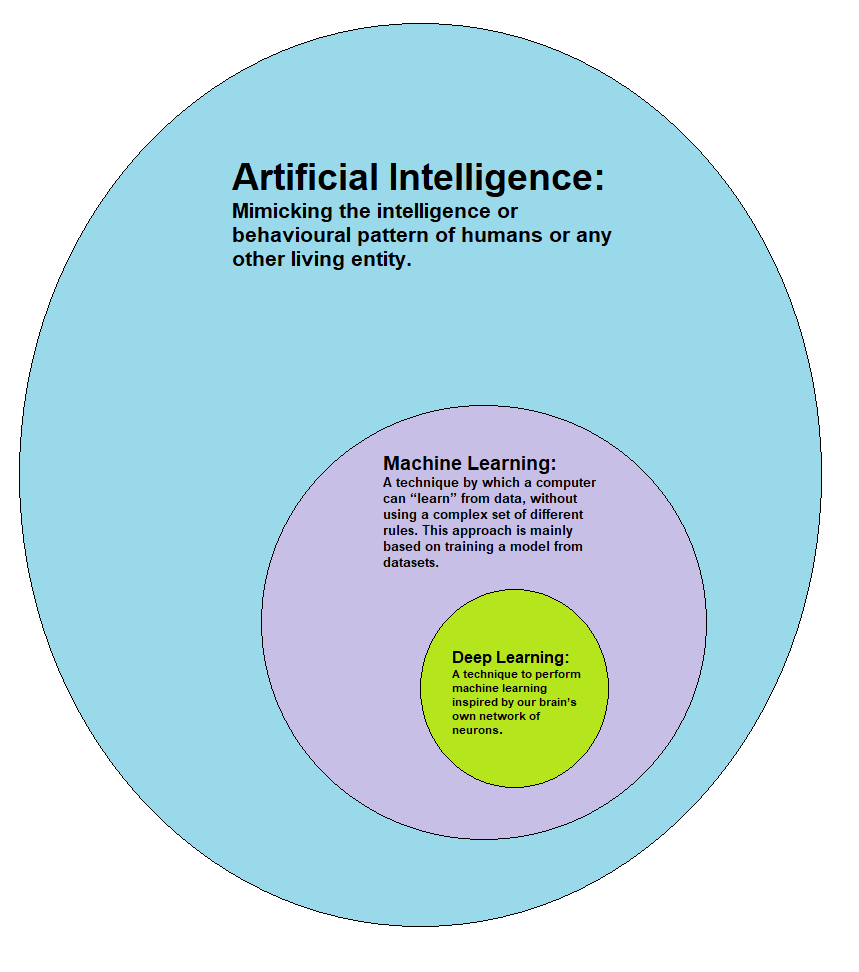
Machine Learning (ML) is a subset of AI that uses statistical methods to enable machines to improve with experience. Instead of being explicitly programmed for a task, an ML system is trained on a large dataset. For example, a spam filter learns to identify junk mail by analyzing thousands of emails you've marked as spam.
Deep Learning (DL) is a more advanced subset of machine learning. It uses structures called neural networks, which are inspired by the human brain. These networks have many layers that allow them to learn complex patterns from data. Deep learning is the technology behind self-driving cars recognizing pedestrians and voice assistants understanding your commands.
Natural Language Processing (NLP) is a field of AI focused on enabling computers to understand, interpret, and generate human language. This is what allows you to talk to your phone, translate text from one language to another, and get summaries of long articles.
AI in the Real World
AI is no longer just science fiction. It's integrated into many of the products and services we use every day across various industries.
| Industry | Application of AI |
|---|---|
| Healthcare | Analyzing medical images like X-rays to detect diseases earlier. |
| Transportation | Powering navigation apps with real-time traffic prediction. |
| Entertainment | Recommending movies and music based on your viewing habits. |
| Retail | Using chatbots to provide 24/7 customer service. |
| Manufacturing | Optimizing supply chains and predicting when machinery needs maintenance. |
These applications show how AI can process huge amounts of information to find patterns and make predictions, automating tasks and often performing them more efficiently than humans could.
From suggesting your next song to helping doctors diagnose illnesses, AI works behind the scenes to make countless daily tasks faster, easier, and more effective.
Now that you have a grasp of the basics, let's test your knowledge.
What is the primary goal of artificial intelligence?
How did early AI, often called symbolic AI, differ from modern AI?
Understanding these foundational concepts is the first step in appreciating the power and potential of artificial intelligence.