Choosing Your Machine Learning Model
Introduction to Machine Learning
What is Machine Learning?
Machine learning is a way of teaching computers to make predictions or decisions without being explicitly programmed for every single task. Instead of writing detailed, step-by-step instructions, we let the computer learn from data.
Think about how a child learns to recognize a dog. You don't give them a list of rules like "if it has four legs, a tail, and fur, it's a dog." Instead, you show them many different dogs. Over time, the child's brain identifies the patterns. Machine learning works in a similar way. We feed a computer program, called a model, a large amount of data, and it learns to spot patterns and make judgments on its own.
The core idea is simple: machines learn from experience, just like humans do.
Why Does It Matter?
Machine learning is all around you. It’s the technology that powers the spam filter in your email, the recommendation engine that suggests what you should watch next on a streaming service, and the navigation app that finds the fastest route by analyzing traffic patterns.
In medicine, it helps doctors detect diseases earlier by analyzing medical images. In finance, it identifies fraudulent transactions. By finding patterns in complex data, machine learning helps solve problems in nearly every industry, making processes more efficient and decisions smarter.
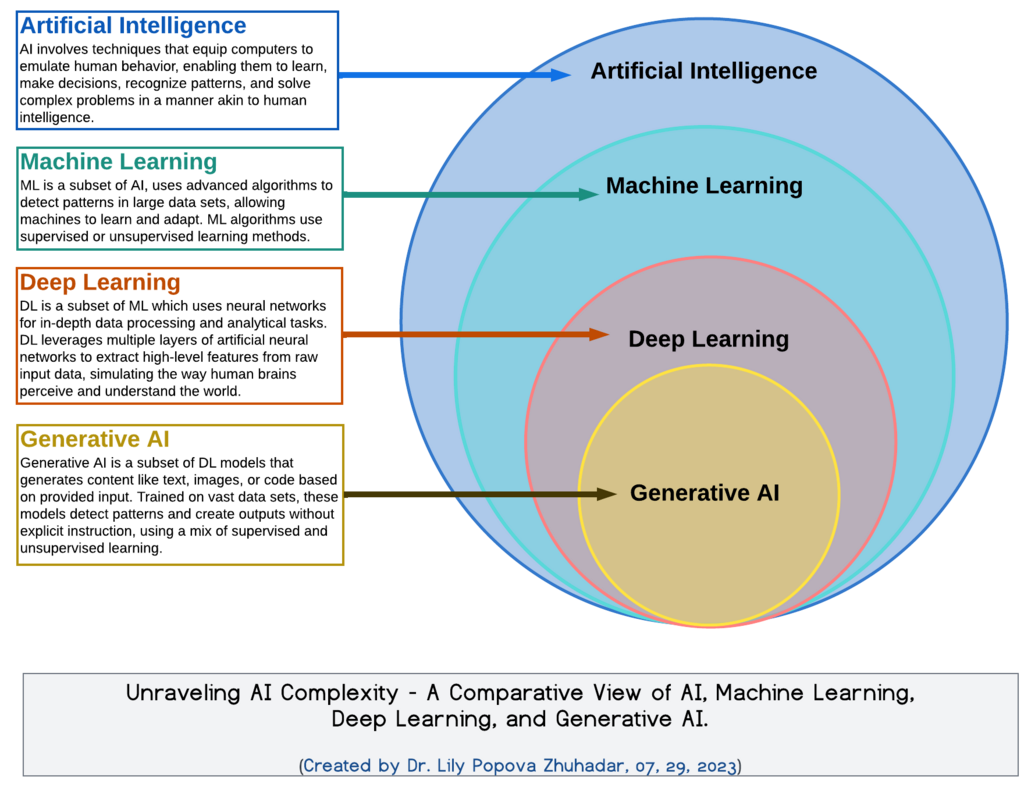
Three Ways to Learn
Machine learning models learn in different ways, depending on the data they are given and the goal of the task. The three main approaches are supervised, unsupervised, and reinforcement learning.
There are three main types of machine learning: supervised learning, unsupervised learning, and reinforcement learning.
Supervised Learning
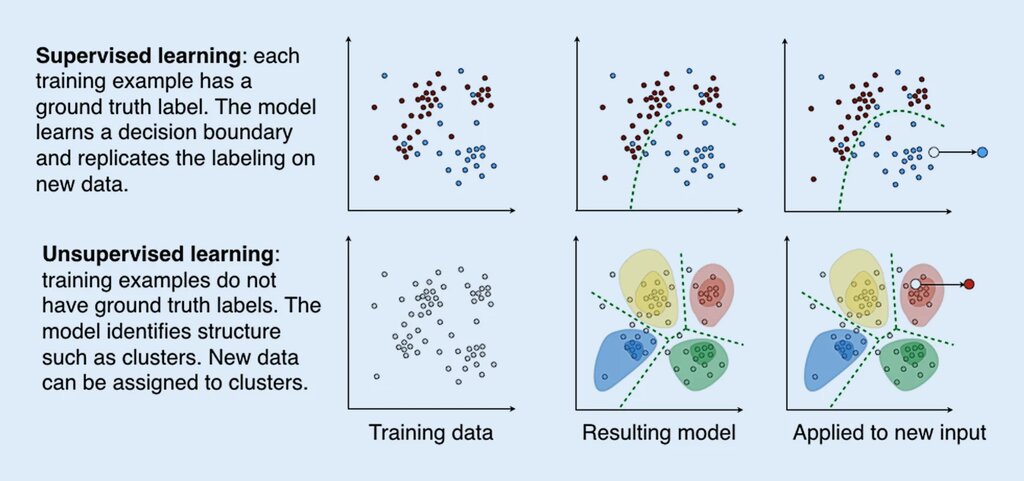
This is the most common type of machine learning. In supervised learning, the model learns from data that is already labeled with the correct answers. It's like studying for a test with a practice exam that includes an answer key.
For example, to train a model to identify pictures of cats, you would feed it thousands of images, each one labeled as either "cat" or "not a cat." The model learns the features associated with a cat. After training, it can look at a new, unlabeled image and predict whether it contains a cat.
Unsupervised Learning
What if you don't have labeled data? That's where unsupervised learning comes in. Here, the model is given a dataset without any explicit answers and must find patterns or structures on its own. It's like being given a box of mixed-up LEGOs and asked to sort them into piles of similar pieces.
A common application is customer segmentation, where a business might use unsupervised learning to group customers with similar purchasing habits. This helps them understand their customer base better without starting with predefined categories.
Reinforcement Learning
Reinforcement learning is about learning through trial and error. The model, often called an "agent," learns to make decisions by performing actions and receiving feedback in the form of rewards or penalties. The goal is to maximize the total reward over time.
Think of training a dog. When it performs a desired trick, you give it a treat (a reward). When it does something else, it gets nothing. Over time, the dog learns which actions lead to treats. Reinforcement learning is used to train AI to play games like chess or Go, and it's also important for robotics, where a robot learns to navigate its environment by getting positive feedback for successful moves and negative feedback for collisions.
What is the primary difference between machine learning and traditional programming?
A developer is building a system to identify cats in photos. They provide the model with thousands of images, each one tagged with a 'cat' or 'not a cat' label. What type of machine learning is being used?
Understanding these core concepts is the first step into the world of machine learning.