Chinese Reading Fluency for Live Broadcast
Chinese Character Recognition
Characters Are Made, Not Drawn
At first glance, Chinese characters can look like complex, random drawings. But they aren't. Most characters are logical constructions built from smaller, simpler components. Think of them less like pictures and more like Lego creations, where standard pieces combine in predictable ways.
The earliest characters started as simple pictures of things in the world. These are called pictographs.
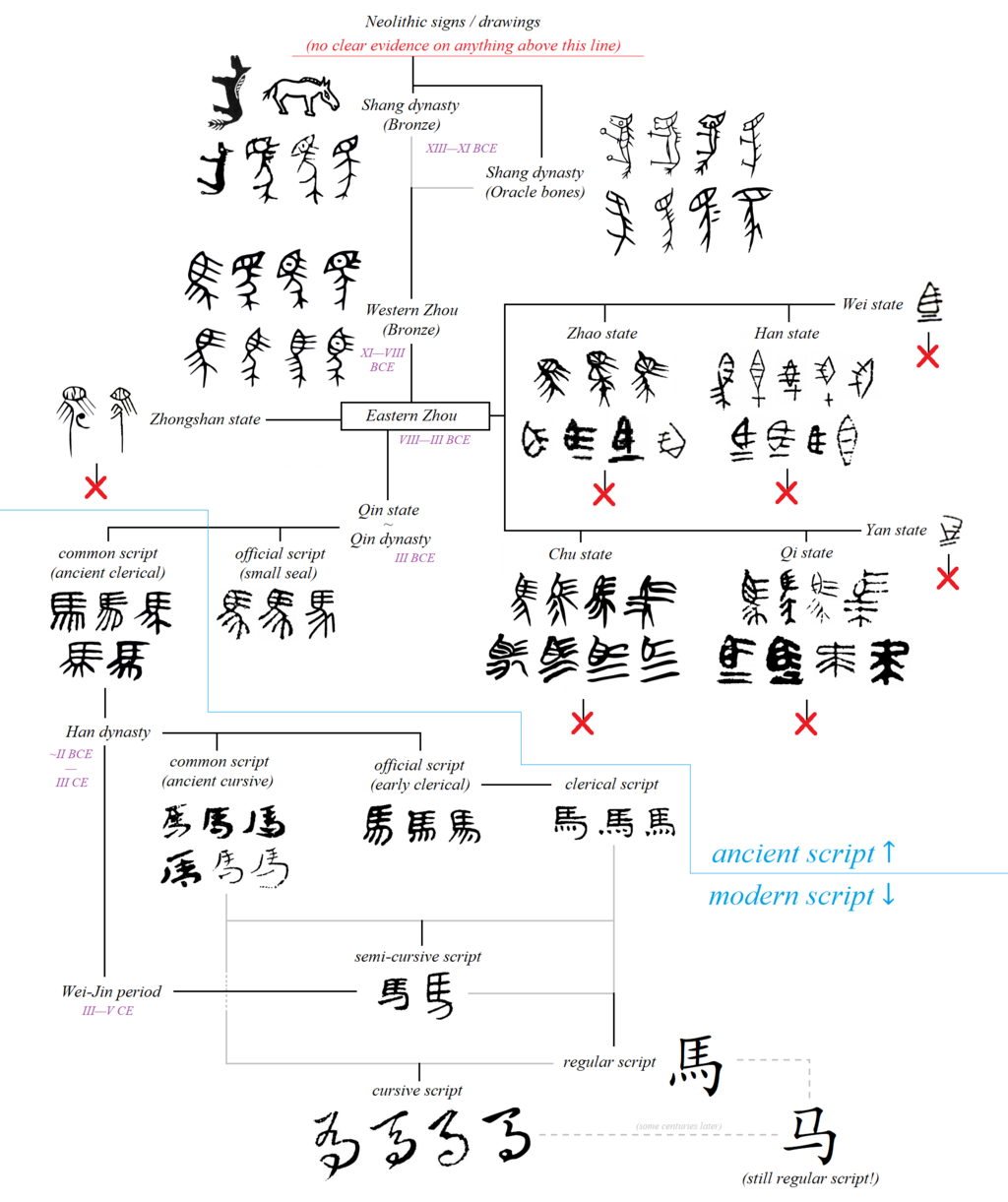
While pictographs are the historical root, very few characters in modern Chinese are this direct. The vast majority of characters you'll encounter are combinations of smaller parts. Recognizing these parts is the key to unlocking the entire system. Instead of memorizing thousands of unique designs, you'll learn to see the handful of repeating components that form them.
The best method is to learn about semantic radicals—the parts of characters that carry meaning.
Radicals Are Your Guide
The most important component to learn is the radical. A radical is a graphical component that gives a clue about a character's meaning. It's a category tag. For example, the radical 氵, which is a compressed form of the character for water (水), appears in characters related to liquids.
Once you recognize the water radical, you can make an educated guess that any unfamiliar character containing it has something to do with water. There are over 200 radicals, but learning the most common ones will give you a massive head start.
| Radical | Pinyin | Meaning |
|---|---|---|
| 人 (亻) | rén | person |
| 口 | kǒu | mouth |
| 心 (忄) | xīn | heart, mind |
| 手 (扌) | shǒu | hand |
| 木 | mù | wood, tree |
| 日 | rì | sun, day |
| 讠 | yán | speech |
Notice how some radicals, like the ones for 'person,' 'heart,' and 'hand,' have a compressed form when used as a component on the left side of another character.
How to Memorize Characters
Rote memorization is a slow and painful way to learn characters. A much better approach is to use techniques that leverage how characters are built. The goal is to understand, not just memorize.
Using these memory aids, learners can break down complex characters into simpler components, associate them with vivid mental images, and ultimately reinforce their understanding and retention.
One powerful technique is creating stories. Break a character down into its components and invent a short, memorable story that connects them. Let's take the character 安 (ān), which means 'peace' or 'quiet'. It's composed of the 'roof' radical (宀) over the character for 'woman' (女).
A simple story could be: "A woman under a roof is at peace in her home." This connects the visual components to the character's meaning.
Another character, 好 (hǎo), means 'good'. It combines 'woman' (女) and 'child' (子). The story is straightforward: a woman with her child is a good thing.
This method turns abstract symbols into something concrete and memorable. It forces you to look closely at the structure of each character and actively engage with its meaning.
Ready to test your recognition skills? Let's see how well you can identify the components we've covered.
What is the most accurate description of how the majority of modern Chinese characters are constructed?
In the context of Chinese characters, what is a "radical"?
By focusing on radicals and components, you build a scalable system for learning. Each new radical you learn makes it easier to understand dozens of future characters. This is how you conquer the Great Wall of Chinese characters, one building block at a time.