Chinese Mandarin HSKK A1-A2 Vocabulary Builder
Pinyin and Tones
What is Pinyin?
Before diving into Chinese characters, you need to learn how to pronounce the sounds of Mandarin. That's where Pinyin comes in. It's the official system for writing Mandarin sounds using the Roman alphabet—the same letters used in English.
Think of Pinyin as the building blocks for speaking Chinese. Mastering it first makes learning everything else much easier.
Pinyin breaks down every sound in Mandarin into two parts: an initial and a final. An initial is the starting consonant sound (like 'b', 'p', 'm'), and a final is the vowel sound that follows (like 'a', 'o', 'uang'). When you combine them, you get a full syllable. For example, the initial b plus the final a makes the syllable ba.
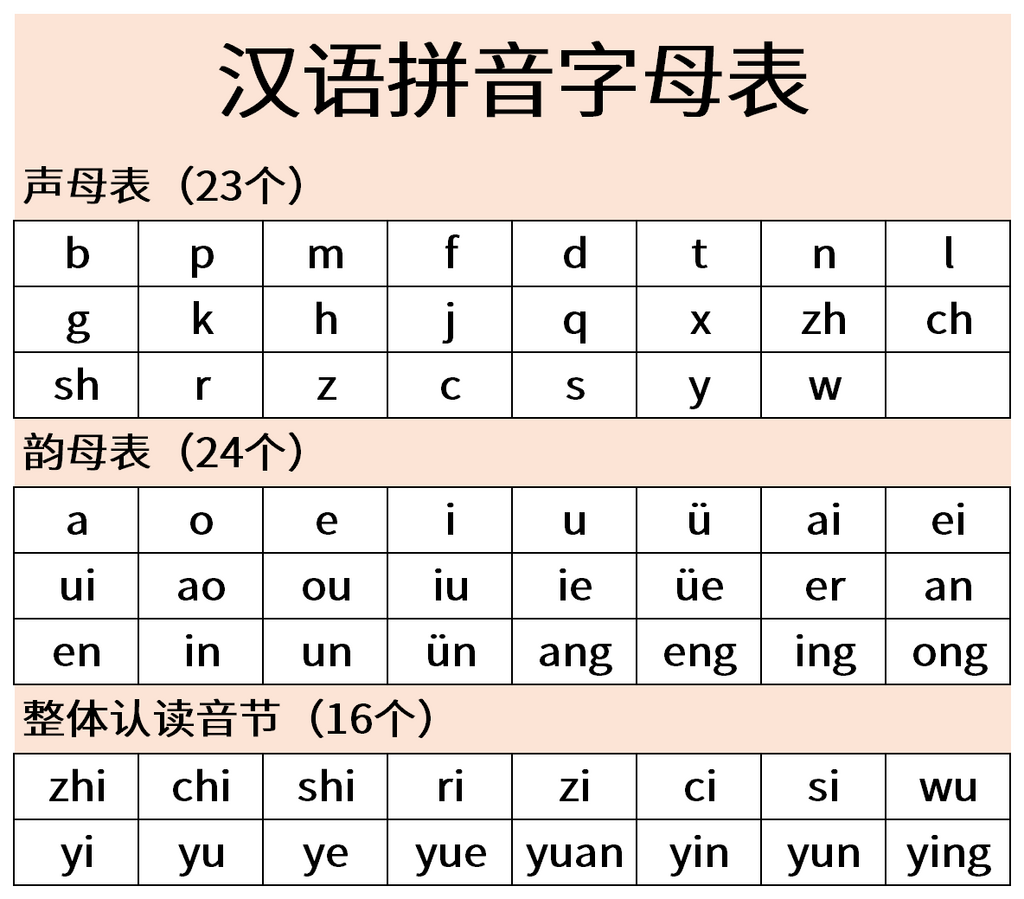
But there's one more crucial piece to the puzzle: tones.
The Four Tones
Mandarin is a tonal language. This means the pitch of your voice when you say a syllable changes the word's meaning. The same syllable, like ma, can mean different things depending on how you say it.
mom
hemp
horse
to scold
Mandarin has four main tones, plus a fifth neutral tone.
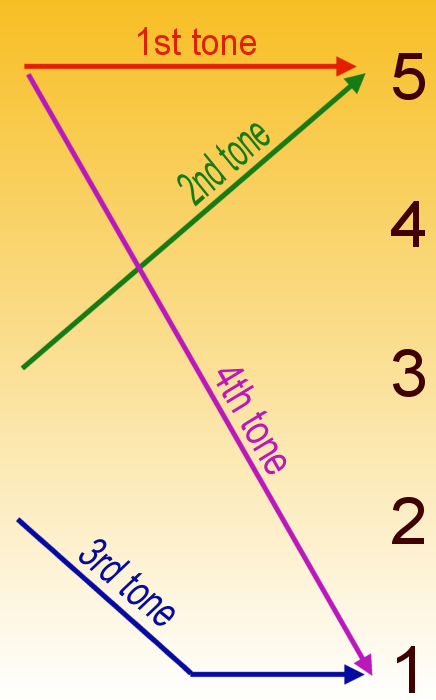
First Tone (¯): High and flat. Keep your voice steady and high, like you're holding a single note while singing.
Second Tone (´): A rising tone. It starts from a medium pitch and goes up, like you're asking a question. Think of saying, "Huh?"
Third Tone (ˇ): A dipping tone. Your voice starts at a mid-level, dips down, and then rises back up. In fast speech, you often only hear the low, dipping part.
Fourth Tone (ˋ): A sharp, falling tone. It starts high and drops quickly, like a command. Think of saying, "Stop!"
Neutral Tone: Some syllables don't have a tone mark and are pronounced lightly and quickly. You'll see this with particles or the second syllable in some two-syllable words.
Tone Marks
In Pinyin, tones are shown with marks placed over the main vowel of a syllable. There's a simple rule for where to put the mark. It goes on the vowels in this order of priority: a, o, e, i, u, ü.
So, in the syllable hǎo, the a comes before o in the priority list, so the tone mark goes on the a. In lèi, the e comes before i, so the tone mark goes there.
| Tone Number | Tone Mark | Description | Pinyin Example |
|---|---|---|---|
| 1st Tone | ¯ (macron) | High, flat | tā (他, he) |
| 2nd Tone | ´ (acute) | Rising | lái (来, to come) |
| 3rd Tone | ˇ (caron) | Dipping | hǎo (好, good) |
| 4th Tone | ˋ (grave) | Falling | kàn (看, to see) |
| Neutral Tone | (none) | Light, quick | de (的, possessive particle) |
Practice with Tone Pairs
Getting the tones right is essential for being understood. One of the best ways to practice is by saying tone pairs, which are two-syllable words with different tone combinations. This helps train your ear and your mouth.
Let's try a few common pairs. Notice how the meaning changes completely just by altering the tones.
First + First (1+1):
jīntiān(今天) - todaySecond + Third (2+3):
xúexí(学习) - to studyThird + Fourth (3+4):
dǎsuàn(打算) - to planFourth + First (4+1):
kànshū(看书) - to read a book
Listen to recordings of native speakers and try to mimic them. Recording yourself and comparing is also a great way to improve. Don't worry about getting it perfect right away. Consistent practice is the key.
Now, let's test what you've learned about Pinyin and tones.
What is the primary function of Pinyin in learning Mandarin Chinese?
Every Pinyin syllable is composed of an initial consonant sound and a final vowel sound.
With a solid grasp of Pinyin and tones, you've built the foundation for speaking Mandarin clearly and confidently.