China's Rise to Global Power
Economic Reforms
A New Economic Path
For decades, China's economy was centrally planned. The government dictated what was produced, how much it cost, and who got it. Individual farms were merged into large, state-run communes, and private businesses were nearly nonexistent. This system struggled to keep up with the needs of a growing population.
In 1978, a new era began under the leadership of Deng Xiaoping. The policy, known as 'Reform and Opening Up' (改革开放, Gǎigé Kāifàng), aimed to fundamentally reshape the economy. It wasn't a sudden switch, but a gradual, pragmatic process of introducing market forces.
The first major changes happened in the countryside. The government dismantled the communes and introduced the Household Responsibility System. Families could lease land and decide what to grow. After selling a required amount to the state at a set price, they were free to sell the surplus at market prices. For the first time in years, farmers had a direct incentive to produce more. The results were immediate and dramatic, with agricultural output soaring.
Laboratories of Capitalism
To attract foreign capital and technology without abruptly changing the entire country, the government experimented with a bold idea: Special Economic Zones (SEZs). These were coastal areas with more liberal economic policies, designed to function as controlled laboratories for market capitalism.
Shenzhen, then a small fishing village just across the border from Hong Kong, became the most famous SEZ. Established in 1980, it offered tax incentives, streamlined regulations, and modern infrastructure to lure foreign companies. The goal was to create export-oriented industries that could bring in foreign currency and introduce modern management techniques.
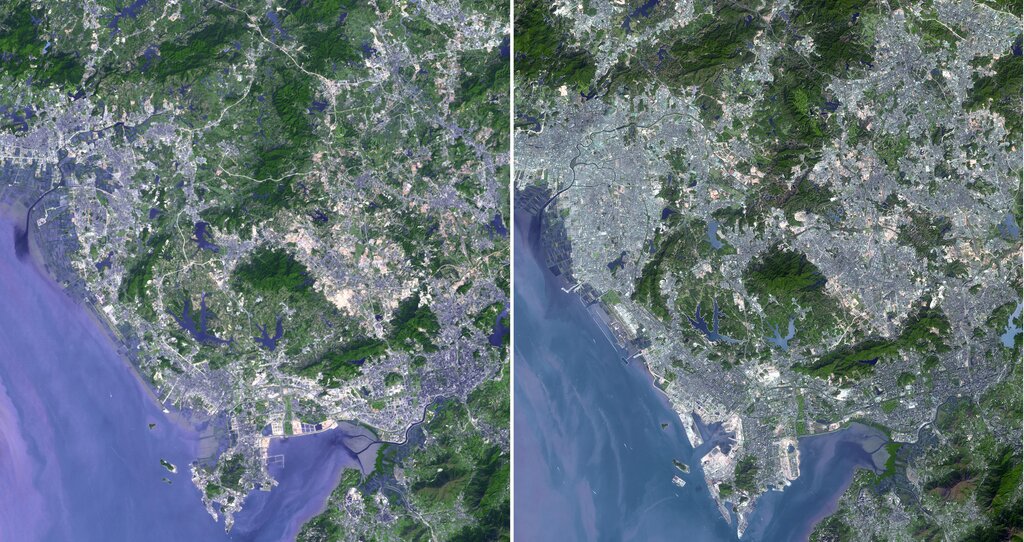
The success of Shenzhen and other SEZs, like Xiamen and Shanghai's Pudong New Area, was staggering. They became powerful engines of growth, connecting China to the global economy through trade and investment. These zones proved that market-based policies could work within China's political system, paving the way for their gradual adoption across the country.
An Economic Miracle
The reforms unleashed decades of explosive economic growth. From 1978 into the 2000s, China's economy grew at an average rate of nearly 10% per year, a pace unmatched by any other major nation in history. This rapid expansion had a profound impact on the lives of hundreds of millions of people.
The most significant achievement was a drastic reduction in poverty. As new industries created jobs and incomes rose, people escaped hardship on an unprecedented scale.
Between 1981 and the early 2000s, China lifted over 500 million people out of extreme poverty, one of the greatest such reductions in human history.
This economic transformation also fueled massive industrialization and urbanization. Millions of people migrated from rural farms to booming coastal cities to work in factories producing everything from textiles to electronics. This migration was one of the largest in human history and turned China into the 'world's factory.' Cities swelled in size, with skylines of cranes and new high-rises becoming a common sight across the country. The reforms didn't just change China's economy; they reshaped its entire society.
Let's check your understanding of these transformative reforms.
Prior to the 'Reform and Opening Up' policy in 1978, China's economy was primarily characterized by what system?
The first major changes under the 'Reform and Opening Up' policy targeted which sector of the economy?
The policies of Reform and Opening Up set China on a new trajectory, integrating it into the world economy and transforming the lives of its citizens.