Children's Math Adventures
Counting and Number Recognition
Learning to Count
Counting feels natural, but it's a big skill for a small child. It's more than just saying numbers out loud. The real magic happens when a child connects the word "one" to a single object, "two" to two objects, and so on. This is called one-to-one correspondence, and it's the foundation of all math.
Imagine counting apples in a basket. You touch the first apple and say "one." You touch the second apple and say "two." You're not just reciting a list; you're assigning a number to each specific item. Every apple gets one number, and only one.
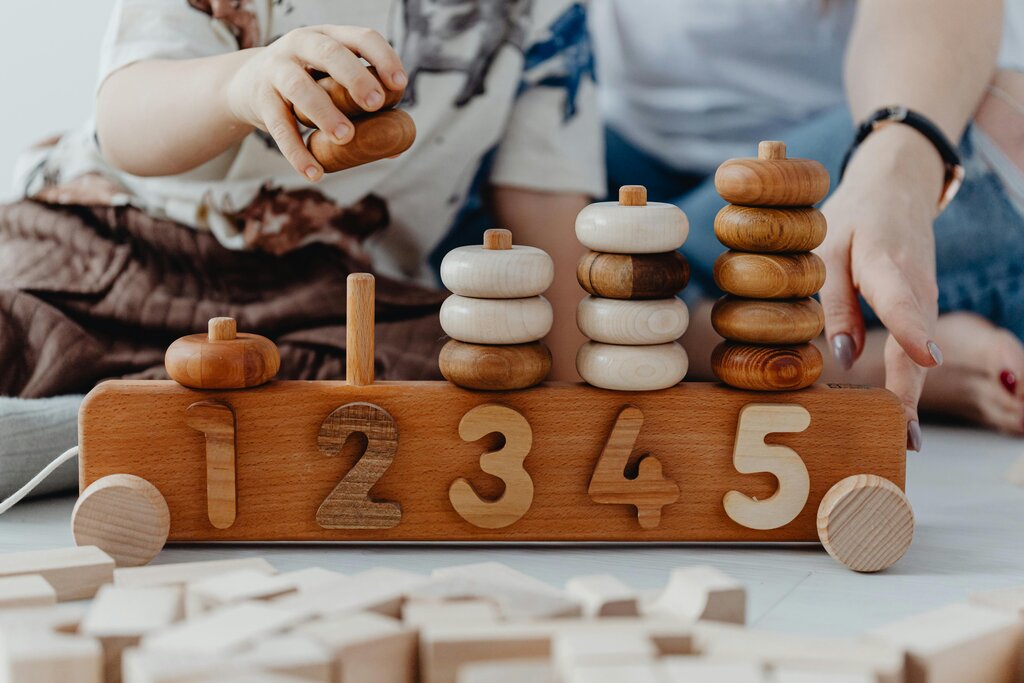
This simple act of matching a number word to an object is the first step. At first, kids might count the same object twice or skip one altogether. That's perfectly normal. Practice helps them understand that each object gets its own unique count.
The Number Lineup
Numbers have a strict order. One always comes before two, and three always comes after two. This fixed sequence is crucial. It's like lining up for a turn on the slide; there's a clear first, second, and third person in line, and the order doesn't change.
Counting songs and number songs provide an ideal way to help your children develop numeracy skills from a young age.
Songs and rhymes are fantastic tools because they make the sequence memorable and fun. The rhythm and melody help lock the order of numbers into a child's memory without feeling like a lesson.
What Numbers Look Like
Once children can count objects and know the number sequence, the next step is recognizing the symbols themselves. Each number has a name, like "four," and a written shape, which we call a numeral: 4. The goal is to connect the spoken word, the quantity, and the written symbol.
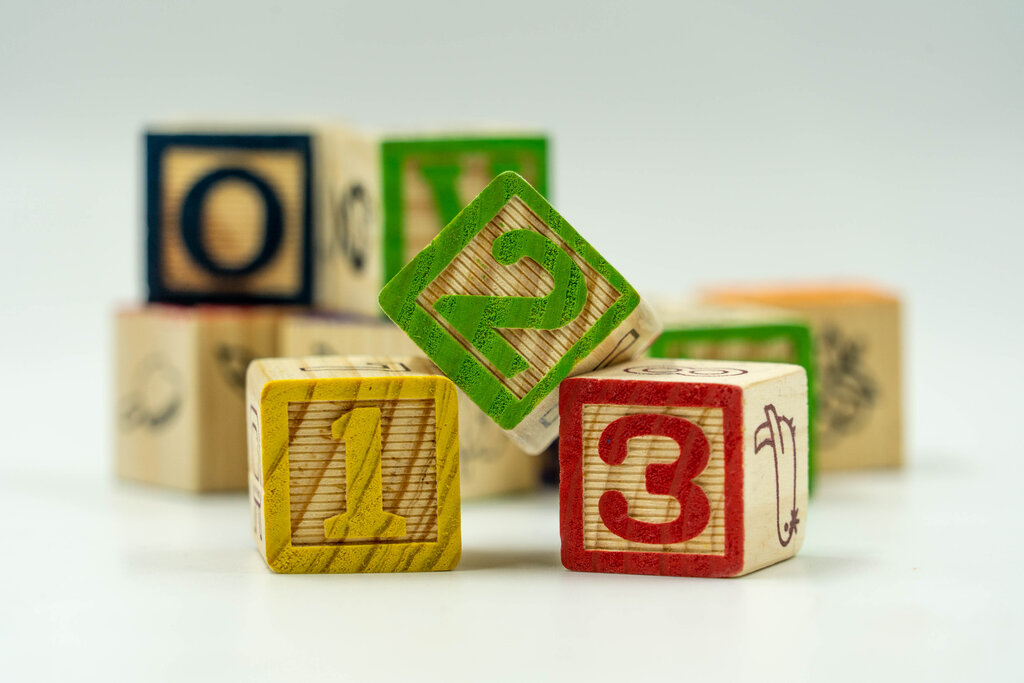
This is like learning the letters of the alphabet. A child learns that a specific shape on a page makes the "B" sound. In the same way, they learn that the symbol '5' represents a group of five things. We can help make this connection clear.
| Numeral | Name | How Many? |
|---|---|---|
| 1 | One | ● |
| 2 | Two | ● ● |
| 3 | Three | ● ● ● |
| 4 | Four | ● ● ● ● |
| 5 | Five | ● ● ● ● ● |
Seeing the numeral next to the quantity it represents helps solidify the connection. Pointing out numbers on street signs, in books, or on a clock makes learning a part of everyday life.
When a child touches each of their toys only once while saying a number for each one, what key counting principle are they demonstrating?
Why are songs and rhymes like "One, Two, Buckle My Shoe" particularly effective for teaching early counting skills?