Childhood Cancer and Quality of Life
Introduction to HRQoL
More Than Just Health
When we talk about health, we often think in terms of blood pressure, lab results, or the absence of disease. But being healthy is much more than that. It's about how you feel and function in your everyday life. This broader concept is captured by what experts call Health-Related Quality of Life, or HRQoL.
HRQoL asks a simple but profound question: How does my health status affect my ability to live the life I want?
Thinking in terms of HRQoL is crucial because it shifts the focus from purely clinical outcomes to the patient's personal experience. Two people could have the same medical diagnosis but experience a very different quality of life. Understanding this helps healthcare providers, researchers, and public health officials see the bigger picture. It allows them to measure the true impact of illnesses and the benefits of treatments from the individual's point of view.
The Four Dimensions
HRQoL is not a single, simple concept. It's a tapestry woven from several different threads of our lives. Generally, it's broken down into four main dimensions:
-
Physical Health: This is the most straightforward dimension. It covers things like pain, fatigue, sleep quality, and physical symptoms of an illness or its treatment.
-
Psychological Health: This dimension looks at your emotional and mental well-being. It includes feelings of anxiety or depression, your mood, self-esteem, and your overall outlook on life.
-
Social Health: Humans are social creatures. This aspect of HRQoL considers the quality of your relationships with family and friends, your ability to participate in social activities, and your sense of belonging in your community.
-
Functional Status: This relates to your ability to perform everyday activities. It can mean being able to work or go to school, but it also includes managing daily tasks like grocery shopping, taking care of yourself, and enjoying hobbies.
How is It Measured?
Since HRQoL is a subjective experience, the best way to measure it is to ask the person directly. This is typically done through carefully designed questionnaires, often called surveys or instruments. These surveys ask people to rate various aspects of their lives, from their level of physical pain to their ability to socialize.
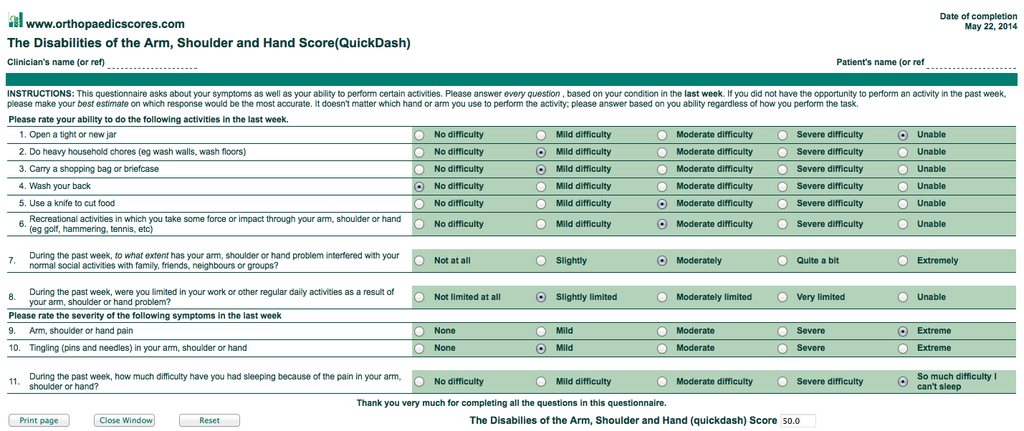
Some questionnaires are general and can be used for any population, while others are designed for people with specific diseases, like arthritis or heart disease. The responses provide valuable data that helps track a patient's progress, compare the effectiveness of different treatments, and guide public health policies.
To evaluate the effectiveness of aged care interventions, outcome measures such as Health-related Quality of Life (HRQoL) are used.
Many factors can influence a person's HRQoL. Age, income, education level, and access to social support all play a significant role. For example, a chronic health condition might have a much greater negative impact on someone who lacks a strong support system or faces financial instability. By understanding these influences, we can better identify populations that may need more support and develop interventions that address the whole person, not just the disease.
Now that you understand the basics of HRQoL, let's test your knowledge.
What is the primary focus of Health-Related Quality of Life (HRQoL)?
Which of the following is NOT considered a core dimension of Health-Related Quality of Life (HRQoL)?
Understanding HRQoL provides a more complete and human-centered view of health, moving beyond simple metrics to capture what it truly means to live well.