Child Cognitive Development Explained
Introduction to Cognitive Development
How Thinking Grows
From the moment a baby is born, their mind is working. They're not just tiny adults; their way of thinking, understanding, and interacting with the world is fundamentally different. Cognitive development is the story of how that thinking process grows and changes, from the simple reflexes of an infant to the complex abstract thought of an adolescent.
Cognition
noun
The mental processes involved in gaining knowledge and comprehension. These processes include thinking, knowing, remembering, judging, and problem-solving.
This isn't just about learning more facts, like memorizing state capitals. It's about a complete rewiring of how the mind works. A two-year-old might believe the moon is following them, while a ten-year-old understands the science of orbits. The change isn't just in the information they have, but in their ability to reason and see the world from different perspectives.
Why It Matters
Understanding how a child's mind develops is incredibly practical. For parents and educators, it provides a roadmap for what to expect and how to best support learning. Knowing that a four-year-old struggles with abstract concepts helps a teacher choose the right activities, using hands-on materials instead of just lectures. It helps us create learning environments that are challenging but not frustrating.

When we match our teaching methods to a child's developmental stage, learning becomes more natural and effective. It's the difference between trying to force a plant to grow and giving it the right amount of sunlight and water. By understanding the typical path of cognitive development, we can also identify when a child might need extra support and intervene early.
Two Foundational Theories
Two thinkers laid much of the groundwork for how we understand cognitive development today: Jean Piaget and Lev Vygotsky. They had different perspectives, but both saw children as active participants in their own learning.
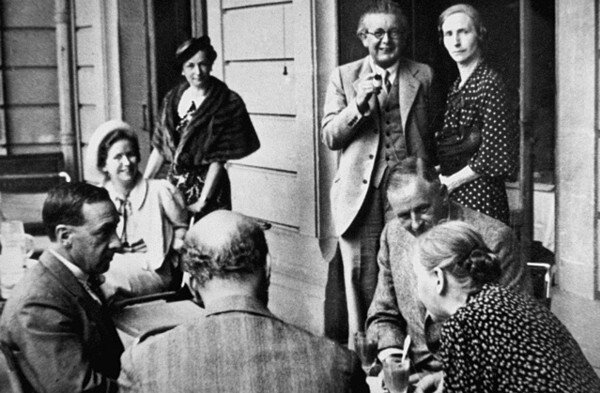
Jean Piaget, a Swiss psychologist, believed that children move through distinct stages of thinking. He saw them as 'little scientists' who experiment with the world to build their own understanding. His theory outlines four major stages that unfold in a fixed order as a child matures.
Piaget’s Four Stages:
- Sensorimotor Stage
- Preoperational Stage
- Concrete Operational Stage
- Formal Operational Stage
Lev Vygotsky, on the other hand, was a Russian psychologist who emphasized the social side of learning. His sociocultural theory argues that children learn through interactions with more skilled people, like parents, teachers, and peers. He believed that our thinking is shaped by the culture we grow up in. For Vygotsky, learning isn't a solo journey; it's a collaboration.
Vygotsky's key idea is that development happens first on a social level and only later on an individual level.
These two theories provide a powerful lens for viewing how a child’s mind grows. Piaget gives us a structure of developmental stages, while Vygotsky reminds us that learning is deeply embedded in our relationships and culture. Together, they form the foundation for understanding the remarkable journey of cognitive development.