Chess for the Impatient Beginner
Chessboard and Pieces
The Chessboard
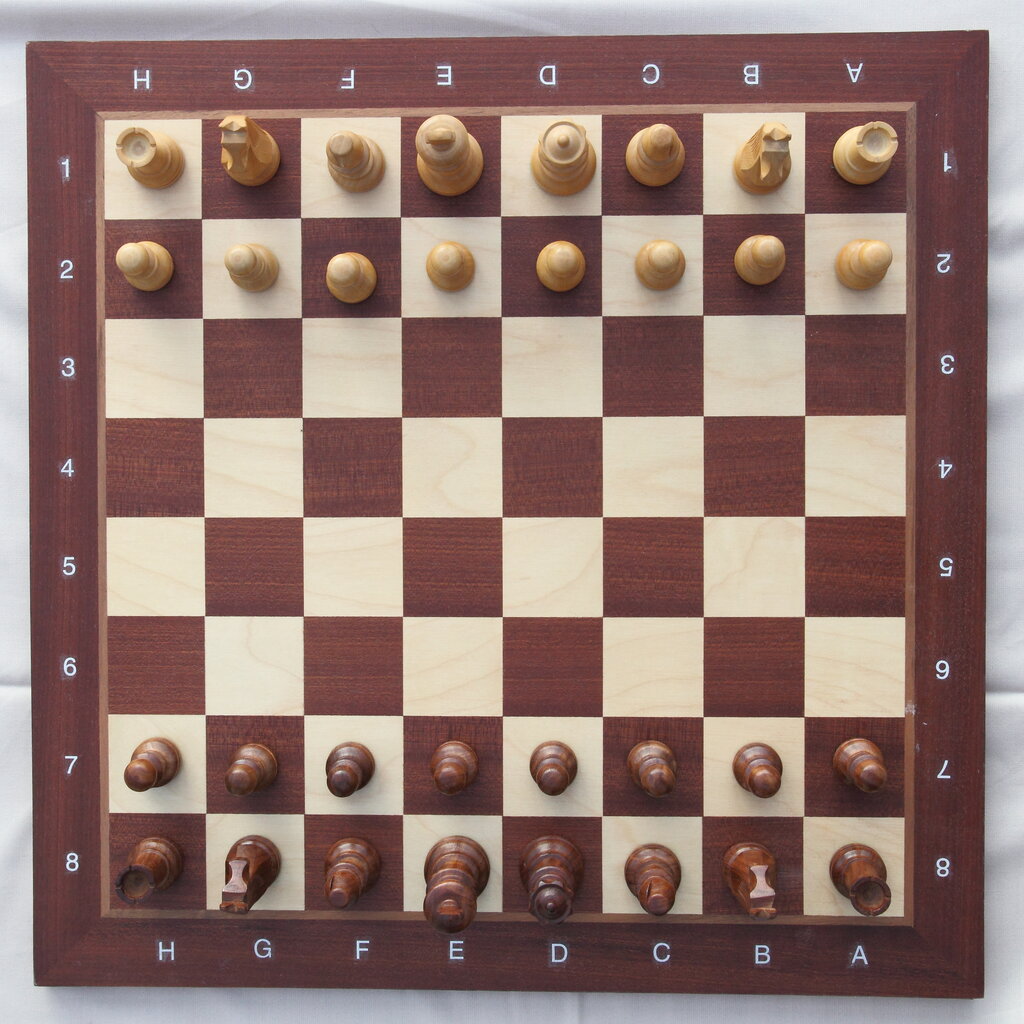
The game of chess is played on a square board with 64 squares arranged in an 8x8 grid. The squares alternate between light and dark colors. No matter how you orient the board, each player should have a light-colored square in the bottom-right corner.
The board has a coordinate system to help us talk about where the pieces are. The rows are called ranks and are numbered 1 through 8. The columns are called files and are labeled 'a' through 'h'.
The Pieces
Each player starts with an army of 16 pieces. There are six different types of pieces, and each one moves in a unique way. Let's meet them one by one.
The Pawn
You have eight pawns, and they form your front line. The pawn is the least powerful piece, but it has special abilities. On its first move, a pawn can advance either one or two squares forward. After that, it can only move one square forward at a time. Pawns cannot move backward.
Interestingly, pawns don't capture the same way they move. A pawn captures one square diagonally forward.
There are a couple of special rules for pawns, like en passant and promotion, but we'll cover those later. For now, just focus on their basic movement.
The Rook
You start with two rooks, one in each corner. Rooks move in straight lines—horizontally or vertically—for any number of empty squares. They are powerful pieces, especially in open games where they have clear paths.
The Knight
Next to the rooks, you have two knights. The knight's move is special—it moves in an 'L' shape. This means it moves two squares in one direction (horizontally or vertically) and then one square at a 90-degree angle. The knight is the only piece that can jump over other pieces, friend or foe.
The Bishop
The two bishops start next to the knights. Bishops move diagonally for any number of empty squares. Because they move diagonally, each bishop is restricted to squares of its own color. You have one light-squared bishop and one dark-squared bishop, and they can never cross paths.
The Queen
The queen is the most powerful piece on the board. She can move any number of empty squares in any straight direction—horizontally, vertically, or diagonally. Think of her as a combination of a rook and a bishop. Each player gets one queen.
The King
Finally, the king. The king is the most important piece, but it's not the most powerful. It can move only one square in any direction—horizontally, vertically, or diagonally. The goal of the game is to trap your opponent's king, a situation called checkmate.
Setting Up the Board
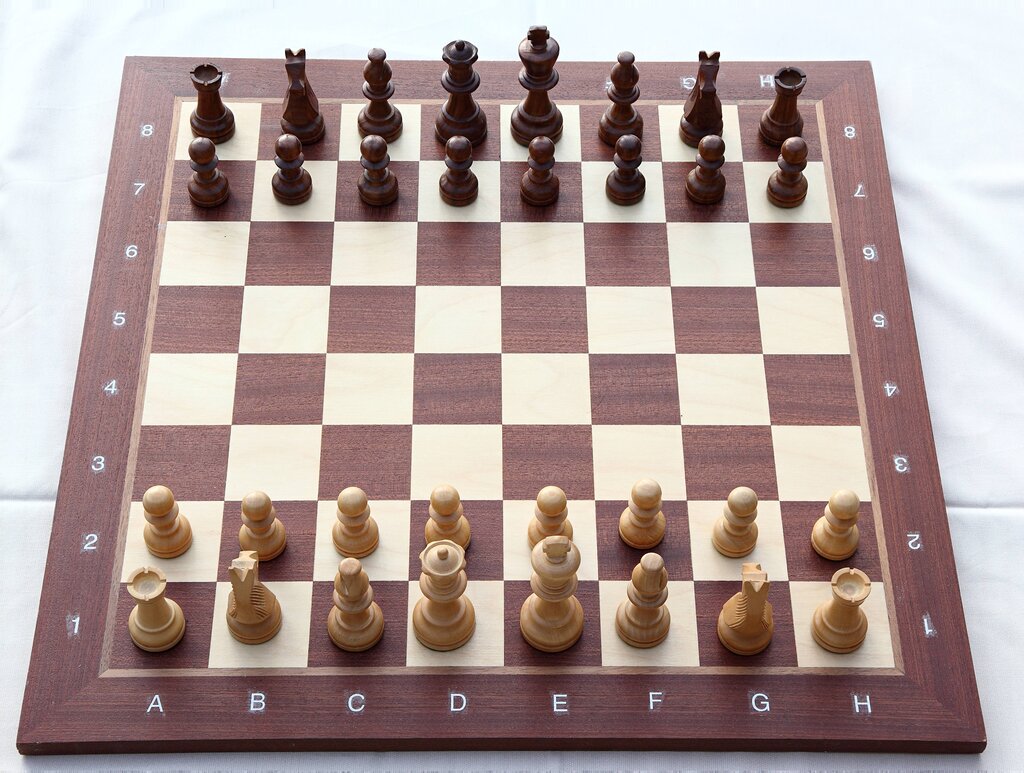
Now that you know the pieces, let's put them on the board. The setup is always the same. White's pieces go on ranks 1 and 2, and Black's pieces go on ranks 7 and 8.
First, place the rooks in the corners. Then, put the knights next to the rooks, followed by the bishops.
The queen goes on the central square that matches her color. So, the white queen goes on the light square (d1), and the black queen goes on the dark square (d8). The king takes the last remaining square on the back rank.
Finally, arrange the eight pawns on the rank in front of the other pieces. You're now ready to play.
Take some time to get familiar with how each piece moves. Setting up the board and moving the pieces around is a great way to build your understanding.
Which piece moves in an 'L' shape and is the only one that can jump over other pieces?
On its very first move, how far can a pawn advance?