Chemistry Fundamentals Explained
Matter and Its States
What Is Matter?
Everything around you is made of matter. The chair you're sitting on, the water you drink, and the air you breathe are all forms of matter. Simply put, matter is anything that has mass and takes up space.
Matter is defined as anything that occupies space and has mass.
Think of mass as the amount of "stuff" in an object. A bowling ball has more mass than a balloon. Volume is the amount of space that stuff occupies. While the bowling ball has more mass, an inflated balloon might take up more space, meaning it has a larger volume. All matter has both mass and volume, but it can look and behave very differently depending on its state.
The Three Main States
Matter usually exists in one of three states: solid, liquid, or gas. The main difference between them comes down to how the particles within them are arranged and how they move.
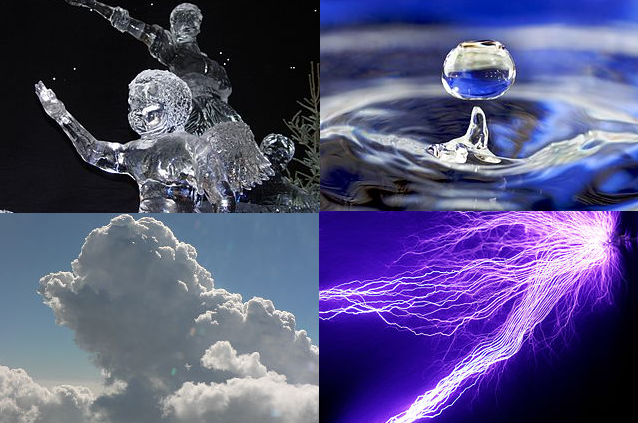
A solid holds a specific shape and volume. The particles in a solid are packed tightly together in a fixed structure. They vibrate in place but don't move around. A book, a rock, and an ice cube are all solids. They don't change shape unless something forces them to.
A liquid has a definite volume but takes the shape of its container. The particles in a liquid are close together but can slide past one another. This freedom of movement allows liquids to flow. Think of water, milk, or honey.
A gas has no fixed shape or volume. It expands to fill any container it's in. Gas particles are far apart and move around quickly and randomly. The air we breathe is a mix of gases, like oxygen and nitrogen.
| Property | Solid | Liquid | Gas |
|---|---|---|---|
| Shape | Definite | Takes shape of container | Takes shape of container |
| Volume | Definite | Definite | Fills volume of container |
| Particle Arrangement | Tightly packed, ordered | Close, but random | Far apart, random |
| Particle Movement | Vibrate in place | Flow past each other | Move freely and quickly |
Changing States
Matter isn't stuck in one state forever. By changing conditions like temperature or pressure, we can make it transition from one state to another. These changes are called phase transitions.
Let's break down these changes:
- Melting: Solid to liquid. This happens when you add heat to a solid, like an ice cube melting into water.
- Freezing: Liquid to solid. This is the reverse of melting, caused by removing heat. Water in an ice tray freezes into solid cubes.
- Vaporization: Liquid to gas. Adding heat can cause a liquid to vaporize. Boiling water to create steam is a common example.
- Condensation: Gas to liquid. When a gas cools, it can turn back into a liquid. Think of dew on the grass in the morning or water droplets forming on the outside of a cold drink.
- Sublimation: Solid to gas. Some substances can skip the liquid phase entirely. Dry ice (solid carbon dioxide) is a classic example, turning directly into a gas at room temperature.
- Deposition: Gas to solid. This is the opposite of sublimation, where a gas turns directly into a solid. Frost forming on a cold window is an example of deposition.
Understanding these states and how they change is a first step into the world of chemistry and physics, helping us make sense of the world around us.