Chemistry Fundamentals
Atomic Structure
The Atom's Core
Everything you see is made of atoms. Think of them as the fundamental building blocks of matter. At the center of every atom is a tiny, dense core called the nucleus. This is where you'll find two types of particles: protons and neutrons.
Proton
noun
A subatomic particle found in the nucleus of every atom, with a positive electric charge.
Protons are positively charged and essentially define what an element is. An atom with one proton is always hydrogen. An atom with six protons is always carbon. The number of protons is called the atomic number, and it's unique for each element.
Neutron
noun
A subatomic particle of about the same mass as a proton but without an electric charge, present in all atomic nuclei except those of ordinary hydrogen.
Neutrons, as their name suggests, are neutral. They have no charge. They hang out with the protons in the nucleus and contribute to the atom's mass, but they don't change the element's identity.
Orbiting the nucleus at a distance are the third type of particle: electrons.
Electron
noun
A stable subatomic particle with a negative electric charge, found in all atoms.
Electrons are tiny, negatively charged particles that are constantly in motion, creating a sort of cloud around the nucleus. In a neutral atom, the number of electrons equals the number of protons, balancing the positive and negative charges. The properties of these subatomic particles are summarized below.
| Particle | Charge | Relative Mass | Location |
|---|---|---|---|
| Proton | +1 | ~1 | In the nucleus |
| Neutron | 0 | ~1 | In the nucleus |
| Electron | -1 | ~1/1836 | Outside nucleus |
Electron Neighborhoods
Electrons don't just swarm the nucleus randomly. They are organized into specific energy levels, often called shells. You can picture these shells as concentric layers, like the layers of an onion, with the nucleus at the very center.
Each shell can only hold a certain number of electrons. The first shell, closest to the nucleus, can hold a maximum of two electrons. The second shell can hold up to eight, the third can hold up to 18, and so on. Electrons fill the innermost shells first before moving to shells further out.
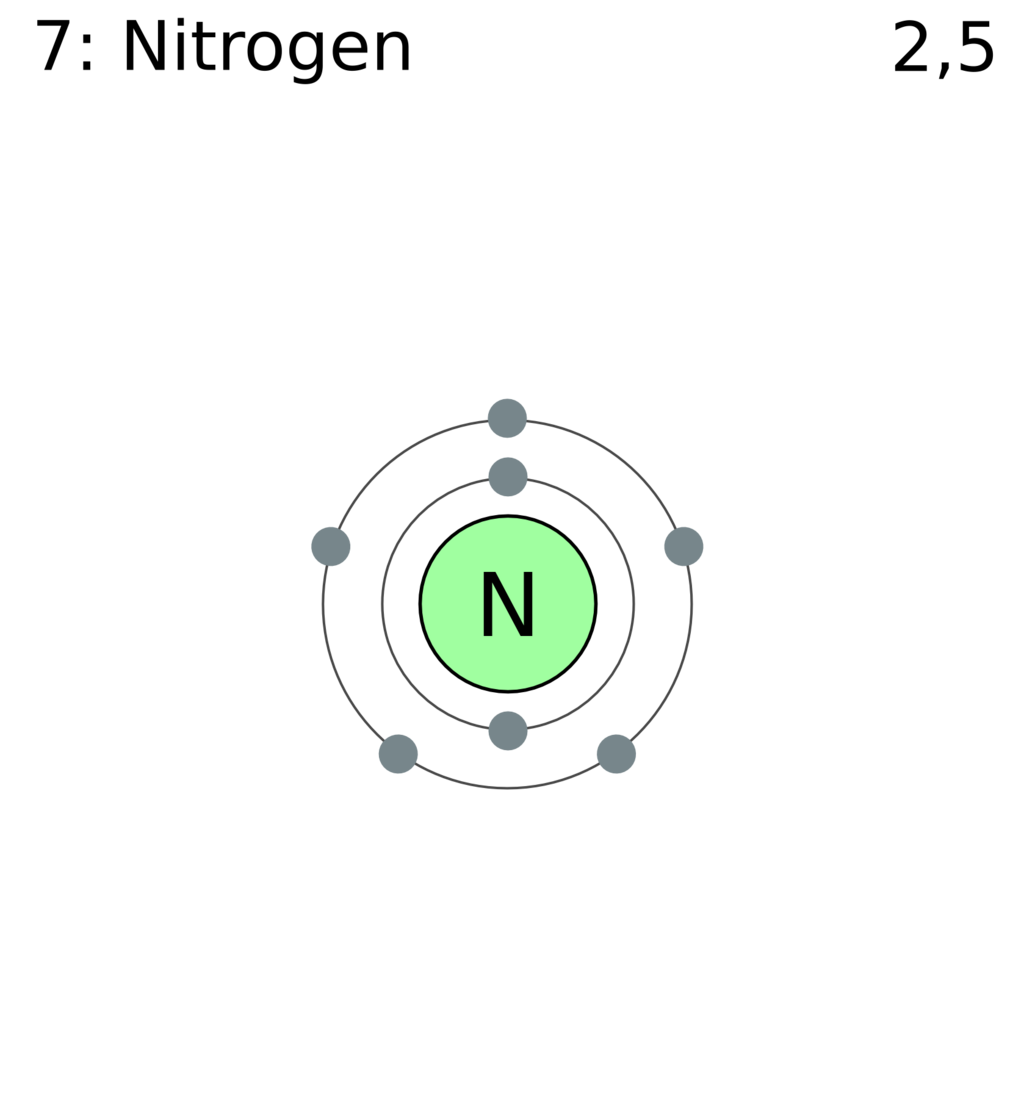
The electrons in the outermost shell are especially important. These are called valence electrons, and they are the ones that interact with other atoms. The number of valence electrons an atom has is the primary factor determining its chemical properties and how it will react.
An atom's desire to have a full outer shell of electrons is the driving force behind most chemical reactions.
Electron Configurations
Chemists have a shorthand for describing where an atom's electrons are located. This is called the electron configuration. It's like writing an address for every electron in the atom.
For simple models, we can write the configuration by listing the number of electrons in each shell, separated by commas or periods. Let's look at a few examples.
| Element | Total Electrons | Configuration |
|---|---|---|
| Helium (He) | 2 | 2 |
| Carbon (C) | 6 | 2, 4 |
| Sodium (Na) | 11 | 2, 8, 1 |
From sodium's configuration (2, 8, 1), we can immediately see that it has two electrons in the first shell, eight in the second, and one in the third. That single electron in the outermost shell makes sodium highly reactive.
Elemental Cousins
While the number of protons defines an element, the number of neutrons can vary. Atoms of the same element that have different numbers of neutrons are called isotopes.
For example, every carbon atom has six protons. But some carbon atoms have six neutrons, while others might have seven or eight. They are all still carbon, but they are different isotopes of carbon.
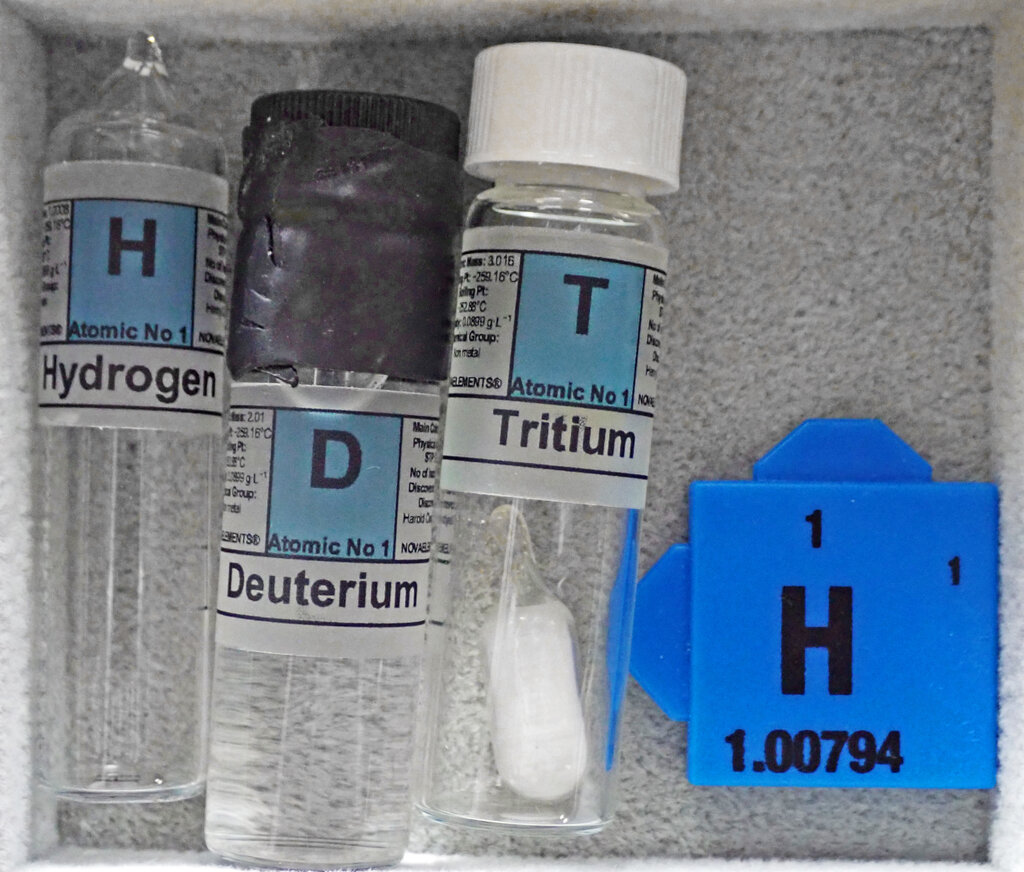
Because neutrons have mass, isotopes of an element have different masses. This is why we use a mass number, which is the total count of protons and neutrons in the nucleus.
To identify a specific isotope, we write the mass number after the element's name, like Carbon-12 or Carbon-14.
- Carbon-12: 6 protons + 6 neutrons = Mass number 12
- Carbon-14: 6 protons + 8 neutrons = Mass number 14
Most isotopes are stable, but some, like Carbon-14, are unstable or radioactive. These radioactive isotopes are incredibly useful in fields like medicine, archaeology (for carbon dating), and energy production.
Now that you've got the basics down, let's test your knowledge.
What uniquely determines the identity of an element?
The electrons located in the outermost shell of an atom, which are responsible for chemical reactions, are called __________.
Understanding these core components of the atom is the first step toward understanding chemistry itself. Everything from the way water molecules stick together to the reactions that power our sun is governed by the properties of these tiny particles.