ChatGPT Scriptwriting Assistant
Introduction to ChatGPT
Meet Your New Writing Partner
ChatGPT is a powerful language model created by OpenAI. Think of it as an incredibly well-read assistant that has processed a vast library of books, articles, and websites. It doesn't 'think' like a human, but it excels at recognizing patterns in language. This allows it to understand your requests and generate new, human-like text in response.
This ability to process and generate natural language is what makes it a useful tool for writers. You can have a conversation with it, ask it questions, and give it instructions. It can write an email, summarize a complex topic, or even draft a poem. For a scriptwriter, it opens up new ways to tackle the creative process.
From Blank Page to First Draft
Staring at a blank page can be daunting. ChatGPT can act as a tireless brainstorming partner to get your ideas flowing. You can ask it for story concepts based on a theme, character archetypes, or a specific setting. For example, you could ask for "five loglines for a sci-fi movie set in an underwater city."
Once you have an idea, ChatGPT can help build it out. It can generate a basic three-act structure, outline key plot points for each act, or develop character backstories. This helps you create a solid foundation before you start writing scenes.
Use ChatGPT to generate dialogue options when you're stuck, or to write descriptive passages for a new scene. It’s a tool to get you unstuck, not to replace your voice.
When you get down to the scene level, it can help with the specifics. Need some snappy dialogue for a witty detective? Ask for a few options. Unsure how to describe a futuristic cityscape? Prompt it to generate a paragraph of scene description. It can provide the raw material that you, the writer, can then shape and refine.
Knowing the Limits
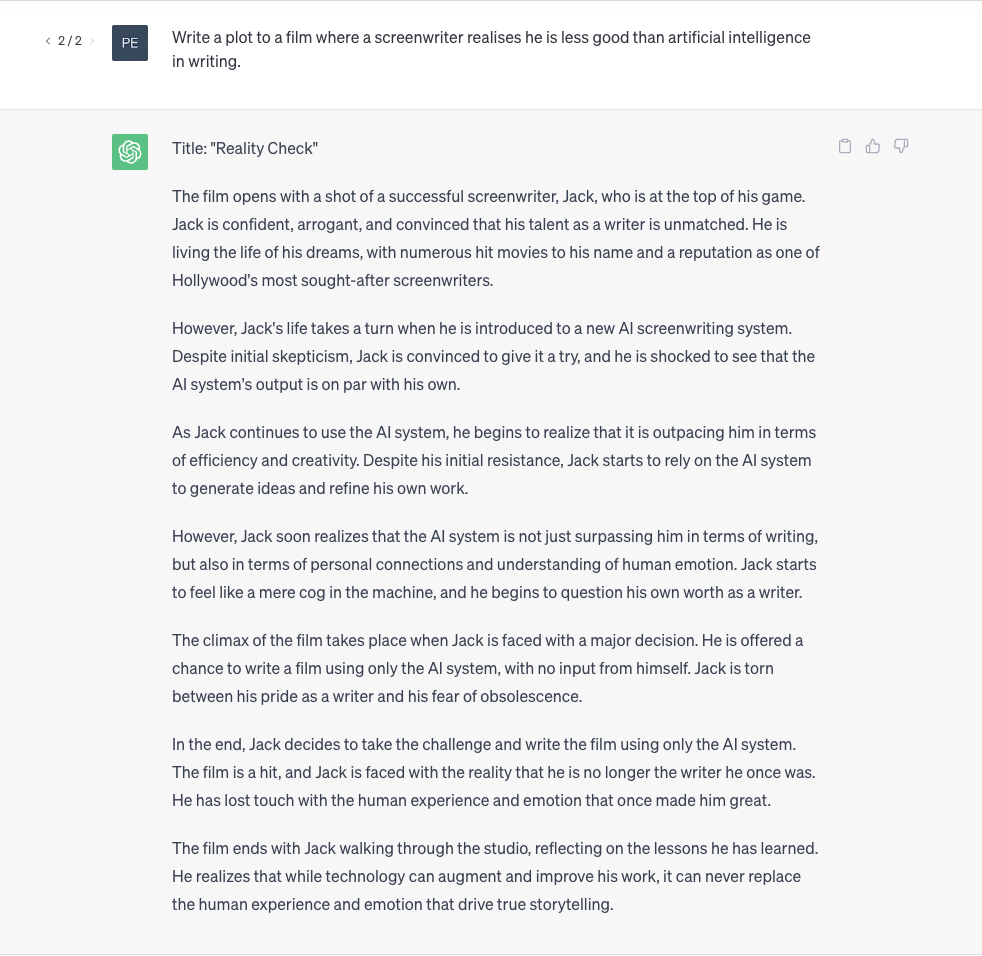
While ChatGPT is a powerful tool, it has significant limitations, especially in creative writing. Its greatest strength is its broad knowledge, but it lacks genuine life experience, emotion, and personal perspective. The stories it generates can sometimes feel generic or derivative because they are based on patterns from existing texts.
It doesn't understand subtext, nuance, or the subtle emotional currents that make a story compelling. The dialogue might be grammatically correct but lack a unique character voice. A scene description might be vivid but miss the one key detail that reveals something crucial about the plot or a character's state of mind.
ChatGPT is an assistant, not the author. The creativity, vision, and emotional heart of the story must come from you.
The model can also make factual errors or generate nonsensical information, a phenomenon often called "hallucination." It's crucial to fact-check any specific information it provides and, more importantly, to treat its creative output as a starting point. Your job is to inject the originality, polish the dialogue until it sings, and ensure the story has a soul.
At its core, how does ChatGPT function?
A scriptwriter is facing a blank page. According to the text, which is an effective way to use ChatGPT to start the creative process?