ChatGPT Digital Marketing Ebook Creation
Understanding Digital Marketing
What Is Digital Marketing?
Digital marketing is any marketing that uses electronic devices and the internet. Businesses leverage digital channels such as search engines, social media, email, and their websites to connect with current and prospective customers.
Think of it as the modern way to spread the word. Instead of billboards and newspaper ads, you're using the tools people engage with every day: their phones, laptops, and social media feeds. It's not just about selling; it's about building a brand, creating relationships, and providing value where your audience already spends their time.
The main goal of digital marketing is connectivity. It’s less about shouting a message from a megaphone and more about starting a conversation with the right people.
Why It Matters
In the past, marketing was a one-way street. A company would run a TV commercial, and that was that. There was no easy way to know who saw it or what they thought.
Digital marketing changed everything. Now, you can reach a global audience or target a specific neighborhood with the same set of tools. It's often more cost-effective than traditional marketing, allowing small businesses to compete with large corporations. Most importantly, its results are measurable. You can track exactly who clicks your ads, reads your content, and buys your products. This data allows you to understand your customers better and refine your strategy over time.
This ability to gather and analyze data is what makes digital marketing so powerful. It transforms marketing from guesswork into a science, enabling businesses to make informed decisions that lead to real growth.
The Main Channels
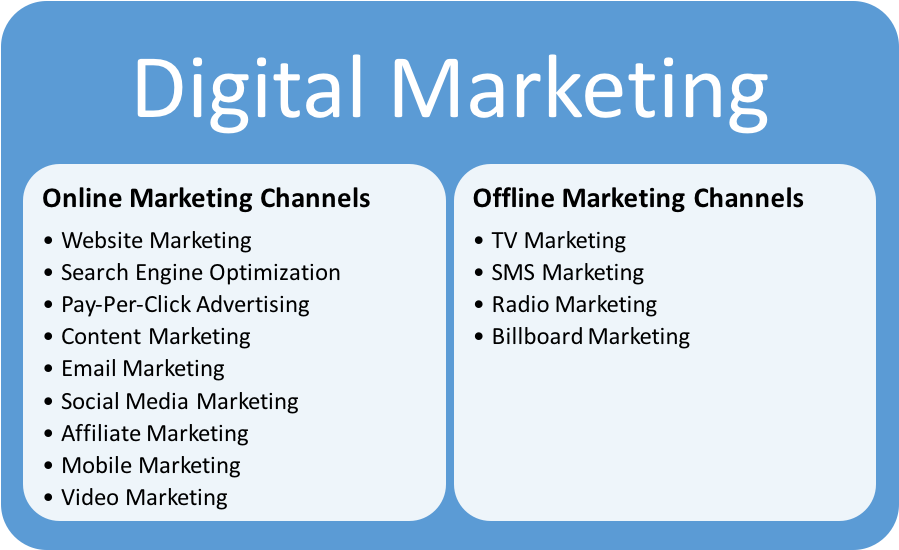
Digital marketing isn't just one thing; it's a collection of different channels and strategies working together. While there are many specializations, most efforts fall into a few key categories.
SEO
noun
The practice of increasing the quantity and quality of traffic to your website through organic search engine results.
Search Engine Optimization (SEO) is all about making your website more visible on search engines like Google. When people search for terms related to your business, you want to be one of the first results they see. This is achieved by optimizing your website's content and structure.
Content Marketing focuses on creating and distributing valuable, relevant, and consistent content to attract and retain a clearly defined audience. This could be blog posts, videos, podcasts, or infographics. Instead of directly pitching your products, you provide useful information that builds trust and authority.
Social Media Marketing involves using social platforms like Instagram, Facebook, LinkedIn, and X to promote a product or service. It's more than just posting updates. It's about engaging with your audience, building a community, and driving traffic to your website.
Email Marketing is one of the most direct and effective ways to connect with your leads, nurture them, and turn them into customers. It involves sending targeted messages to a list of subscribers who have opted in to receive communication from you. This channel is great for building loyalty and promoting special offers.
Pay-Per-Click (PPC) Advertising is a model where marketers pay a fee each time one of their ads is clicked. The most common type is search engine advertising, where you can pay for your ad to show up at the top of Google's search results for specific keywords.
These channels rarely work in isolation. A strong digital marketing strategy integrates several channels to create a cohesive experience for the customer.
Now that you've been introduced to the core concepts, let's review them with some flashcards.
Time to check your understanding of these foundational ideas.
What is the primary advantage of digital marketing compared to traditional marketing methods like billboards or print ads?
The main goal of Search Engine Optimization (SEO) is to:
Understanding these core components is the first step toward building a successful digital presence. Each channel offers unique opportunities to connect with an audience and grow a business.