Change Management Activation Strategies
Introduction to Change Management
What is Change Management?
Change is a constant in any organization. Whether it's adopting new technology, merging with another company, or shifting strategic direction, things are always evolving. Change management is the structured approach to navigating these transitions. It’s about guiding people and teams from their current way of working to a new, desired state.
Think of it as the people-focused side of any project. A company can install the most advanced software in the world, but if employees don't understand it, don't want to use it, or don't get the proper training, the project will fail. The core idea is to support individuals so they can successfully embrace and adopt new ways of working.
Change management is a structured approach for guiding individuals through organizational change, preparing, equipping and supporting them so they can successfully adopt new ways of working.
Without this focus on people, even the most brilliant strategies can fall flat. Effective change management minimizes resistance, reduces stress on the team, and helps ensure that the intended benefits of the change are actually realized.
Models for Managing Change
To bring structure to this process, experts have developed various models. These aren't rigid rules, but frameworks that help leaders think through the stages of a transition. Two of the most foundational models are Lewin's and Kotter's.
Kurt Lewin, a psychologist, proposed a simple three-stage model. It's easy to remember by thinking of an ice cube.
- Unfreeze: This is about preparing the organization for change. It involves communicating why the old way of doing things is no longer sufficient and creating a sense of urgency.
- Change: Here, the new processes, systems, or structures are introduced. This is the stage of learning and transition, which often involves confusion and uncertainty.
- Refreeze: The final stage is about anchoring the change into the company's culture. The new state becomes the new norm, supported by policies, training, and recognition.
John Kotter, a Harvard professor, expanded on this idea with his 8-Step Process. His model provides a more detailed roadmap for leaders to follow. It's less about distinct phases and more about building momentum.
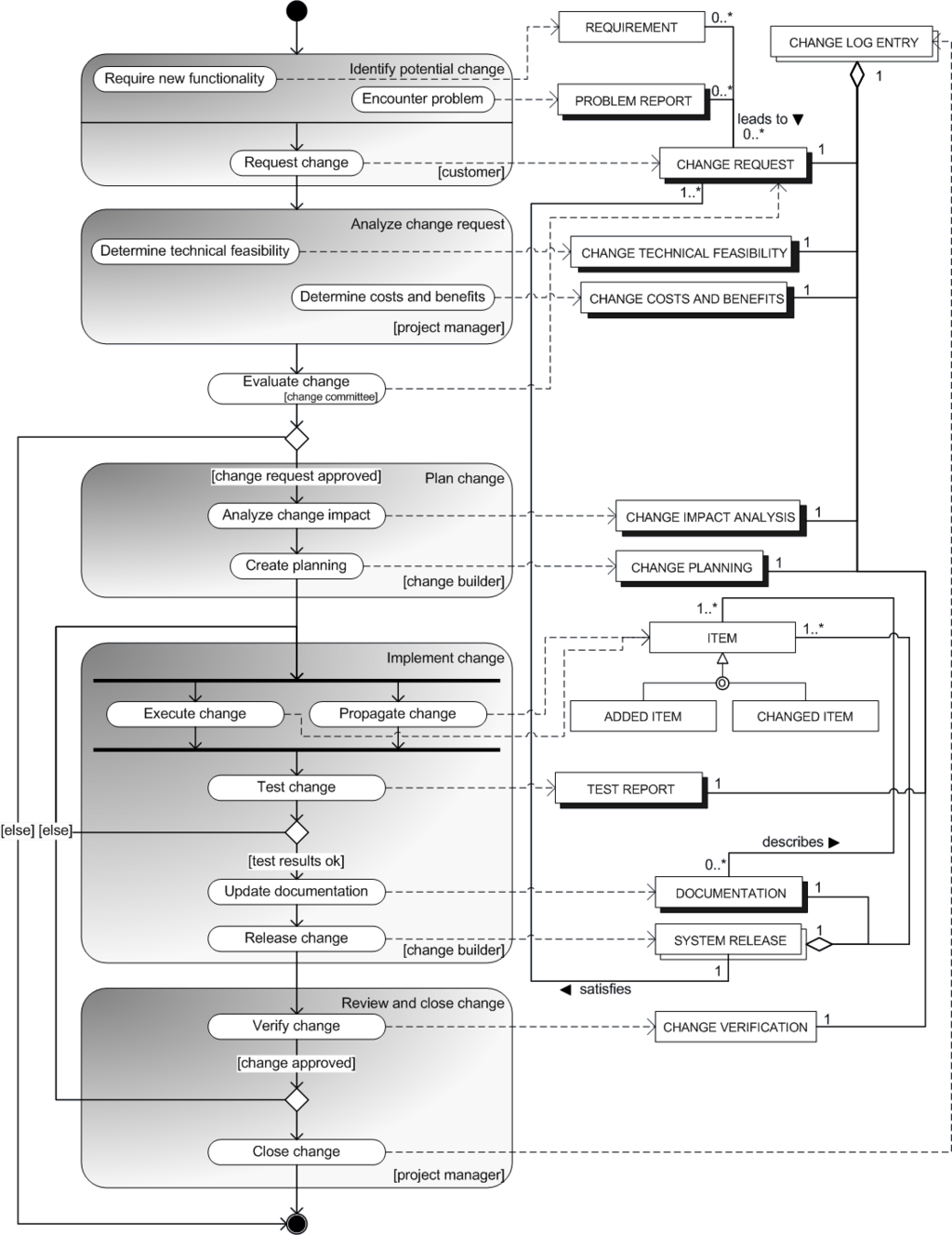
Kotter's model can be grouped into three main thrusts:
- Create a Climate for Change: This involves establishing a sense of urgency, forming a powerful coalition of leaders, and creating a clear vision for the change.
- Engage and Enable the Organization: This is about communicating the vision broadly, removing obstacles, and creating short-term wins to build momentum and motivation.
- Implement and Sustain: The final steps involve building on the change, not letting up, and anchoring the new approaches in the culture to make them stick.
The Goal of Managing Change
Regardless of the model used, the role of change management is to help an organization achieve its strategic goals. A new business strategy requires new behaviors from employees. A corporate restructuring requires new ways of collaborating. A technology upgrade requires new skills.
Change management bridges the gap between launching a new initiative and having it become a successful, integrated part of the business. It helps people cross that bridge, ensuring that the organization doesn't just change on paper, but in practice.
Let's check your understanding of these core concepts.
What is the primary focus of change management?
According to Kurt Lewin's model, what is the main goal of the 'Unfreeze' stage?
Understanding these fundamentals is the first step. By recognizing that change is a process that must be managed with care for the people involved, organizations can navigate transitions much more smoothly.