Chakras and Psychological Development
Root: Foundational Safety
The Seedbed of the Self
The first story your body ever learns is not told in words. It's a felt sense, an implicit understanding of the world written directly into your nervous system during the first year of life. This foundational imprinting is the domain of the Muladhara, or root chakra. It corresponds almost perfectly with psychologist Erik Erikson's first stage of psychosocial development: Trust vs. Mistrust.
From birth to about 18 months, an infant's entire world is about survival. Am I safe? Will my needs be met? The primary caregiver's consistent, attuned response to these needs—feeding when hungry, soothing when distressed, holding when ached for—builds a foundation of trust. This isn't a conscious thought process. It's a somatic experience. The feeling of being securely held, both physically and emotionally, tells the infant's developing nervous system that the world is a reliable place. This forms the energetic bedrock of the root chakra, a sense of being grounded, secure, and having a right to be here.
When there is early trauma, the ensuing biological dysregulation forms the shaky foundation upon which the psychological self is built.
Wiring for Safety or Threat
This early relational dance has profound neurological consequences. The quality of attachment directly shapes the development of key brain structures responsible for our stress response. Two central players are the amygdala and the HPA axis. The amygdala, the brain's smoke detector, is constantly scanning for threats. The HPA axis is the system that floods the body with stress hormones like cortisol in response to a perceived danger.
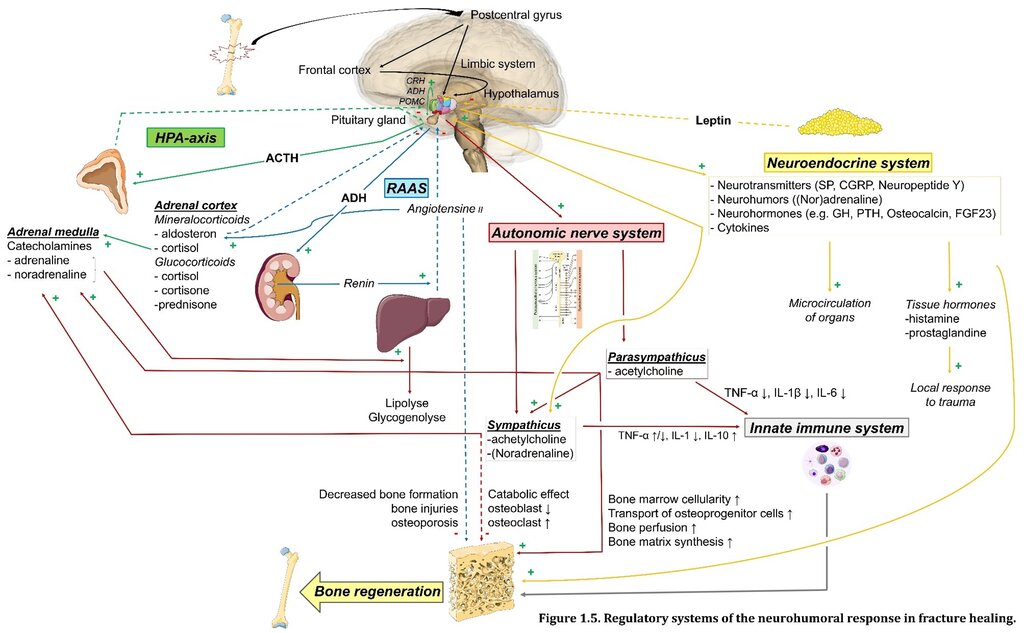
In a securely attached infant, the caregiver acts as an external regulator for this system. When the baby is distressed, the caregiver's soothing presence helps the baby's nervous system return to a calm state. This co-regulation teaches the HPA axis to have a resilient, flexible response. The message is: 'Threats happen, but they pass, and I am safe.'
However, if a caregiver is neglectful, inconsistent, or threatening, the infant's nervous system remains in a state of high alert. The amygdala becomes over-sensitive, and the HPA axis becomes chronically activated. This leads to a state of hyper-vigilance, where the world is implicitly experienced as a dangerous place. The foundational narrative of the root chakra becomes 'I am not safe,' leading to lifelong patterns of anxiety, insecurity, and difficulty feeling grounded.
Body of Evidence
The story of our early attachment isn't just stored in the brain; it's held in the body. The root chakra's energy is physically anchored in the base of the body. The legs and feet are our connection to the earth, governing our ability to stand our ground and move forward with confidence. The pelvic floor, a complex web of muscles at the base of the torso, often holds deep-seated tension related to feelings of unsafety. Even the bones themselves, the densest structures in our body, relate to this foundational sense of stability and support.
When there are unresolved attachment wounds at this root level, the clinical signs can be subtle or overt. They manifest not as memories, but as patterns of being.
| Category | Manifestation of Root-Level Wounds |
|---|---|
| Psychological | Chronic anxiety, insecurity, difficulty trusting others, feeling disconnected or 'spacey'. |
| Behavioral | Financial instability, hoarding, restlessness, resistance to structure, or conversely, extreme rigidity. |
| Somatic | Issues with legs, feet, knees (e.g., poor circulation, chronic pain), lower back pain, elimination problems. |
| Energetic | A sense of being ungrounded, lack of physical vitality, a pervasive feeling of not belonging. |
Working with these patterns involves more than just cognitive understanding. Since the wounds were formed pre-verbally, healing often requires a that speaks the language of the body: sensation. Practices that cultivate a felt sense of safety—like grounding exercises, stable postures, and conscious connection to the legs and feet—can help to rewrite this earliest story. It's about showing the nervous system, through direct experience, that it is finally safe to rest.
The foundational imprinting associated with the Muladhara (root) chakra corresponds most closely with which of Erik Erikson's stages of psychosocial development?
In a securely attached infant, the caregiver's soothing presence acts as an external regulator for the baby's developing nervous system. What is this process called?