Cemeteries of Lukeville and Darby Wells
Introduction to Lukeville and Darby Wells Cemeteries
Lukeville Cemetery
Just north of the U.S.-Mexico border lies the small community of Lukeville, Arizona. It's a border crossing town, a place of transition. The Lukeville Cemetery is situated nearby, serving the residents of this unique bi-national region. Its location is key to its story. The cemetery sits within the boundaries of the Tohono O'odham Nation, a Native American reservation that spans both sides of the international border.
The history of Lukeville is tied to the establishment of the border and its role as a port of entry. The community that grew here is a blend of cultures: American, Mexican, and Tohono O'odham. The cemetery reflects this heritage. It's a historical record of the families who have lived, worked, and traveled through this desert landscape for generations. The burial practices and grave markers often show a mix of Catholic, Protestant, and Indigenous traditions, telling a quiet story of the area's diverse cultural fabric.
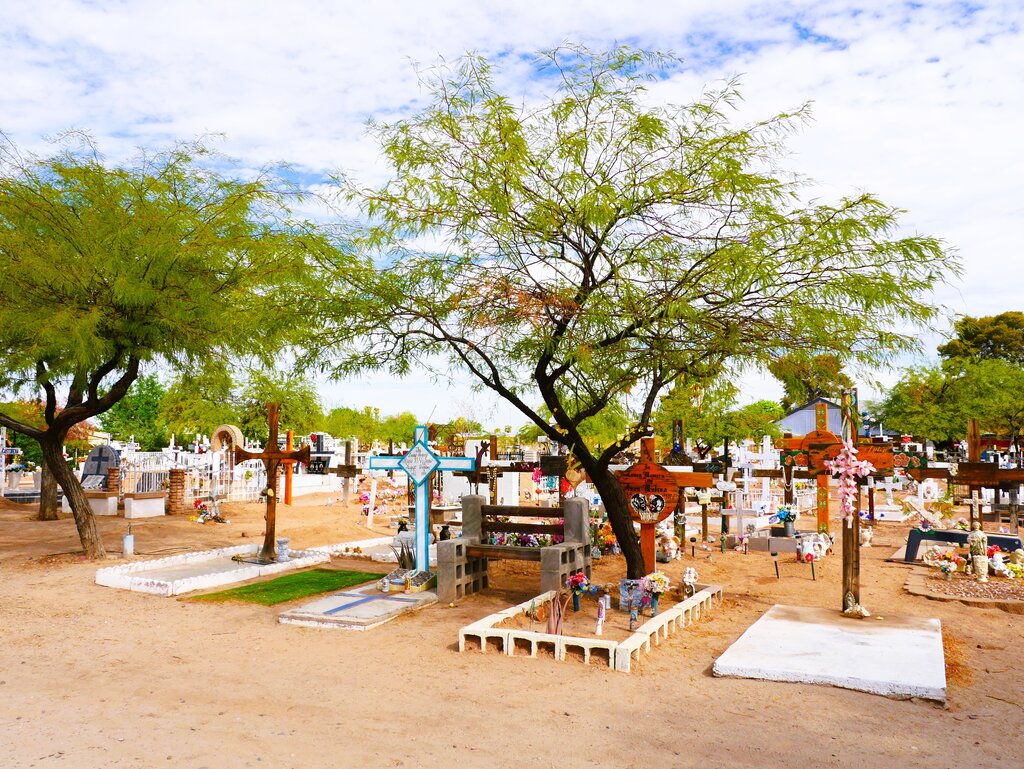
Darby Wells Cemetery
Travel about 25 miles north of Lukeville, deeper into the Sonoran Desert, and you'll find the Darby Wells Cemetery. Unlike Lukeville, which is defined by the border, Darby Wells is more isolated. It’s located near the small town of Ajo, another community with deep roots in the region's mining history. The name itself, Darby Wells, points to its origin as a vital water source in an arid land, likely a stop for ranchers and travelers.
The Darby Wells community was never large. It was a place centered around ranching and prospecting, populated by hardy individuals accustomed to the harsh desert environment. The cemetery is small and unassuming, a testament to the lives of these early settlers. Like Lukeville Cemetery, it also lies within the Tohono O'odham Nation. Many of the graves belong to O'odham families who have inhabited this land for centuries, long before any borders were drawn. The cemetery's cultural significance lies in its preservation of the history of a small, resilient desert community and its deep connection to the enduring presence of the Tohono O'odham people.
Both cemeteries serve as important historical records, preserving the stories of the diverse communities—settler, rancher, and Native American—who have called this desert borderland home.
Let's review the key locations from this section.
Now, check your understanding of these two historic sites.
What is a key characteristic of the Lukeville Cemetery's location?
The Darby Wells community was primarily centered around which activities?
These cemeteries offer a unique window into the history and culture of the Arizona-Sonora borderlands.