Celtic Paganism and Modern Witchcraft
Introduction to Celtic Paganism
The People Without a Nation
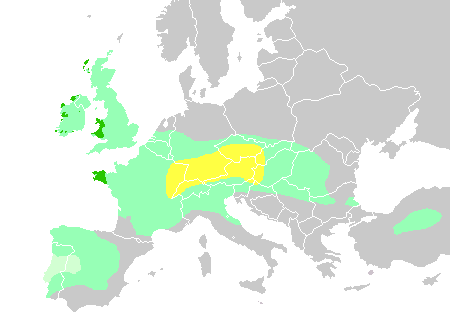
When we talk about the ancient Celts, it's easy to picture a single, unified people. The reality is more complex. The Celts weren't an empire or a nation but a collection of tribes spread across Europe, linked by shared language, art, and spiritual beliefs. Their story begins in the early Iron Age, around 800 BCE, in central Europe. Archaeologists identify this early period as the Hallstatt culture, named after a site in Austria.
From this heartland, Celtic culture expanded dramatically. Over centuries, these tribes migrated and settled in lands from modern-day Spain and Britain to Turkey. This later, more widespread phase, known for its intricate metalwork and art, is called the La Tène culture. Because the Celts passed down their knowledge orally through priests and bards, they left no sacred texts of their own. What we know comes from archaeology and the writings of their contemporaries, like the Greeks and Romans, who were often their rivals.
A World Alive with Spirits
At the heart of Celtic spirituality was the belief that the divine was everywhere. This wasn't a religion of distant gods confined to temples. Instead, the sacred was woven into the fabric of the natural world. Every river, mountain, and forest grove could be home to a spirit or deity. This worldview is a form of animism, the belief that objects, places, and creatures all possess a distinct spiritual essence.
For the Celts, the line between the physical and spiritual worlds was thin. Certain times, like sunrise and sunset, and places, like shorelines or caves, were seen as powerful thresholds where one could connect with the Otherworld.
This deep connection to nature meant that life was a constant interaction with the divine. A spring wasn't just a source of water; it was a gateway to a goddess who could offer healing. A towering oak tree wasn't just timber; it was a sacred pillar connecting the earth and the heavens, a place of wisdom and ritual.
Pagan Celtic spirituality perceived that the supernatural otherworlds lie so close to this one that the borders often cross, and that the magical numinous was present in every aspect of their lives and surroundings.
Gods of Tribe and Place
Celtic paganism was polytheistic, meaning they worshipped many gods and goddesses. Unlike the organized pantheons of Greece or Rome, the Celtic deities were often tied to specific tribes or locations. A goddess of the river Seine in Gaul, for example, might not be worshipped in Ireland. However, some divine figures and themes were common across the Celtic world.
| Deity / Figure | Association | Notes |
|---|---|---|
| Lugh | Skills, craftsmanship, oaths | Often seen as a master of all arts. His festival, Lughnasadh, celebrated the harvest. |
| Brigid | Healing, poetry, smithing | A powerful goddess in Ireland, her influence survived in the figure of St. Brigid. |
| The Morrígan | War, fate, sovereignty | A complex figure, often appearing as a trio of goddesses or in the form of a crow. |
| Cernunnos | Animals, nature, fertility | Known from carvings as the "Horned God," often depicted sitting with animals. |
Many deities existed in threes, a concept known as triplism. This is why we see references to triple goddesses or figures like the three Matronae (mother goddesses), who represented fertility and protection. This focus on threes reflects a worldview that saw the cosmos in interconnected parts: land, sea, and sky; or past, present, and future.
The spiritual leaders who mediated between the human and divine worlds were the Druids. They were more than priests; they were also judges, healers, and lore-keepers, responsible for memorizing the vast collection of poems, laws, and histories of their people.
Time to check what you've learned about the core beliefs of Celtic Paganism.
The ancient Celts were a unified empire with a single ruler, similar to the Romans.
What is the term for the Celtic belief that the divine exists in all aspects of the natural world, such as rivers, mountains, and trees?
Celtic Paganism was not a single, static religion but a vibrant and diverse set of beliefs deeply rooted in the natural world. It saw divinity in the land itself and understood life as an ongoing conversation with the spirits and gods who shared it.