Cellular Respiration Explained
Introduction to Cellular Respiration
How Your Body Makes Energy
Your body is a bustling city of trillions of cells, and each one needs energy to work. From contracting a muscle to thinking a thought, every action requires power. But where does this power come from? It comes from the food you eat, specifically from molecules like glucose, a simple sugar.
Cellular respiration is the process your cells use to convert the chemical energy stored in glucose into a usable form. Think of it like a car's engine. A car burns gasoline to release energy that makes the wheels turn. Similarly, your cells “burn” glucose in a series of controlled steps to release energy that powers all of life's activities.
The main goal of cellular respiration is to create ATP, the molecule that provides energy for almost every process within a cell.
ATP, The Cell's Energy Currency
Imagine glucose is a $100 bill. It holds a lot of value, but you can't use it in a vending machine. You need to break it down into smaller, usable change. In the cellular world, that change is a molecule called Adenosine Triphosphate, or ATP.
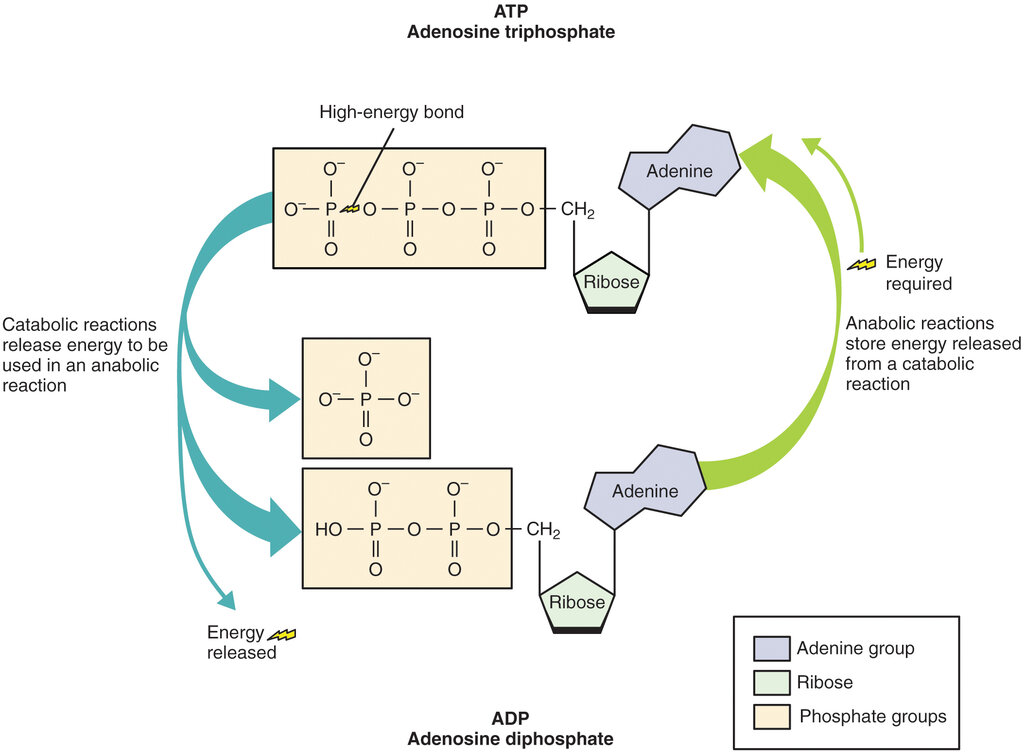
ATP is often called the energy currency of the cell. When a cell needs to perform a task, it “spends” ATP. The energy is released when one of ATP's three phosphate groups is broken off, turning it into ADP (Adenosine Diphosphate). This process is reversible; the cell can add a phosphate group back onto ADP, storing energy and recreating ATP, much like recharging a battery.
ATP
noun
Adenosine Triphosphate. A molecule that carries energy within cells. It is the main energy currency of the cell.
The Energy Assembly Line
Creating ATP from glucose is a complex process, like an assembly line with three main stations. Each station performs a specific job, breaking down the glucose molecule step-by-step to efficiently capture its energy.
The first stage is Glycolysis. The name literally means “sugar splitting.” It happens in the cell's main fluid-filled space, the cytoplasm. Here, a single molecule of glucose is split into two smaller molecules. This step doesn't require oxygen and produces a small, quick burst of ATP.
Next comes the Krebs Cycle, also known as the citric acid cycle. This stage takes place inside specialized compartments in the cell called mitochondria. The smaller molecules from glycolysis are broken down even further, releasing more energy and carbon dioxide as a waste product (the same you breathe out).
The final and most productive stage is Oxidative Phosphorylation. This also occurs in the mitochondria. It uses the high-energy products from the Krebs cycle and, crucially, oxygen to produce a massive amount of ATP. Think of it as the main power plant of the cell. This is why we need to breathe oxygen—it's the final key ingredient for this highly efficient energy-making process.
While glycolysis can happen without oxygen (anaerobic), the Krebs cycle and oxidative phosphorylation require oxygen (aerobic) to produce the vast majority of the cell's ATP.
What is the primary purpose of cellular respiration?
The molecule often called the 'energy currency' of the cell, which is spent to power cellular activities, is ______.
This entire process, from a single glucose molecule to dozens of ATP molecules, is fundamental to life. It’s how the energy from the sun, captured by plants and stored in food, is ultimately transferred to you to power everything you do.